Singles pickleball: where to serve from and how the score decides
Short answer: In singles, the server serves from the right serving area when their score is zero or even, and from the left when it is odd. A player holds serve, alternating sides after each point, until they lose a rally, which is a side out.
Rule 5.A of the 2026 rulebook covers singles.
- Position. Even score: serve from the right and receive in the opponent's right service court. Odd score: left.
- Holding serve. Keep serving, alternating after each point won.
- Side out. Occurs when the server loses a rally.
- Calling. Two numbers: server's score, then receiver's. The game starts "zero - zero".
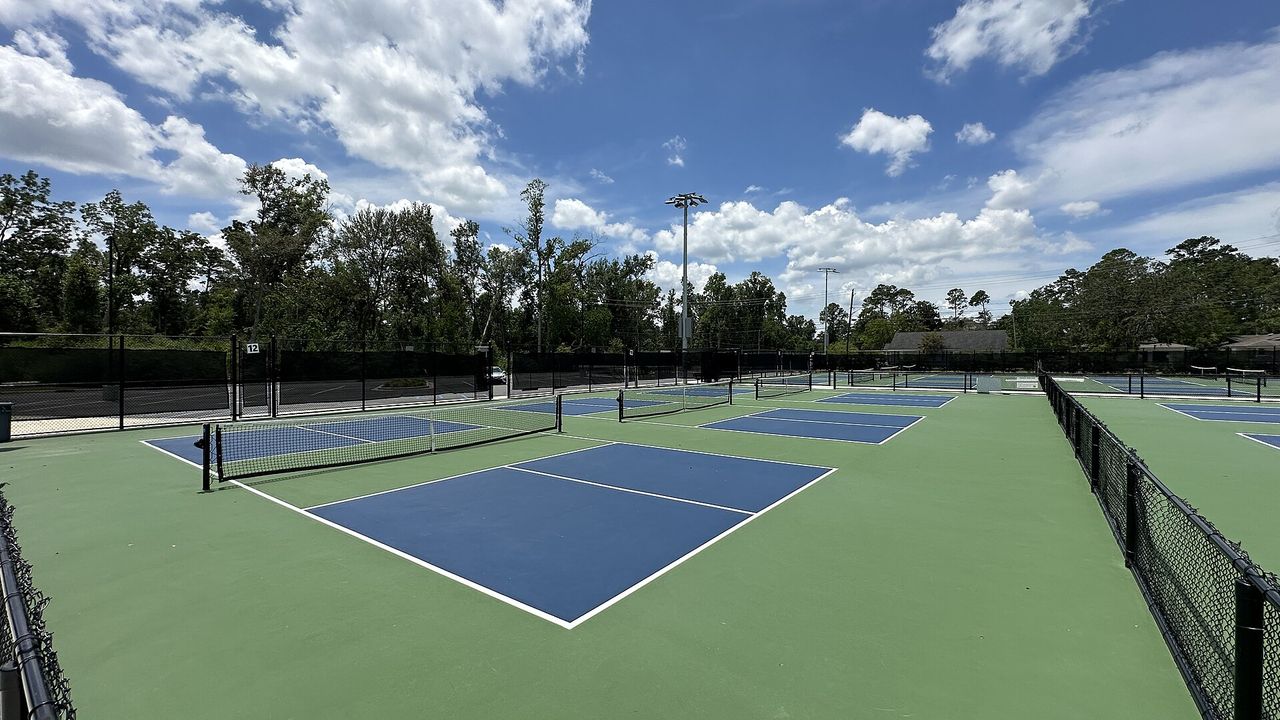
The court is the same 20 by 44 feet as doubles; see court size and net height. The rulebook also has separate provisions for mini-singles.
The rule in one line
In singles, the server's own score decides everything. Rule 5.A.1 says that when the server's score is zero or even, the serve is made from the right serving area and received in the opponent's right service court. When the server's score is odd, the serve is made from the left serving area and received in the opponent's left service court. There is no second server and no partner to track, so singles is the simplest way to learn the serving pattern.
Holding serve and side out
Under 5.A.2, a player keeps serving, alternating between the right and left serving areas after each point won, until they lose a rally. Losing a rally ends the service turn: 5.A.3 calls this a side out, and the opponent then becomes the server. Because points are scored only by the serving side in standard scoring (rule 4.A: a point is scored by serving the ball and winning the rally), a player who wins a rally as the receiver does not score. They win the right to serve.
A walk through the first few points
- The game starts at 0-0. The server's score is zero, which is even, so they serve from the right and the receiver stands in their own right service court. The score is called as zero - zero (rule 6.B.1).
- The server wins the rally and the score becomes 1-0. The score is now odd, so the server moves to the left serving area. The call is one - zero.
- The server wins again: 2-0. Even again, so they return to the right.
- The server loses a rally. No point is scored and it is a side out. The opponent serves next, and their own score is zero, so they serve from their right side.
The receiver always stands diagonally across from the server, in the service court that matches the server's side.
Calling the score
In singles the score is called as two numbers: the server's score first, then the receiver's (rule 6.B.1). The server normally calls it, and the whole score must be called before the serve is hit. Hitting the serve while the score is being called is an early-serve fault (6.C.1).
Where to stand after the serve
Positions only matter for the serve and the return of serve. The doubles rules in section 5.B.4 state that, except while serving and receiving, players may stand anywhere on their own side of the net, on or off the court. The singles rules in 5.A cover only the serving and receiving positions. The two-bounce rule still applies, so the receiver must let the serve bounce and the server must let the return bounce; see our two-bounce guide.
Common mistakes
- Serving from the wrong side. This is the most common error. The fix is the score: even means right, odd means left.
- Forgetting to switch after a point. The server alternates sides after each point won.
- Receiving from the wrong court. The receiver must be in the service court diagonally opposite the server.
If a player or position error is claimed during a rally, section 5.C sets out what happens: a correct claim leads to a replay, and an incorrect claim is a fault against the player who stopped the rally. For the doubles version of these rules, see doubles serving order and positions, and for scoring methods see side-out versus rally scoring. The rulebook also lists mini-singles (rule 14.B), a half-court variation of standard singles.
Frequently asked questions
Which side does the server stand on in singles?
The right side when their score is zero or even, and the left side when their score is odd (rule 5.A.1).
Does a singles server get a second serve?
No. A player keeps serving until they lose a rally, which is a side out (rules 5.A.2 and 5.A.3). There is no second server in singles.
How is the score called in singles?
As two numbers, the server's score then the receiver's. The game starts at zero - zero (rule 6.B.1).
What if I realise I served from the wrong side?
Rule 5.C covers claimed position errors. If the correct server or receiver was out of position when the score was called and the rally is correctly stopped, the rally is replayed. If the error is identified after the rally is completed, the result stands.
Sources
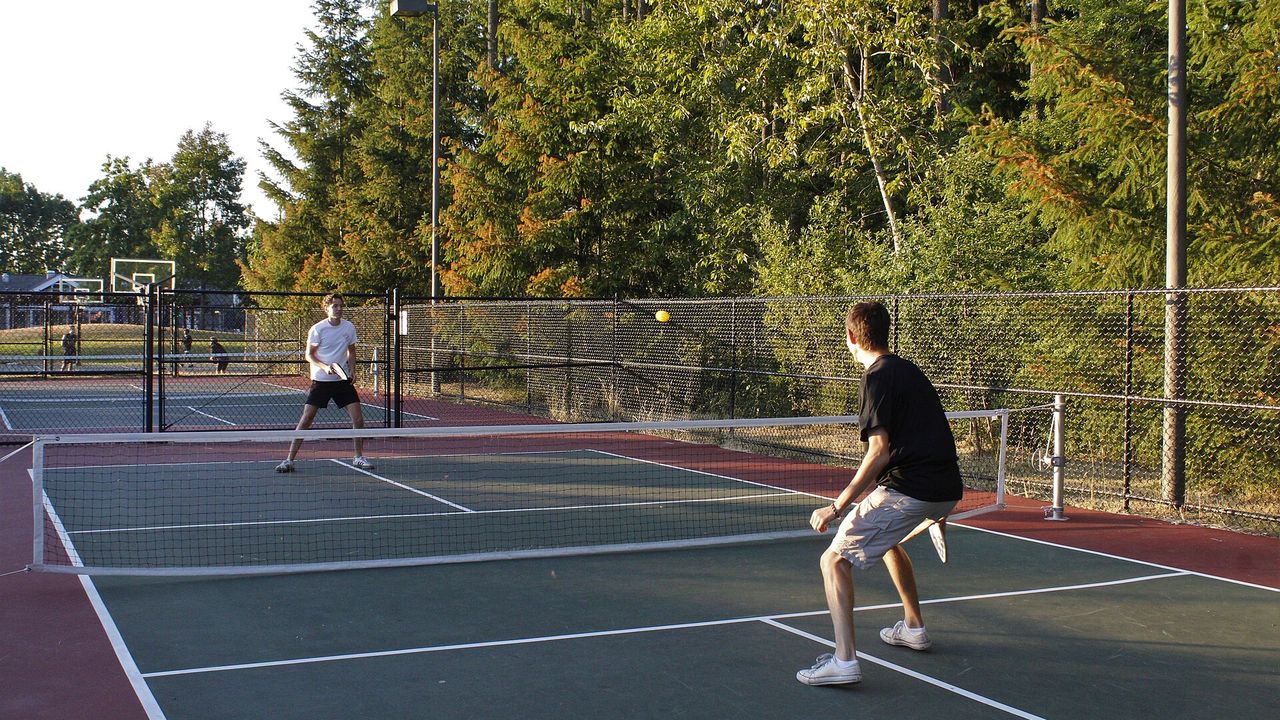
Sources checked 14 Oct 2026. Header photo: Player in a pickleball match on an outdoor court with trees behind, by Picklerpeej, CC BY-SA 4.0, via Wikimedia Commons.