Doubles serving order and court positions, step by step
Short answer: In doubles, both players on a team serve before a side out is declared, except that at the start of each game only the starting server serves before the side out. Positions are set by the team's score: the starting server is on the right when the score is zero or even and on the left when it is odd.
Section 5 of the 2026 USA Pickleball rulebook covers positions and serving order.
First and second server
After each side out, service begins with the player correctly positioned on the right side for the team's score. For that service rotation this player is the first server and their partner is the second server. The starting server of the team that begins each game is designated a second server for that team's first rotation, which is why the opening call is "zero - zero - two".
Where to stand
For each rally the positions of server and receiver are determined by their team's score. The starting server is on the right when the team's score is zero or even, and on the left when it is odd. The starting server's partner stands on the opposite side.
Holding serve
The first server serves, alternating right and left serving areas after each point won, until the serving team loses a rally. Then the serve passes to the second server.
Between serves
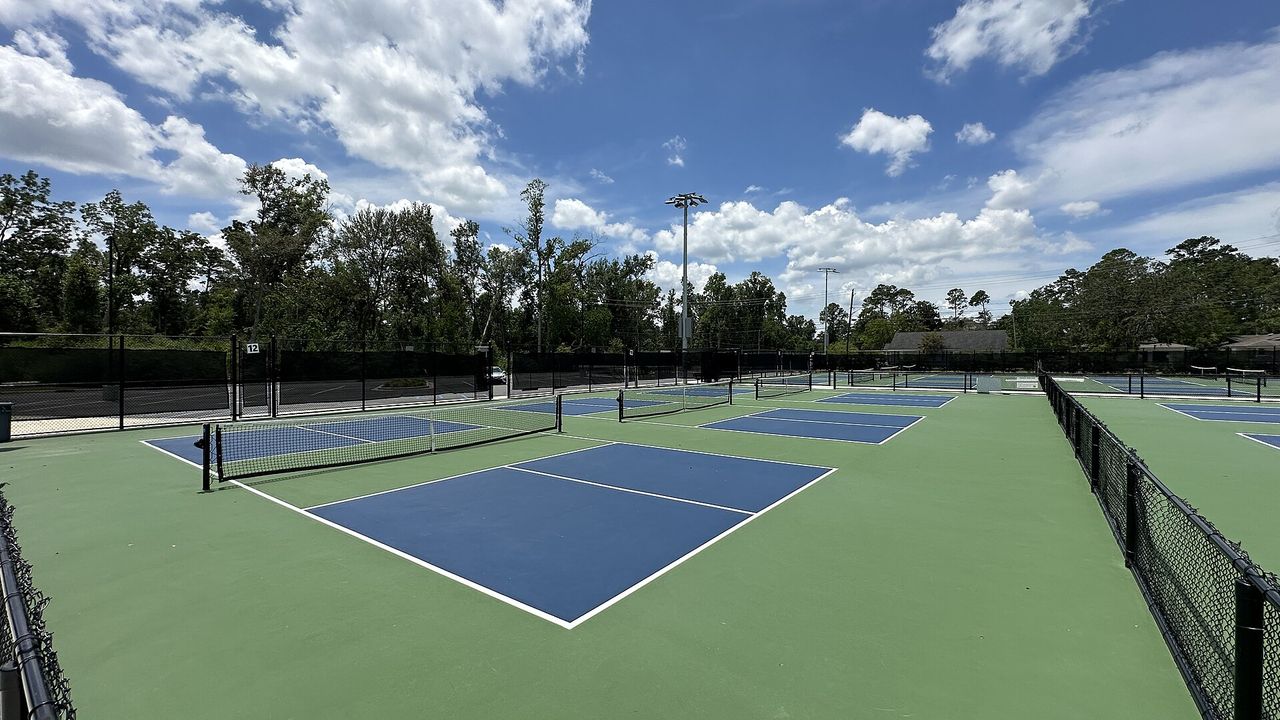
Except when serving or receiving, there is no restriction on where players stand, on or off the court, as long as they are on their own end of the net while the ball is live.
For the rally-scoring variant, which has no second server, see our scoring guide.
Why doubles feels complicated
Doubles has two layers: each side serves with both partners before a side out, and the position of each partner depends on the team's score. Once you know the three rules behind it, it follows a pattern. The rulebook puts the pattern in section 5.B.
Rule 1: both partners serve (5.B)
Both players on a team serve before a side out is declared. The exception is the start of each game, when only the starting server serves before a side out is declared. The first server serves until the team loses a rally (5.B.5), and then the serve passes to the second server. The second server serves until the team loses a rally, and that loss is a side out (5.B.6). Servers alternate between the right and left serving areas after each point their team wins.
Rule 2: scores decide positions (5.B.3)
The starting server's correct position is the right side of the court when the team's score is zero or even, and the left side when it is odd. Their partner takes the opposite side: left when the score is zero or even, right when it is odd. That is why the rule gives positions by score rather than by habit.
Rule 3: first and second servers (5.B.2)
After each side out, service begins with the player correctly positioned on the right side according to the team's score. For the whole of that rotation, that player is the first server and their partner is the second server. The exception: the starting server for the team that starts each game is designated as a second server for that team's first service rotation of the game. That is why the first service turn of every game is shorter.
Starting a game
The score at the start of a doubles game is called zero - zero - two (rule 6.B.2). The three numbers are the serving team's score, the receiving team's score, and the server number. The two shows that the starting server is already the second server, so after the first lost rally, the serve goes to the opponents.
Positions during the rally (5.B.4)
Except when serving and receiving, there is no restriction on where players stand, on or off the court, as long as they stay on their end of the net while the ball is live. The only exception is the allowed crossing of the net plane under rule 13.I; see touching the net and crossing the plane.
Fixing mistakes (5.C)
- Before the serve is hit, you may ask your opponents who the correct server or receiver is, or whether players are in the correct positions. They must answer (5.C).
- If a player stops a rally and correctly identifies a position error, the rally is replayed (5.C.1.a).
- If the claim is wrong, the player who stopped the rally commits a fault (5.C.1.b).
- If the correct server and receiver were in their right positions and a player who is not the correct receiver returns the serve, it is a fault against that player, even if the rally is finished, as long as it is called before the next serve (5.C.1.c).
- If an error is spotted only after the rally is over, the result stands (5.C.2).
A quick tip
The score is the key. Call the score first, then ask: which side am I on? An even team score means the starting server stands on the right. See also singles serving, calling the score and doubles strategy.
Frequently asked questions
How is the score called in doubles?
As three numbers: the serving team's score, the receiving team's score, then the server number. A game starts at zero - zero - two (rule 6.B.2).
Why does the first serving turn of a game have only one server?
The starting server of the team that begins each game is designated as a second server for that first rotation, so the serve passes to the opponents after the first lost rally (rule 5.B.2).
Can players stand anywhere after the serve?
Yes, apart from serving and receiving positions, players may stand anywhere on their own end of the net while the ball is live (rule 5.B.4).
What if I return a serve but I am not the correct receiver?
If the correct server and receiver were in their correct positions when the score was called, it is a fault against the player who returned it, provided it is called before the next serve (rule 5.C.1.c).
Sources
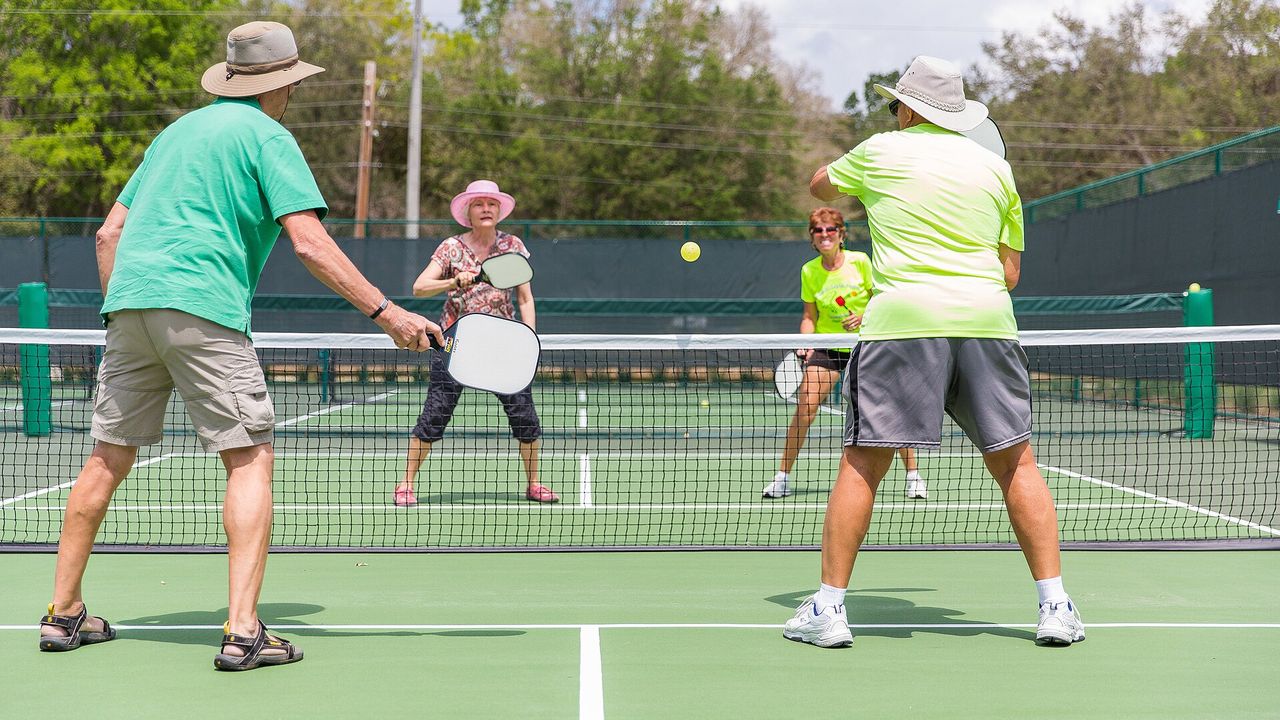
Sources checked 14 Oct 2026. Header photo: Four players in a doubles pickleball game on an outdoor court, by TheVillagesFL, CC BY-SA 4.0, via Wikimedia Commons.