
The two-bounce rule in pickleball, explained
Short answer: Under rule 10.A of the 2026 USA Pickleball rulebook, the serve and the return of serve must each bounce before being returned. After those two bounces, either side may volley (outside the kitchen) or play the ball off the bounce.
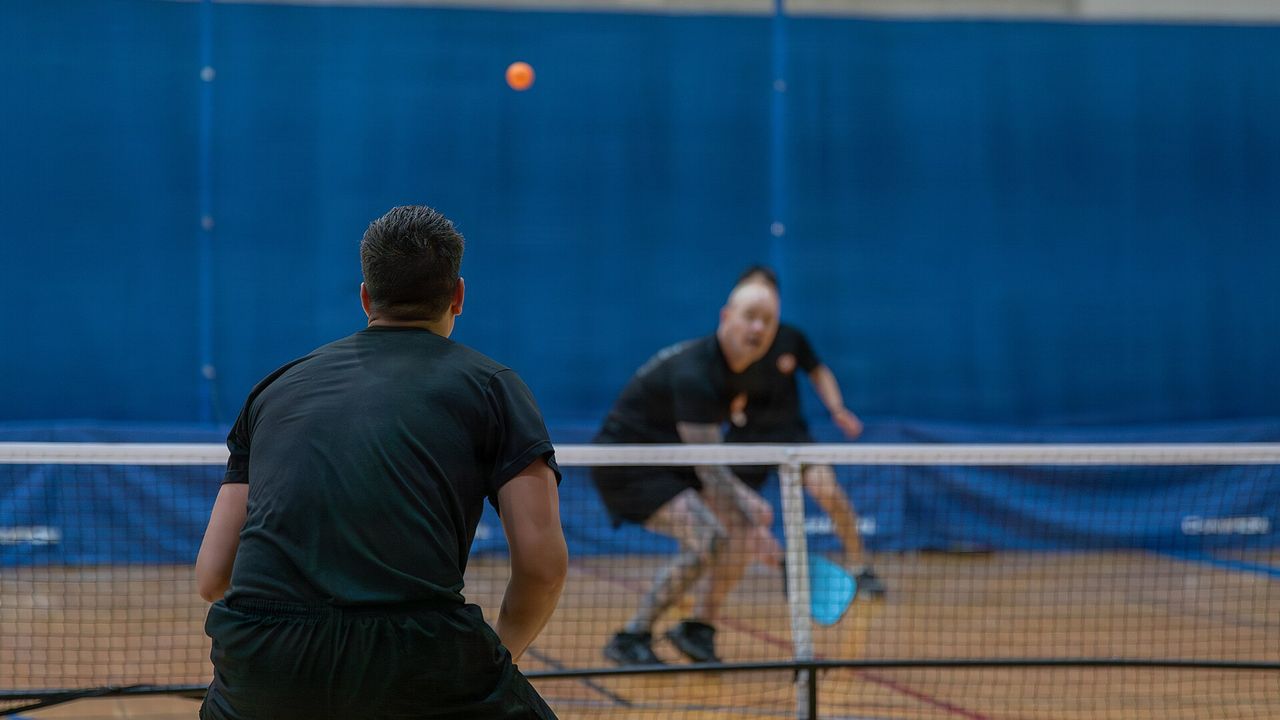
The two-bounce rule, sometimes called the double-bounce rule, stops the serving side from rushing the net behind a serve and smashing the return.
What the rulebook says
Rule 10.A: the serve and the return of serve must each bounce before being returned. If the receiver hits the serve out of the air, it is a fault against the receiver (10.A.1). If the serving side hits the return out of the air, it is a fault against the serving side (10.A.2).
A different rule: maximum bounces
Do not confuse it with the double bounce fault. Rule 10.B says a player must return the ball before a second bounce on their side, and failing to do so is a fault.
Where the ball must land
A returned ball must land on the opponent's end of the court, or touch the opponent or something worn or carried by them, before landing (rule 10.C). A ball that first lands outside is a fault against the hitter.
Adaptive play
The rulebook's definitions allow wheelchair players and some players with certain disabilities to let the ball bounce twice before returning it. The first bounce must be in the court; the second can be anywhere on the playing surface.
Once the two bounces have happened, the kitchen rules matter: see our kitchen guide.
The rule as written (10.A)
The 2026 rulebook states it plainly: the serve and the return of serve must each bounce before being returned. In the introductory section the rule appears as one of the sport's unique features: after the serve, the receiver must allow the ball to bounce before making their first return, and then the serving team must allow the ball to bounce before making their first return.
Two faults, two sides
- No bounce by the receiver (10.A.1). If the receiver does not allow the serve to bounce before hitting it, it is a fault against the receiver.
- No bounce by the serving side (10.A.2). If the server or the server's partner does not allow the return of serve to bounce before hitting it, it is a fault against the serving side.
The rule therefore constrains both sides, once each. After those two bounces, the ball may be volleyed or hit after a bounce, subject to the non-volley zone rules in section 11.
Why it exists
The rulebook does not give a reason, but the effect is clear. Without it, the serving team could rush the net straight away and volley the return, and the serve would dominate. The two-bounce rule makes both teams hit a groundstroke first, which lengthens rallies and gives the receiving side time to get to the net. This is our reading of the rule's effect, not a statement from the rulebook.
Maximum bounces (10.B)
The two-bounce rule is often confused with a different rule: a player must return the ball before a second bounce. If a player fails to do so, it is a fault against them (10.B.1). Put together: the serve and the return each must bounce once, and no ball may bounce twice on a player's side.
Wheelchair and adaptive play
Players using wheelchairs, and players with certain disabilities, may allow the ball to bounce twice before returning it. The first bounce must be in the court, but the second bounce can be anywhere on the playing surface. See our wheelchair rules article.
Where it fits in a rally
- The server serves. The ball must bounce on the receiver's side.
- The receiver lets it bounce, then returns it.
- The server's side lets the return bounce, then hits it.
- From then on, volleys are allowed, except in the non-volley zone (see the kitchen rule).
This is why the third shot of a rally gets so much attention; see the third shot drop. For the full list of rally faults, see rally situations.
Frequently asked questions
Who must let the ball bounce first?
The receiver on the serve, then the serving side on the return.
Does the serve have to bounce before it is returned?
Yes. The serve and the return of serve must each bounce before being returned (rule 10.A).
Who is penalised if the return of serve is volleyed?
The serving side. It is a fault if the server or the server's partner does not allow the return of serve to bounce (rule 10.A.2).
Can I volley after the two bounces?
Yes, outside the non-volley zone. Volleys must be initiated outside the zone (rule 11.A).
Do wheelchair players follow the same rule?
They may allow the ball to bounce twice before returning it, with the first bounce in the court.
Sources
Sources checked 14 Oct 2026. Header photo: Two players in a pickleball rally at the net in a gym, by U.S. Army photo by Cpl. Eun Jun Choi, Public domain, via Wikimedia Commons.

.jpg)