Touching the net and crossing the plane: what players cannot do
Short answer: While the ball is live, a player or anything they wear or carry must not touch the net, the net posts or the opponent or their end of the court. A player may cross the net plane only as part of following through on the current strike.
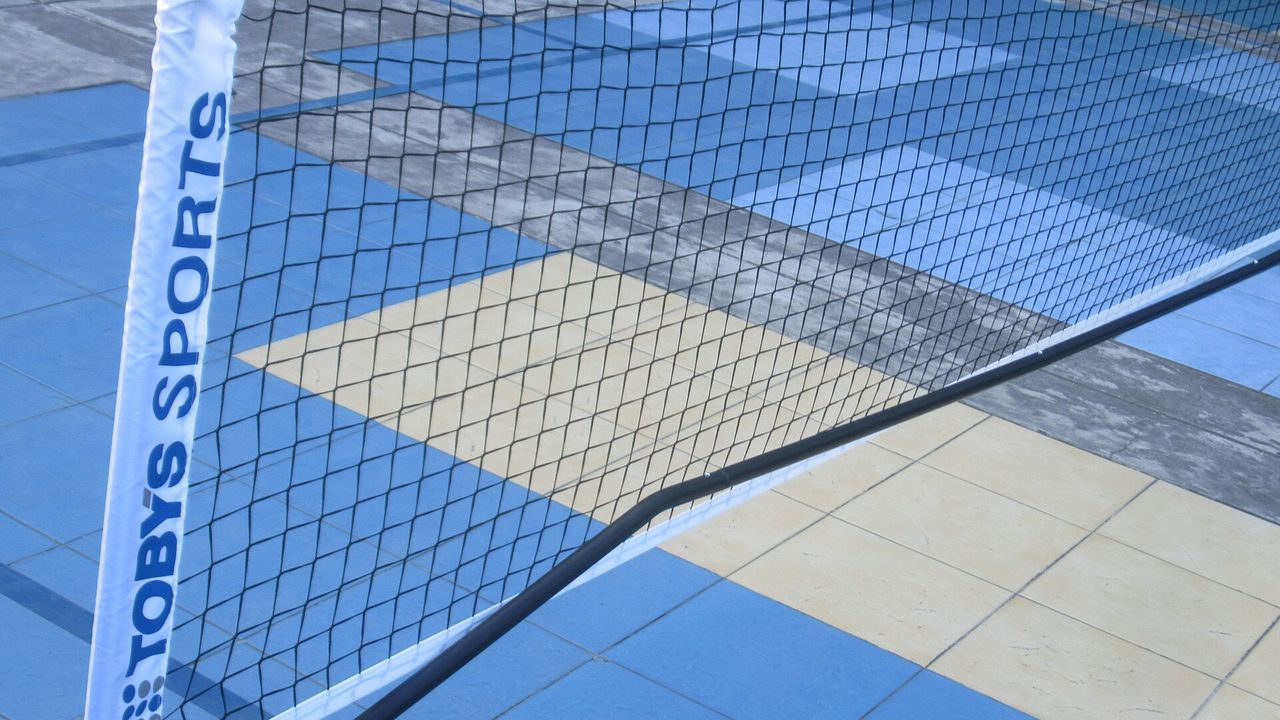
- Contacting the net (13.G). Fault if you or anything worn or carried touches the net or its support while the ball is live.
- Contacting the opponent or their court (13.H). Fault.
- Crossing the plane (13.I). Not allowed while the ball is live, except as below.
- After hitting (13.I.1). You may cross immediately after hitting the ball, for the current strike and its continuation. Crossing before hitting, or crossing without hitting the ball, is a fault.
- Ball spins back (13.I.2). If a ball bounces on your end and returns to the opponent's side without being hit, you may cross over, under or around the net to hit it, but only after the ball has first crossed back entirely.
Together with the kitchen rules in our kitchen guide, these are the main net-area faults.
The core idea
When the ball is live, each team has its own end of the court. The rulebook protects that separation in two ways: it stops players touching the net, and it stops them reaching into the opponents' space. The rules read as a list of faults, but they all follow from one question: was the ball still live when the contact happened?
What counts as "worn or carried"
Rules 13.G, 13.H and 13.I all say "a player or anything that is worn or carried by the player". That means your paddle, hat, sunglasses or clothing counts as part of you. A paddle that taps the net while the ball is live is a fault, even if your body never touched it. A hat that falls off and touches the net is treated the same way. The wording closes an obvious loophole.
The four situations
1. Touching the net or its supports (13.G)
If you, or anything you wear or carry, contacts the net or net support system while the ball is live, it is a fault against you. The usual example is a player lunging forward after a volley and brushing the net with a paddle or shoulder. Once the ball is dead, for example after a fault has been called, touching the net no longer matters.
2. Touching an opponent or their court (13.H)
You may not contact your opponent or the opponent's end of the court while the ball is live. This is why a follow-through that carries a player across the net onto the other side needs care: any contact with the other side's court is a fault, regardless of what the opponent did.
3. Crossing the plane before hitting (13.I.1.a)
If any part of a player, or anything worn or carried, crosses the plane of the net before the player hits the ball, it is a fault. The plane is the imaginary vertical surface above the net line. A paddle that passes over the net to reach a ball that has not yet crossed to your side is the usual example. This is also what rule 13.F protects: the ball must entirely cross to your end first.
4. Crossing the plane without hitting the ball (13.I.1.b)
If you cross the plane and then do not hit the ball, it is a fault against you. That includes a player who swings at the ball over the net and misses it.
The allowed follow-through (13.I.1)
A player may cross the plane of the net immediately after hitting the ball. The allowance applies only while executing the current strike and for the continuation associated with that strike. In practice, you may follow through over the net, but you may not use a follow-through as an excuse to reach over earlier. It is also not a permission to touch the net or the other side's court.
The ball that spins back (13.I.2)
One special case: the ball bounces on the receiving player's end and then returns to the opponent's side without being hit, for example because of spin. In that case the receiving player may cross over, under or around the net to hit it, but only after the ball has first crossed back entirely to the opponent's end. If the player crosses before the ball has fully crossed, it is a fault (13.I.2.a). If the ball is not contacted, 13.I.2.b applies. It is the one situation where the rulebook lets a player cross the net before hitting the ball.
Practical tips
- At the kitchen, balance first, then reach. Lunging with your paddle low and forward is the quickest way to touch the net.
- If you are unsure whether you touched the net, say so. Most players call faults on themselves honestly; see our etiquette guide.
- Remember the difference with the kitchen line. Stepping into the non-volley zone while volleying is a different fault, covered in the kitchen rule guide.
- For ball and net contact, see our net rules article.
Frequently asked questions
Can my paddle cross the net when I follow through?
Yes, but only immediately after you hit the ball, as part of that stroke (13.I.1). It must not touch the net, the net posts or the opponent's court.
Is touching the net a fault when the ball is already dead?
The rule applies while the ball is live. Contact after a fault or after the rally has ended is not covered by 13.G.
Is my hat or paddle part of me for these rules?
Yes. Rules 13.G, 13.H and 13.I cover a player or anything worn or carried by the player.
Can I reach over the net to hit a ball that bounced and came back?
Only after the ball has first crossed back entirely to the opponent's end (13.I.2). Crossing earlier is a fault.
Sources
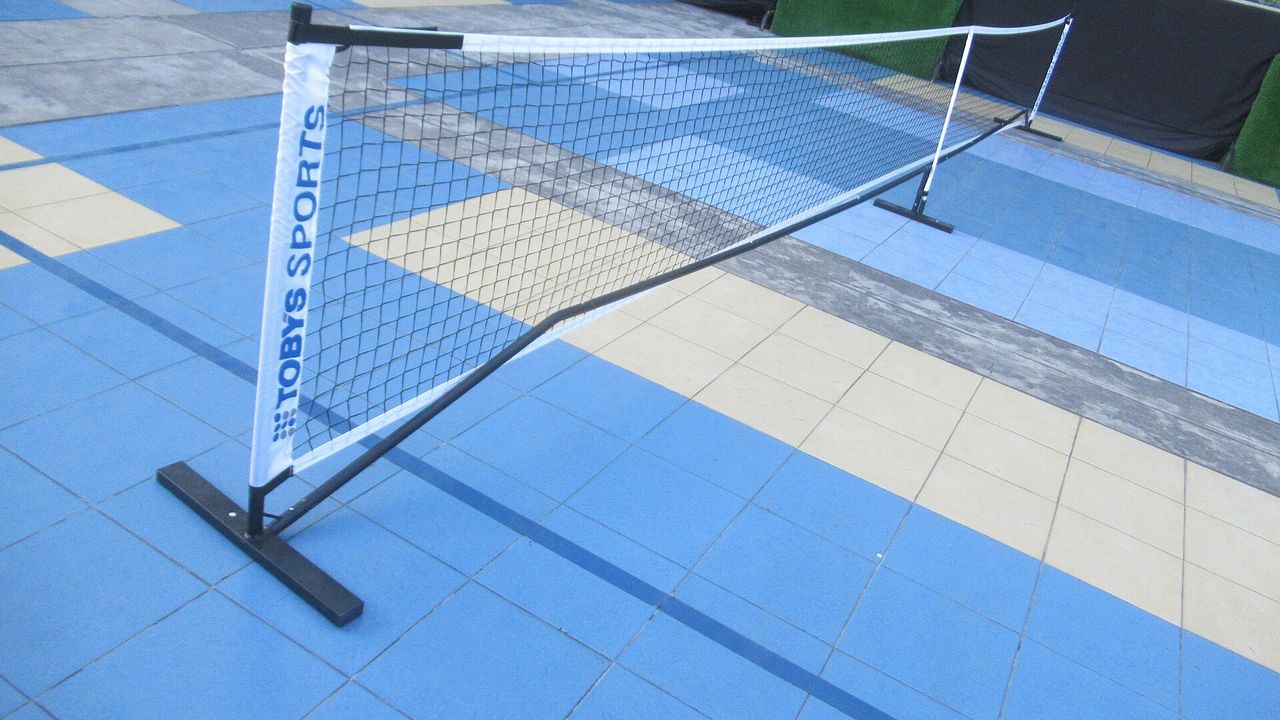
Sources checked 14 Oct 2026. Header photo: The edge of a portable pickleball net with branded tape on a court, by Wikimedia Commons contributor, CC BY-SA 4.0, via Wikimedia Commons.