
Pickleball serve rules: the volley serve and the drop serve
Short answer: There are two legal serves. On a volley serve the paddle must move in an upward arc, the paddle head must not be above the wrist, and the ball must be no higher than the waist at contact. On a drop serve you drop the ball and hit it after it bounces.
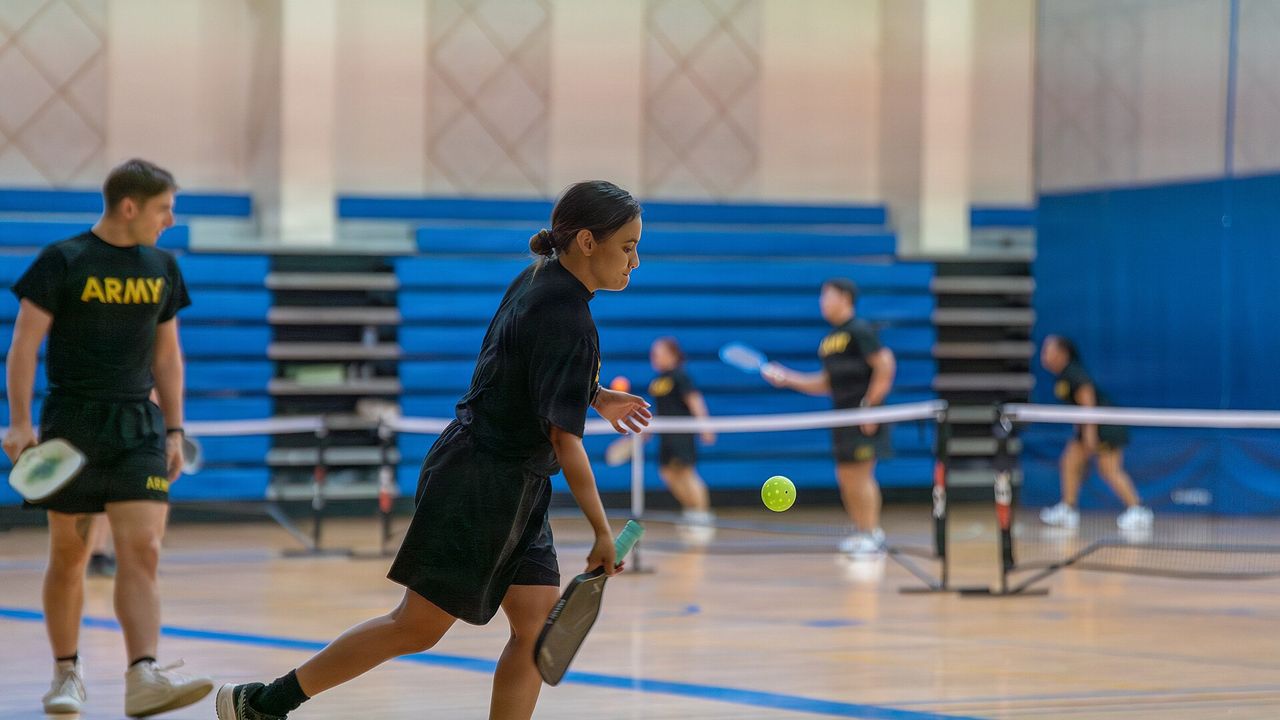
The serve starts every rally, and the 2026 USA Pickleball rulebook describes two ways to do it.
The volley serve
Rule 7.C sets three conditions at the moment the paddle hits the ball: the paddle must be moving in a clear upward arc (7.C.1), the highest point of the paddle head must clearly not be above the highest part of the server's wrist joint (7.C.2), and the ball must clearly be no higher than the server's waist (7.C.3). Breaking any of these is a fault. The serve can be hit forehand or backhand.
The 2026 change document lists an entry titled "Flat Serve No Upward Arc", which tells you the upward-arc requirement was a point of rule clarification for 2026.
The drop serve
A drop serve is made by dropping the ball and hitting it after it bounces on the playing surface (rule 7.D). The ball must be released from a natural, unaided height, and it must not be propelled in any direction or manner before the serve. Before the hit there is no restriction on how many times the ball bounces or where it bounces. A release that breaks those two conditions is a fault.
USA Pickleball has a skills article on taking advantage of the drop serve, which is useful if you want to understand why players choose it.
Where the serve must land
Under rule 7.E the server serves to the service court diagonally opposite their correct position. The ball must clear the opponent's non-volley zone, with or without touching the net, and land in the correct service court. Landing out of bounds or in the kitchen is a fault, as is hitting a permanent object, or the server or partner.
Visible release
The receiver must be able to see the ball release. If not, the receiver may call a replay, but only before returning the serve (rule 7.B.3).
Before the ball is hit: where the server stands (7.A)
Three rules govern foot position when the serve is hit. At least one foot must be in contact with the correct serving area, so a server who has both feet in the air is committing a fault (7.A.1). Neither foot may be in contact with the court itself (7.A.2), and neither foot may touch the playing surface outside the correct serving area (7.A.3). Players may call these service foot faults on an opponent (9.B.3).
Releasing the ball (7.B)
- One hand or the paddle only (7.B.1). The server releases the ball using one hand, or using only the paddle.
- No added spin (7.B.2). Some natural rotation is expected, but the server must not manipulate the ball to add spin with any part of the body or the paddle before hitting it. The server may let the ball roll off the face of the paddle by gravity. Spin may be applied on contact. If the receiver decides spin was added at release, the receiver may call a replay, but only before returning the serve (7.B.2.a).
- Visible release (7.B.3). The release must be visible to the receiver. If the receiver cannot see it, they may call a replay before returning the serve.
The volley serve (7.C)
Three conditions apply at the moment the paddle contacts the ball. The paddle must be moving in a clear upward arc (7.C.1). The highest point of the paddle head must clearly not be above the highest part of the server's wrist joint (7.C.2). The ball must clearly be no higher than the server's waist (7.C.3). A forehand or backhand motion is allowed (7.C.4). Breaking 7.C.1, 7.C.2 or 7.C.3 is a fault (7.C.5).
The drop serve (7.D)
A drop serve is made by dropping the ball and hitting it after it bounces on the playing surface. The rules are short: release the ball from a natural (unaided) height (7.D.1); do not propel it in any direction or manner before hitting it (7.D.2); and note that there is no limit on the number of bounces or on where it bounces before the serve is hit (7.D.3 and 7.D.4). A forehand or backhand motion is allowed. Only breaking 7.D.1 or 7.D.2 is a fault (7.D.6). Because the volley-serve arm-position rules do not apply to a drop serve, the server can hit the ball at any height after it bounces.
Where the serve must land (7.E)
The server serves to the service court diagonally opposite their correct position. The ball must clear the opponent's non-volley zone, with or without touching the net, and land in the correct service court. Five faults follow:
- Lands outside the correct service court (7.E.1).
- Lands in the non-volley zone (7.E.2). The line counts: a serve landing on the non-volley zone line is out (rule 8.C).
- Contacts a permanent object before landing (7.E.3).
- Contacts the server, the server's partner, or anything either of them wears or carries (7.E.4). This is a fault against the server.
- Contacts the receiver or the receiver's partner, or anything they wear or carry, before landing (7.E.5). This is a fault against the receiver.
Which serve should you use?
The rules treat both equally; the choice is a matter of comfort. The volley serve has strict arm-position rules, while the drop serve has strict release rules. Check the details against section 7 before a tournament, and read about the timing rules in calling the score and the 10-second rule. For where to stand, see singles and doubles serving positions.
Frequently asked questions
Can I bounce the ball several times before a drop serve?
Yes. The 2026 rulebook places no limit on the number of bounces or the bounce location before the server hits the ball.
What is the height limit for a volley serve?
The ball must clearly be no higher than the server's waist when the paddle contacts it, and the paddle head must clearly not be above the highest part of the wrist joint (rules 7.C.2 and 7.C.3).
Does the drop serve have any restrictions on bounces?
No. There is no restriction on how many times or where the ball bounces before it is hit, but it must be released from a natural height and not propelled (rules 7.D.1 to 7.D.4).
Is a serve that lands on the kitchen line in?
No. A served ball that lands on the non-volley zone line is out (rule 8.C).
Can I add spin when I release the ball?
No, except that the ball may roll off the paddle face by gravity. Spin may be applied when the paddle hits the ball (rule 7.B.2).
Sources
Sources checked 14 Oct 2026. Header photo: Two players at the net during an indoor pickleball match, by U.S. Army photo by Cpl. Eun Jun Choi, Public domain, via Wikimedia Commons.
.jpg)