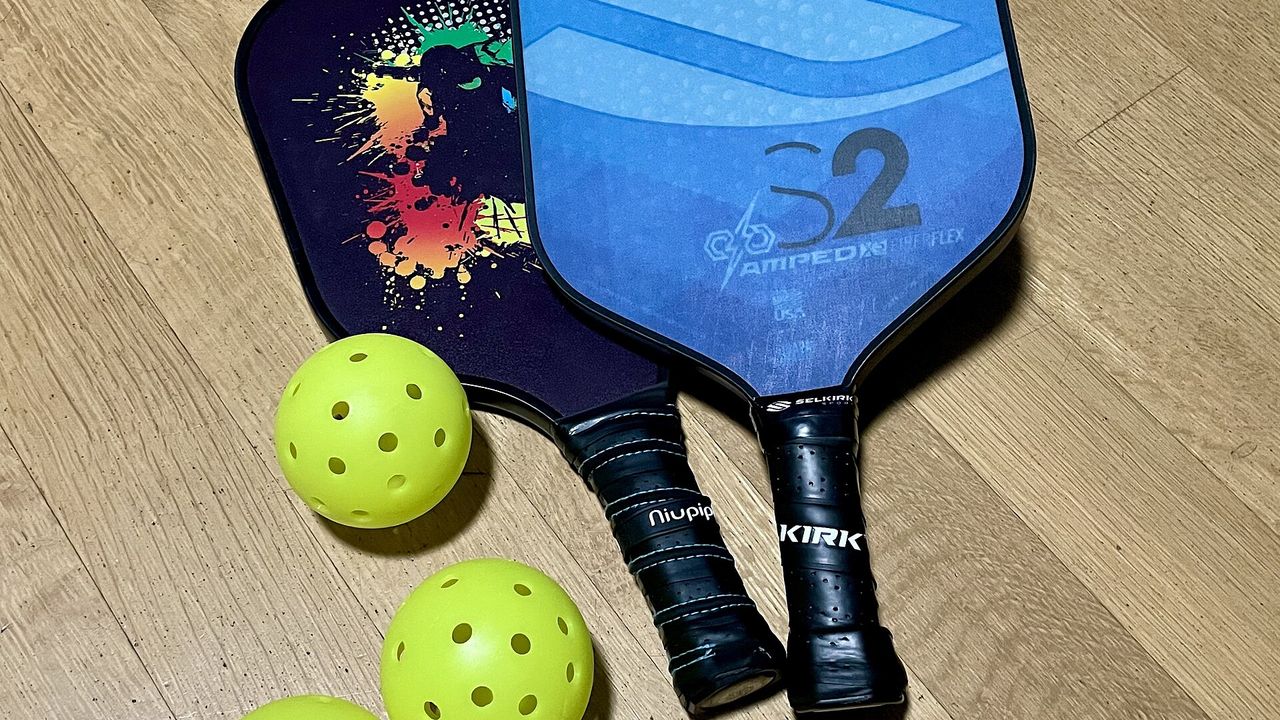
Swing weight vs static weight: what to know before buying a paddle
Short answer: Static weight is the paddle's weight on a scale. Swing weight is how heavy it feels when you swing it, which depends on weight distribution, length, balance and shape. Putting weight toward the head raises it.

This explainer draws on Selkirk, a paddle manufacturer, so it is a maker's view, not independent testing.
Three terms
- Static weight: weight at rest, measured on a scale.
- Swing weight: how heavy the paddle feels when swung. It is measured on specialised equipment and given in kg*cm^2 per Selkirk.
- Twist weight: resistance to twisting at contact, affecting stability.
Trade-offs
Selkirk says a higher swing weight gives more power and better stability, but an excessively heavy swing weight can hurt maneuverability and reaction time. The farther weight sits from the butt cap, the higher the swing weight, like swinging a hammer by the handle rather than the head.
There is no rulebook weight limit; see our paddle rules guide. Weighted tape is an allowed alteration.
Sources
Sources checked 14 Oct 2026. Header photo: The face of a wooden-colored pickleball paddle with a dotted pattern, by Wikimedia Commons contributor, CC BY-SA 4.0, via Wikimedia Commons.