How to choose pickleball shoes: lateral support, outsole and fit
Short answer: Post & Paddle ranks five factors for court shoes: lateral support, outsole type, fit, cushioning and weight. It says running shoes are unsafe on court because they lack lateral support.
Source note: Post & Paddle is a reader-funded review site that says it may earn commissions on links. This article takes only its general advice, not product picks.
The five factors
- Lateral support. A wider, flatter sole, firmer midsole foam and a reinforced upper stop the ankle rolling over the shoe.
- Outsole. Outdoor: hard, dense rubber, often herringbone. Indoor: non-marking gum rubber. If you play both, an all-court shoe wears slightly faster outdoors.
- Fit. Snugger than running shoes: about a thumb's width at the toe, a locked-down midfoot and no side-to-side slide. Try them late in the day with your playing socks. Sizing up lengthens a shoe without widening it.
- Cushioning. Firm and low-profile, with cushioning concentrated in the heel and forefoot.
- Weight. Mostly preference.
Toe drag and replacement
Dragging the trailing toe when lunging to dink can wear a hole in the upper, so a rubber toe guard helps. Replace shoes when tread is smooth in the push-off zones or the midsole stays creased.
The AMA doctor quoted in our injury article gives the same advice: firm sides and grip, not soft-soled running shoes.
Sources
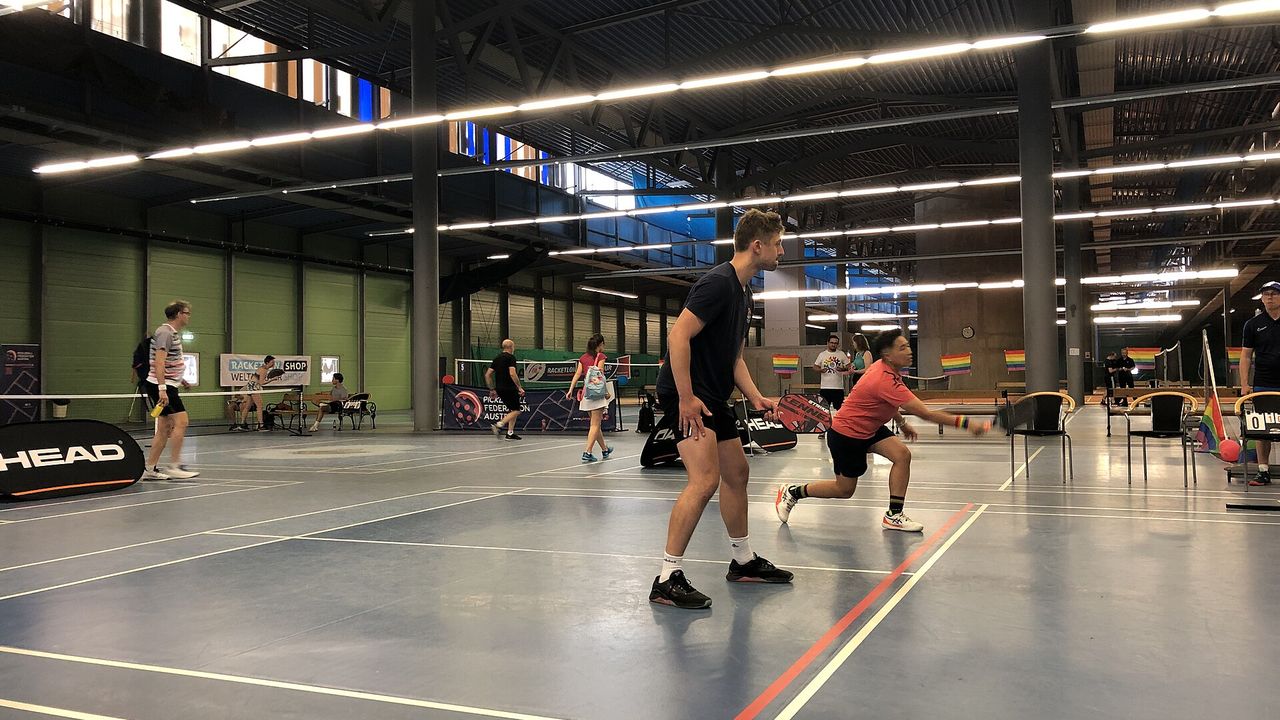
Sources checked 14 Oct 2026. Header photo: Players moving on an indoor court at a pickleball tournament, by SET04SARAH2024, CC BY-SA 4.0, via Wikimedia Commons.