Indoor vs outdoor pickleballs: it is the court surface that matters
Short answer: Onix, a ball maker, says the real difference between indoor and outdoor pickleballs is the court texture: indoor balls are built for smooth surfaces with larger holes and a softer feel, outdoor balls for rough surfaces and wind, with smaller holes and thicker walls.
This is a manufacturer's explanation, so read it as one view. The rulebook says the ball with larger holes is customarily used for indoor play and the smaller-holed ball for outdoor play; see our rulebook summary.
Indoor balls
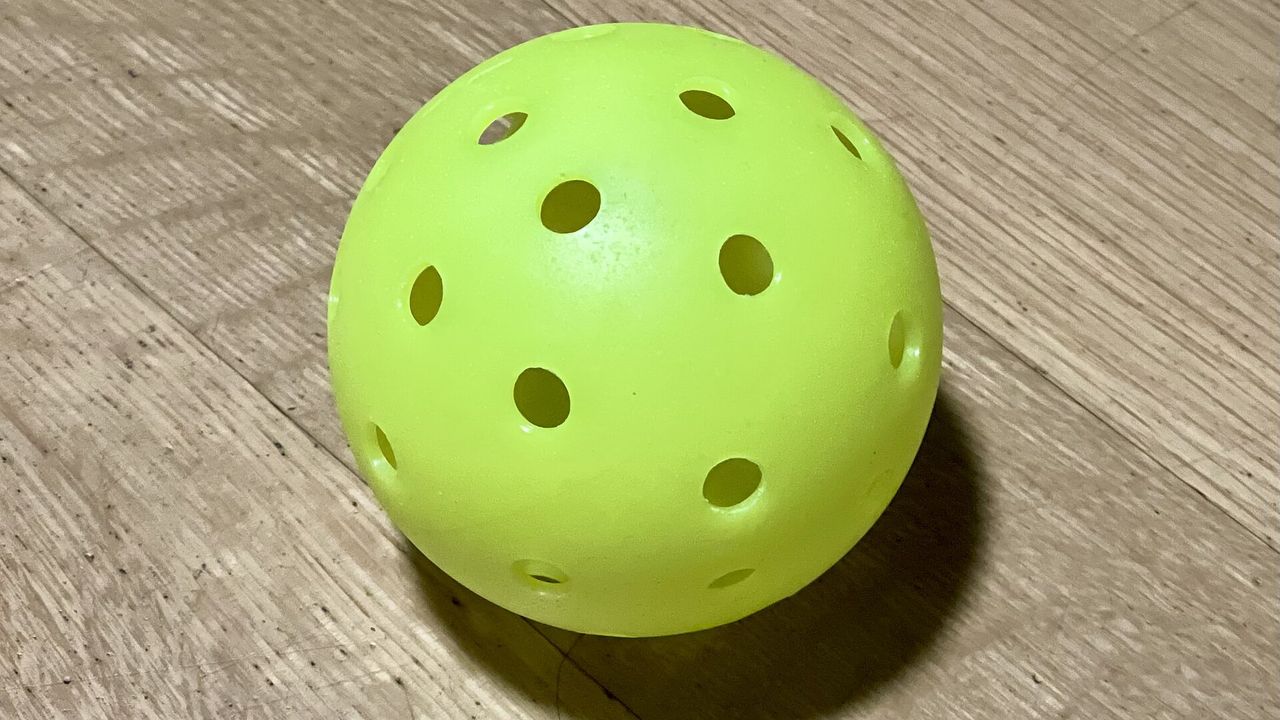
Onix says indoor balls are engineered for smooth surfaces, typically with larger holes and a slightly softer feel that slows the ball, reduces excessive bounce and limits sliding after landing. They reward precision and placement over power.
Outdoor balls
Outdoor balls are typically slightly heavier, with smaller holes and thicker walls, to keep flight consistent on abrasive surfaces and in wind. On smooth indoor floors they can feel overly lively.
Mixing them up
Outdoor balls can sometimes be used on rougher indoor courts, such as tennis-style surfaces. Onix says it generally does not recommend using indoor balls outside, since they may wear faster or behave inconsistently.
Sources
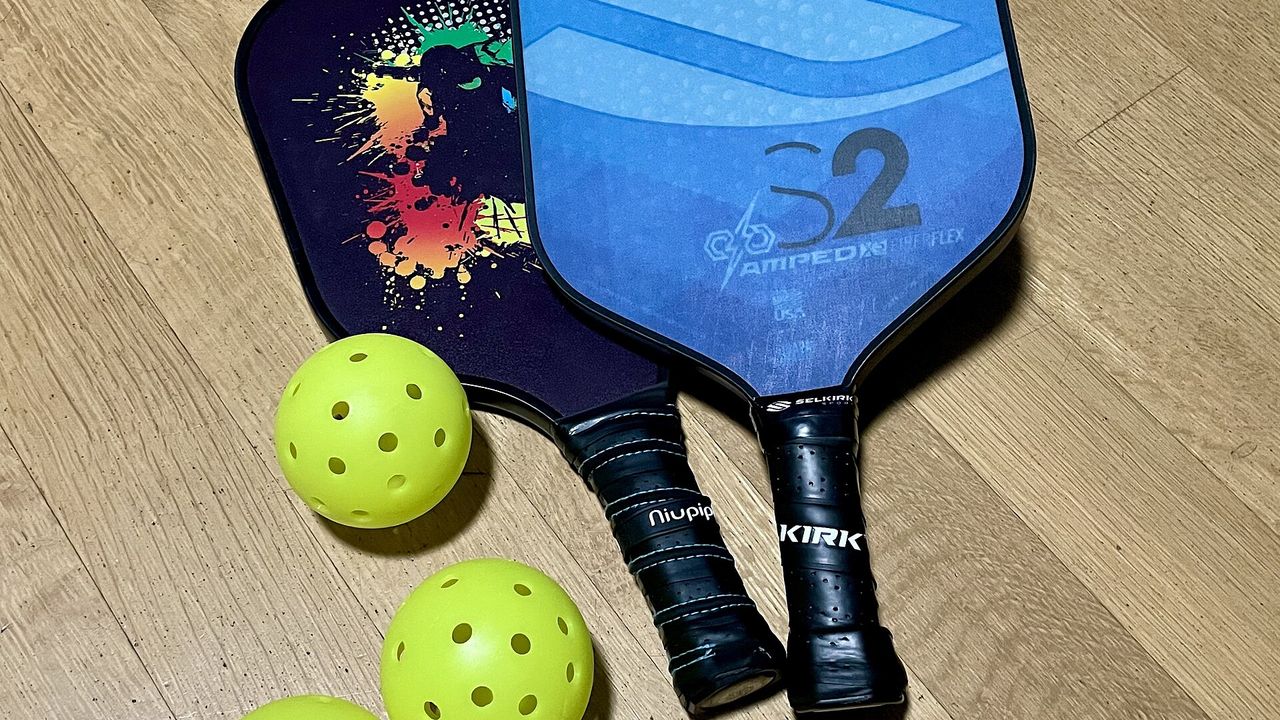
Sources checked 14 Oct 2026. Header photo: Pickleballs and two paddles on a wooden surface, by E is for Ian, CC BY-SA 4.0, via Wikimedia Commons.