Pickleball paddle cores: polymer, Nomex, aluminum and foam
Short answer: A paddle core is the inner layer between the two face panels. Pickleballus.org describes four types: polymer honeycomb (in the vast majority of modern paddles), Nomex (the original high-performance material, still used by power players), aluminum honeycomb (lightweight, less common) and foam (newest).
This guide summarises a May 2026 explainer from Pickleballus.org, a paddle-review site. It is an independent publisher, but it is not a lab test, so treat its characterisations as general guidance.
Why it matters
The explainer says the core determines how much energy transfers to the ball, how much control you retain on soft shots, how loud the paddle sounds and how long the core holds up under weekly play.
The four types
- Polymer honeycomb: the most common in modern paddles.
- Nomex: the original high-performance material, favoured by aggressive hitters.
- Aluminum honeycomb: lightweight and less common today.
- Foam: the newest direction, gaining traction in 2025-2026. Foam paddles still contain polymer, in a different form.
Terms that overlap
"Polymer" and "polypropylene" mean the same thing. "Honeycomb" describes the structure, not the material.
Thickness
Thickness is usually 13, 14 or 16 mm. Before you buy, check that the paddle is on the approved list; see our paddle rules.
Sources
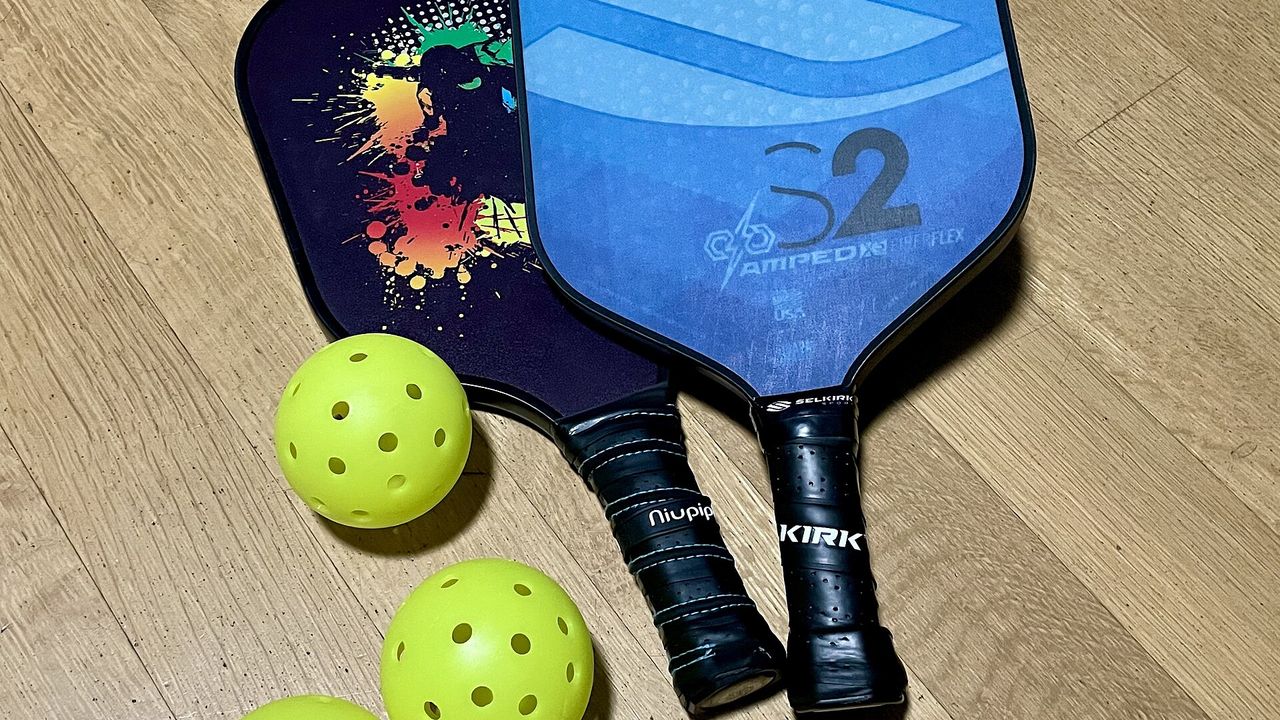
Sources checked 14 Oct 2026. Header photo: A black pickleball paddle with a blue and a yellow pickleball, by OvertAnalyzer, CC BY-SA 4.0, via Wikimedia Commons.