
Faults, hinders and replays: how a rally ends
Short answer: A called or committed fault makes the ball dead and loses the rally for that player. A called hinder also makes the ball dead, and the rally is replayed. Players are expected to call faults on themselves or their partner as soon as they happen.
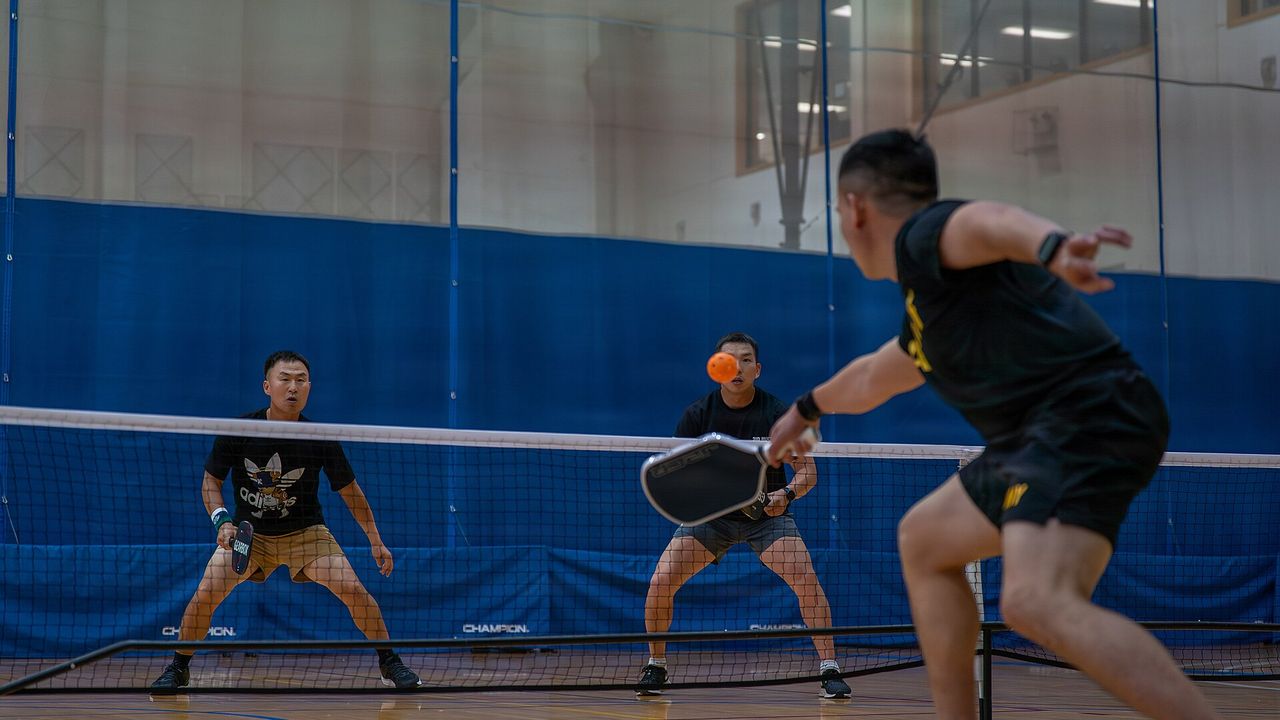
Section 9 of the 2026 rulebook sets out how rallies stop.
Faults
Stopping a rally yourself is a fault unless you are calling a hinder, identifying a position or server error, or asking for a score correction before the return of serve. A fault only occurs while the ball is live, except for kitchen violations involving momentum.
Who can call what
Players may call kitchen faults and service foot faults on an opponent. They must call them as soon as committed or detected and before the next serve is hit. If teams disagree, the rally is replayed; if partners disagree, it goes to the opponents' benefit. For any other fault, you may mention it to your opponent after the rally but have no authority to enforce it. The final decision belongs to the player who allegedly committed it.
Hinders
Any player may call a hinder, and a called hinder results in a dead ball and a replay. USA Pickleball's sportsmanship guide asks players to claim a replay only if the hinder affects their team's ability to play the ball.
See also: kitchen faults and serve faults.
How a rally ends
Section 9 of the rulebook deals with how a rally stops: dead balls, faults, hinders, and the limits on who can call what. Any action that stops play results in a dead ball (9.A). A fault ends the rally, and a hinder leads to a replay.
Stopping a rally (9.A.1)
A player who stops a rally before the ball otherwise becomes dead commits a fault, with three exceptions: calling a hinder (9.C), correctly identifying a player position or server error (5.C.1.a), and asking for correction of an incorrect score before the return of serve (6.F.1). So you cannot simply halt play because you want a point replayed.
Faults (9.B)
- A called fault, or a fault committed by a player, results in a dead ball (9.B).
- A fault only occurs while the ball is live, except for non-volley zone violations involving momentum (9.B.1, referring to 11.A.2).
- Players are expected to call faults on themselves or their partner as soon as they are committed or detected (9.B.2).
What you may call on an opponent (9.B.3)
Players may call only non-volley zone faults and service foot faults on an opponent. Such a fault should be called as soon as it is committed or detected, and before the serve is hit to begin the next rally (9.B.3.a). If the teams disagree about a fault call, the rally is replayed (9.B.3.b). If partners disagree, the call goes in favour of their opponents (9.B.3.c).
Other faults (9.B.4)
If you believe an opponent committed any other type of fault, you may mention the specific fault to them when the rally is complete, but you have no authority to enforce it. The final decision belongs to the player who allegedly committed the fault. This is a core feature of self-officiated pickleball: most faults rely on honest self-calling.
Hinders (9.C)
A called hinder results in a dead ball. Any player may call a hinder (9.C.1), and the rally must be replayed (9.C.2). The sections we read do not define what counts as a hinder; check the full rulebook if you need the exact definition. Hinders are also the one situation where a not-ready signal is valid after the score call has started (6.A.2).
Fault, replay and result stands: a quick guide
| Situation | Outcome |
|---|---|
| Player calls a fault on themselves | Dead ball, fault against that player |
| Kitchen or service foot fault called on opponent, teams disagree | Replay (9.B.3.b) |
| Partners disagree on a fault call | Decided for the opponents (9.B.3.c) |
| Hinder called | Replay (9.C.2) |
| Other fault noticed after the rally | May mention it; the player decides (9.B.4) |
For specific faults, see our guides to the kitchen, the net and serving, and rally situations.
Frequently asked questions
Can I call any fault on my opponent?
No. Players may only call non-volley zone faults and service foot faults on an opponent (rule 9.B.3). For other faults you may mention it after the rally but cannot enforce it (rule 9.B.4).
What happens when a hinder is called?
The rally is a dead ball and must be replayed (rules 9.C and 9.C.2).
Is stopping a rally a fault?
Yes, unless you stop it to call a hinder, to identify a player position or server error, or to ask for a score correction before the return of serve (rule 9.A.1).
What if teams disagree about a kitchen or service foot fault?
The rally is replayed (rule 9.B.3.b).
Sources
Sources checked 14 Oct 2026. Header photo: Two players ready at the net during an indoor pickleball game, by U.S. Army photo by Cpl. Eun Jun Choi, Public domain, via Wikimedia Commons.
.jpg)