How to Play Pickleball for the First Time: A Complete Beginner's Guide
The essentials: Everything between never-held-a-paddle and your first real game: the five rules that matter, three-number scoring, first-game strategy and the beginner mistakes worth skipping.
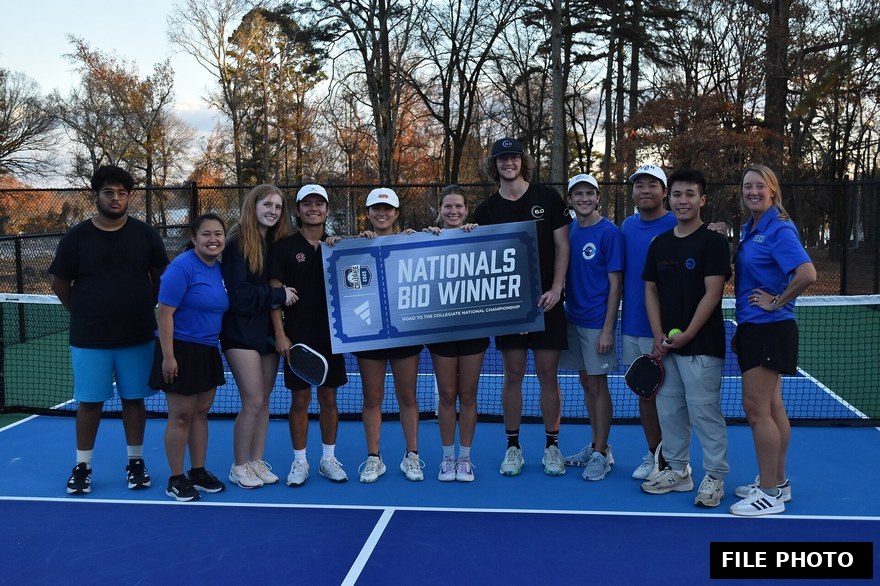
So you have agreed to try pickleball. Good choice: it is the rare sport you can genuinely play, not just survive, on day one. This guide covers everything between "never held a paddle" and your first real game, in the order you will need it.
What you are walking into
Pickleball is played on a badminton-sized court with a net two inches lower than a tennis net, a perforated plastic ball, and solid paddles bigger than a ping-pong paddle but smaller than a tennis racquet. Games are usually doubles, and the atmosphere at open play is famously welcoming: people will lend you a paddle, teach you the scoring and cheer your first decent rally. USA Pickleball's rules summary confirms what veterans say: the same court and rules apply whether you play singles or doubles, and doubles is where beginners should start because it demands less running and more teamwork.
The five rules that matter on day one
You do not need the whole rulebook. You need these. First, the serve goes underhand: your arm moves in an upward arc, contact happens below your waist, and the paddle head is no higher than your wrist at contact; if that feels awkward, the drop serve, bounced then hit, skips those restrictions entirely. Second, the serve must land in the diagonal service box. Third, the two-bounce rule: the receiving side lets the serve bounce, and the serving side lets the return bounce; after those two bounces, anything goes. Fourth, the kitchen: the seven-foot non-volley zone on each side of the net, where you may not hit the ball out of the air. You can step in to play a bounced ball, but no volleys, and watch your momentum after a volley near the line. Fifth, scoring: only the serving team scores, games go to 11 and you must win by 2.
Scoring without tears
Doubles scores are called as three numbers: your team's score, their score, and whether you are server 1 or server 2. Both partners serve before the serve changes sides, except at the very start of the game, which begins 0-0-2 with just one server. Call the score out loud before every serve; it is part of the ritual, and it is what keeps four beginners from a scoring argument. When in doubt, use the position check: a team's first server stands on the right when their score is even, left when odd.
Your first-game strategy in four lines
Serve deep and in. Return deep and in. Get to the kitchen line as soon as you safely can, because that is where points are won. And when in doubt, hit the ball soft and low over the middle of the net rather than hard at the corners. Beginners lose points; they rarely win them. Be the beginner who loses fewer.
What to expect physically and socially
Expect to move more than you planned but less than you fear: doubles pickleball is brisk walking, short lunges and quick hands, not sprinting. Expect your timing to be terrible for twenty minutes and surprisingly decent by the end of the first hour; the ball is slower than a tennis ball and the paddle is short, which forgives a lot. Expect strangers to correct your foot position near the kitchen, and take it in the spirit offered, because the foot-fault habit is the one thing worth fixing immediately. And expect to be asked back. Finding games afterward is its own skill; our guide to finding pickleball games at the in-between level covers what comes next once you are hooked.
The mistakes every beginner makes (so skip them)
The classics: smashing every ball (soft wins more), backing up from the kitchen line (hold your ground), standing flat-footed (stay on your toes with a little split step before your opponent hits), and ignoring the third shot, the moment after the return when the serving team should drop the ball softly into the kitchen instead of blasting it. You will also forget the score. Everyone does; that is why the previous section exists.
The Europe angle
Starting now in Europe puts you in the sport's friendliest era: everyone around you is new too, sessions are full of fellow first-timers, and nobody expects polish. The constraint is finding a court at all. Pickle Haus (pickle.haus) is setting out to build the first and biggest network of dedicated pickleball centers in Poland, with a vision to lead across Europe, the kind of venues where a first session comes with hosted beginner hours. The brand describes this as its ambition; the centers are not open yet.
The bottom line
Underhand diagonal serve, two bounces, stay out of the kitchen on volleys, score to 11 win by 2, and hit soft when in doubt. That is genuinely enough for your first game, and your second will be better.
Sources
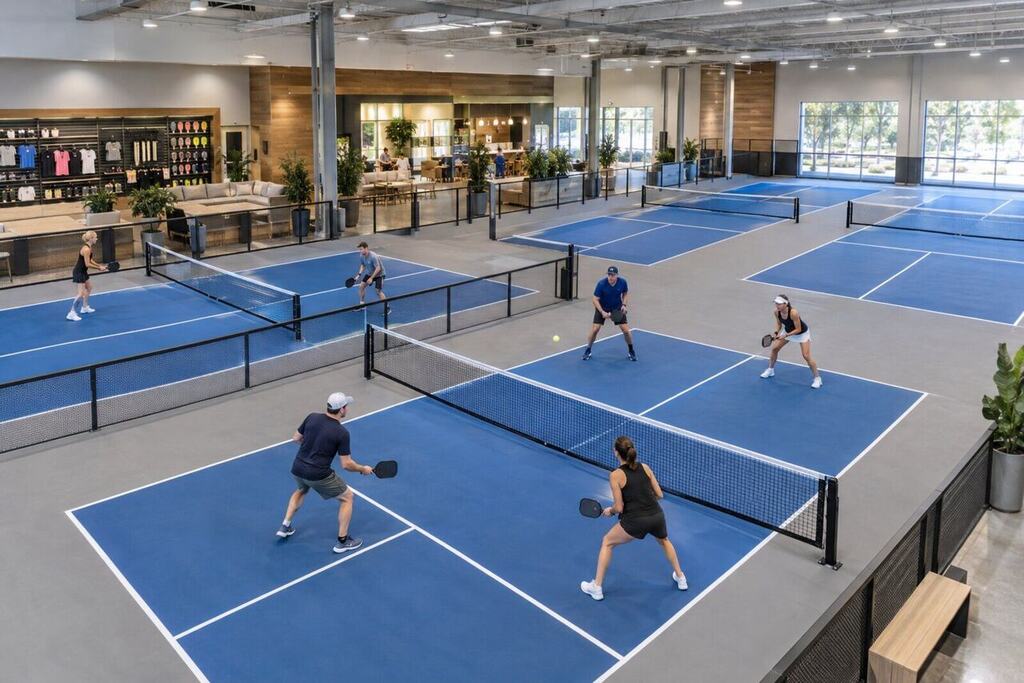
Sources checked 20 Oct 2026. Header image is illustrative, not a photo of the events described. Header image is an illustrative rendering, not a photograph of a specific person, place or event.
Related stories
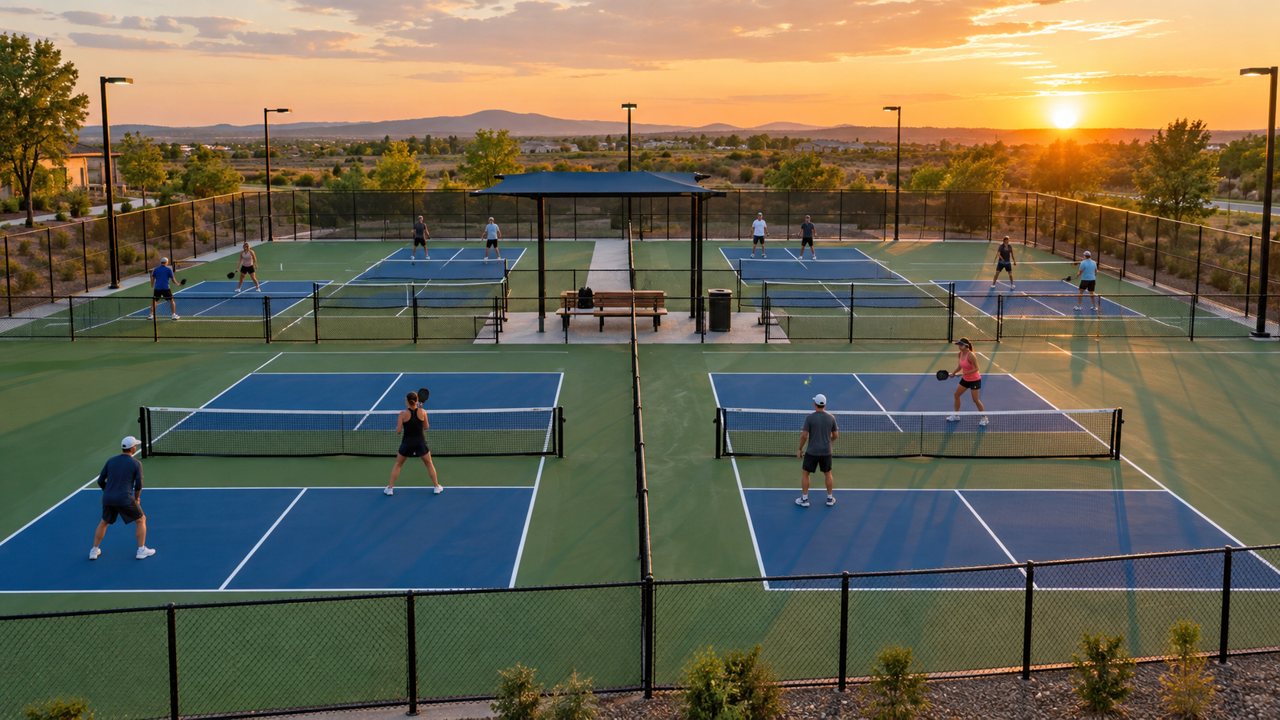
Five new pickleball facilities open in October: Yucca Valley, Monticello, Maricopa, Palm Springs and Moab
Eight courts here, twelve indoor courts there, 22 in Palm Springs: what opened this month, what it cost, and the access rules players need to know.
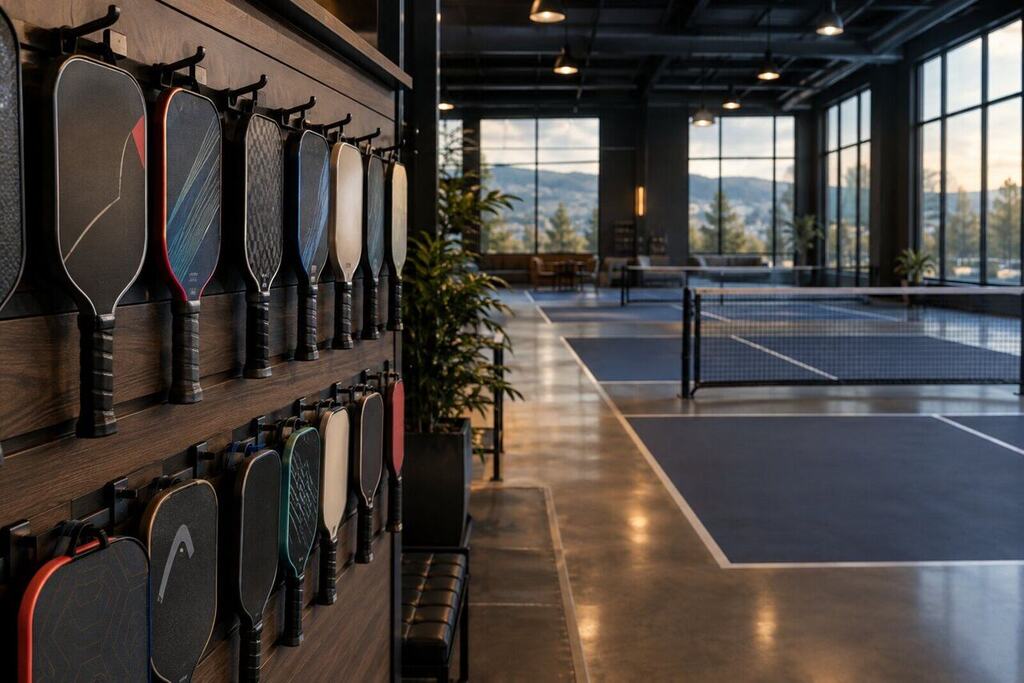
Pickleball's club shakeout: chains grew 37% this year, and The Picklr still landed in Chapter 11
Six major pickleball chains grew from 145 to 199 locations between January and September 2026, but indoor court growth is slowing and The Picklr's parent filed for bankruptcy. The buildout continues through a shakeout.
Life Time is building a dedicated pickleball destination in Palm Beach Gardens
Life Time has opened a new 20,500-square-foot pickleball destination with six courts across from its Palm Beach Gardens club, part of an expansion that also adds a 24-reformer studio and 5,600 square feet of exercise floor.