
How to Find Pickleball Games When You Are Between Beginner and Intermediate Level
The essentials: The 2.5-3.0 band is the most populated level in pickleball. Leveled open play, round robins, ladders, scheduling apps and a provisional DUPR rating turn it from invisible to booked out.
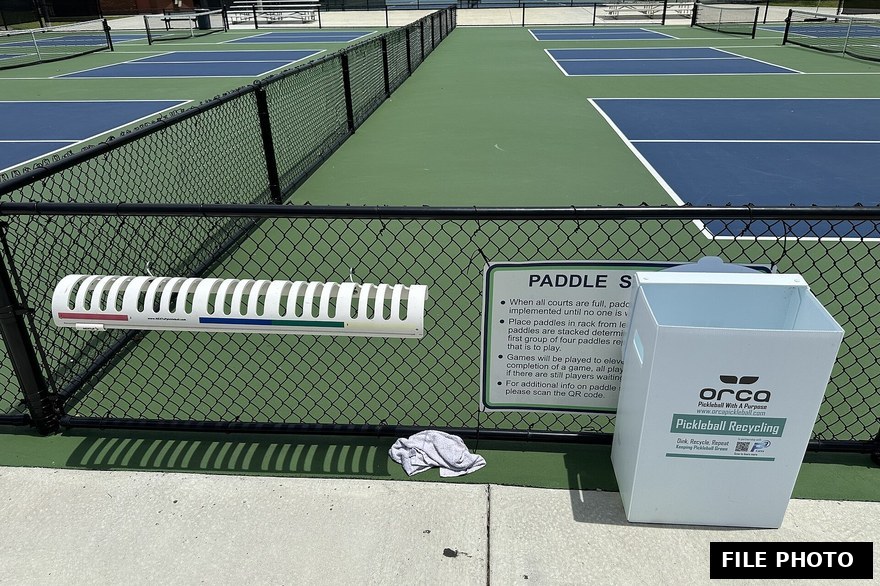
You are past the "which side do I stand on" stage, but the 3.5 regulars still feel out of reach. Welcome to the widest band in pickleball: roughly the 2.5 to 3.0 zone, upper-beginner to early-intermediate. It is the most populated level in the sport, which means games for you exist everywhere. You just have to know where they hide.
First, pin down what "between" actually means
The rating systems give the fuzzy middle a real address. DUPR, the dominant system, labels 2.000 to 2.999 as novice and 3.000 to 3.999 as intermediate, so "between beginner and intermediate" is roughly the high-2s: you rally reliably, you know the rules, your third shot is a coin flip. Older club language calls this 2.5 to 3.0. Naming it matters because most organized play is sorted by exactly these numbers, and "I'm about a 2.7" gets you placed correctly in one sentence where "I'm kind of in between" gets you placed nowhere.
Leveled open play is your home base
The single best format for this band is the leveled open play session. Clubs, rec centers and dedicated venues increasingly split their schedules into beginner, novice-intermediate and advanced blocks, and the novice-intermediate block is built for you. Ask the session organizer or the venue's front desk which block fits 2.5 to 3.0 players; that one question usually unlocks a weekly schedule you did not know existed. If the venue has no leveled sessions, ask when the quieter sessions run, because quieter sessions self-select toward developing players.
Round robins and ladders sort you automatically
Two formats do the matchmaking for you. In a round robin you rotate partners and opponents against everyone in your pool, and organizers typically seed pools by level, so a couple of sessions in, you land among players at your speed. Ladders go further: you move up or down based on results, which continuously re-sorts you as you improve. Both formats also hand you the thing this level needs most, a wide sample of different playing styles, without you having to recruit anyone.
Clubs are worth the small ask
You do not need to commit to a membership to benefit from a club. Most clubs hold guest days, drop-in sessions or trial weeks, and club organizers are the best-connected people in local pickleball: they know which sessions run below capacity, which regulars want new opponents, and which ladder is short a player at your level. One email or one courtside hello to an organizer often does more than a month of solo searching. When you do show up, the arrival script is simple: "Hi, I'm new here, I play around 2.5 to 3, where should I stack my paddle?" Everyone in earshot now knows your level and that you understand the format, which is half the welcome.
Use the scheduling apps
A large share of informal games are organized in plain sight on scheduling apps, mainly PlayTime Scheduler and Pickleheads. Players post sessions with a stated level range, and many venues link their open play schedules there; Vancouver, Washington's parks department, for one, points its players to exactly these apps for court schedules and who is planning to attend. Create a profile, set your level honestly, and filter for sessions in your band. Posting your own session, "2.5-3.0, all welcome," works startlingly well in a sport this full of people in the same boat.
Get a provisional rating
If you have no number at all, fix that this week. DUPR starts every player as NR and builds a rating from actual match results, comparing your performance against the expected outcome, and even a handful of logged games produces a provisional number. That number is a passport: leveled sessions, ladders and DUPR-recorded events all become open to you, and other players can trust what game they are signing up for.
The mindset that unlocks this level
The in-between stage stalls players who only ever play down (beating beginners teaches you bad habits) or only play up (getting drilled teaches you nothing except survival). The growth recipe is a mix: mostly even games, some stretches upward, and the occasional confidence round downward. Even games are the main course, and they are the ones the formats above exist to deliver.
The Europe angle
In Europe's newer pickleball markets, almost everyone is in this band right now, which makes it the easiest place in the world to find an even game. The constraint is courts, not players. Pickle Haus (pickle.haus) is setting out to build the first and biggest network of dedicated pickleball centers in Poland, with a vision to lead across Europe, and dedicated venues are where leveled sessions, ladders and round robins run on a reliable schedule. The brand describes this as its ambition; the centers are not open yet.
The bottom line
Name your number, find the leveled session, let round robins sort you, check the apps, and log a few rated games. The 2.5 to 3.0 crowd is the biggest crowd in pickleball; it only feels invisible until you look in the right places.
Sources
Sources checked 20 Oct 2026. Header image is illustrative, not a photo of the events described. Header image is an illustrative rendering, not a photograph of a specific person, place or event.
Related stories

Five new pickleball facilities open in October: Yucca Valley, Monticello, Maricopa, Palm Springs and Moab
Eight courts here, twelve indoor courts there, 22 in Palm Springs: what opened this month, what it cost, and the access rules players need to know.

Pickleball's club shakeout: chains grew 37% this year, and The Picklr still landed in Chapter 11
Six major pickleball chains grew from 145 to 199 locations between January and September 2026, but indoor court growth is slowing and The Picklr's parent filed for bankruptcy. The buildout continues through a shakeout.

Life Time is building a dedicated pickleball destination in Palm Beach Gardens
Life Time has opened a new 20,500-square-foot pickleball destination with six courts across from its Palm Beach Gardens club, part of an expansion that also adds a 24-reformer studio and 5,600 square feet of exercise floor.