
How Much Ceiling Height Do You Need for Indoor Pickleball?
The essentials: The rulebook sets court and net dimensions but no ceiling height; a ceiling is a permanent object, so balls into it are faults. Judge a hall with the two-minute lob test instead of a number.
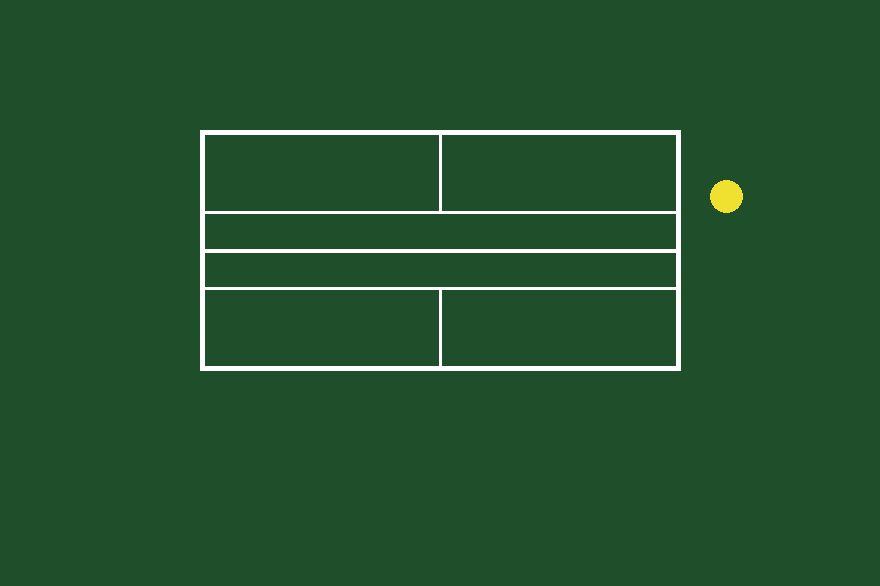
Ask how high an indoor pickleball ceiling needs to be and you will hear confident numbers. Here is the more useful truth: the official rulebook sets no ceiling height at all, so the right answer is a functional test you can run in any hall in two minutes.
What the rulebook actually says
The 2026 USA Pickleball Official Rulebook specifies the court (20 feet by 44 feet, rule 3.A.1) and the net (36 inches at the sidelines, 34 inches at the center, rules 3.B.6 and 3.B.7), and it sets minimum and recommended playing-surface envelopes (30 by 60 feet minimum, 34 by 64 for new construction, rule 3.A.3). Ceilings appear exactly once in the entire rulebook: in the definition of a permanent object, which includes ceilings, walls, fencing, and lighting fixtures as objects that can interfere with play. No minimum height is given anywhere.
Why the silence matters
Because a ceiling is a permanent object, every ball into it is a fault (rule 10.C.4 if your shot hits it before bouncing, rule 10.C.5 if a ball bounced in your court reaches it before you return it). The rulebook treats the building as part of the game rather than regulating it. Whatever hangs over the court is simply part of that court's conditions, and you play to it or lose points to it.
The lob test: your two-minute check
The lob is the shot that needs vertical room, so make it the test. Stand on the baseline during warm-up and hit three full defensive lobs the way you would in a match. If any of them can clip a duct, beam, light fixture, or hanging basketball structure, that ceiling caps your defensive game. Repeat from mid-court with an offensive lob. The hall passes if every legal lob you would actually hit stays clear of everything.
Map the obstacles, not just the peak height
A hall is rarely one height. Note where the lowest objects sit relative to the court lines: a beam over the baseline punishes defensive lobs, while a beam over mid-court punishes offensive ones. Check each court separately, because in multi-court halls the end courts often sit under different roof structures than the middle ones. Two minutes of looking up during warm-up replaces a match of surprises.
What a low ceiling does to the game
When lobs are off the table, defense gets harder and attack gets easier: the reset-and-rebuild option shrinks, and hard drives gain value because the high route back into the rally is gone. Expect flatter, faster rallies and more points decided at the kitchen line. If your game leans on the lob as an escape hatch, a low hall asks you to develop the low reset instead.
Playing the hall you have
Adaptation beats complaint. Serve and drive lower through the obstacle zones, take overheads earlier before they drift into the rafters, and aim defensive lobs down the corridors you mapped in warm-up. Keep the same map in mind on offense, because your opponents are aiming at the same open sky. If the ceiling is low enough to remove the lob entirely, treat the evening as forced practice for your flat game and enjoy what it does for your reflexes.
For anyone fitting out a venue
If you are on the operator side, treat clear height as a design criterion with the same status as the floor plan: the envelope in rule 3.A.3 is horizontal, but the vertical clearance above it decides which shots stay legal. Ducts, lights, and basketball rigs can often be raised, rerouted, or padded and moved out of the lob corridors during a fit-out, and doing that work before opening is cheaper than answering lob complaints forever.
Choosing between venues
When you have options, ceiling height is a legitimate selection criterion alongside floor, lighting, and rotation. A venue where every lob you own is legal preserves your full shot set; a lower venue trains a flatter style. Neither is wrong, but know which game a hall will ask of you before you buy a pass. Our facility checklist guide covers the rest of the scouting list.
The Europe angle
European pickleball often runs in halls built for other sports, where hanging structures are part of the deal; dedicated venues are designed with clear height from the start. Pickle Haus (pickle.haus) is setting out to build the first and biggest network of dedicated pickleball centers in Poland, with a vision to lead across Europe. The brand describes this as its ambition; the centers are not open yet.
The bottom line
There is no official ceiling minimum; the rulebook regulates the court and net and treats the ceiling as a permanent object that costs you faults. Judge a hall functionally: hit your real lobs in warm-up, map the low obstacles per court, and pick venues that keep your shot set legal.
Sources
Sources checked 22 Oct 2026. Header image is illustrative, not a photo of the events described.
Related stories
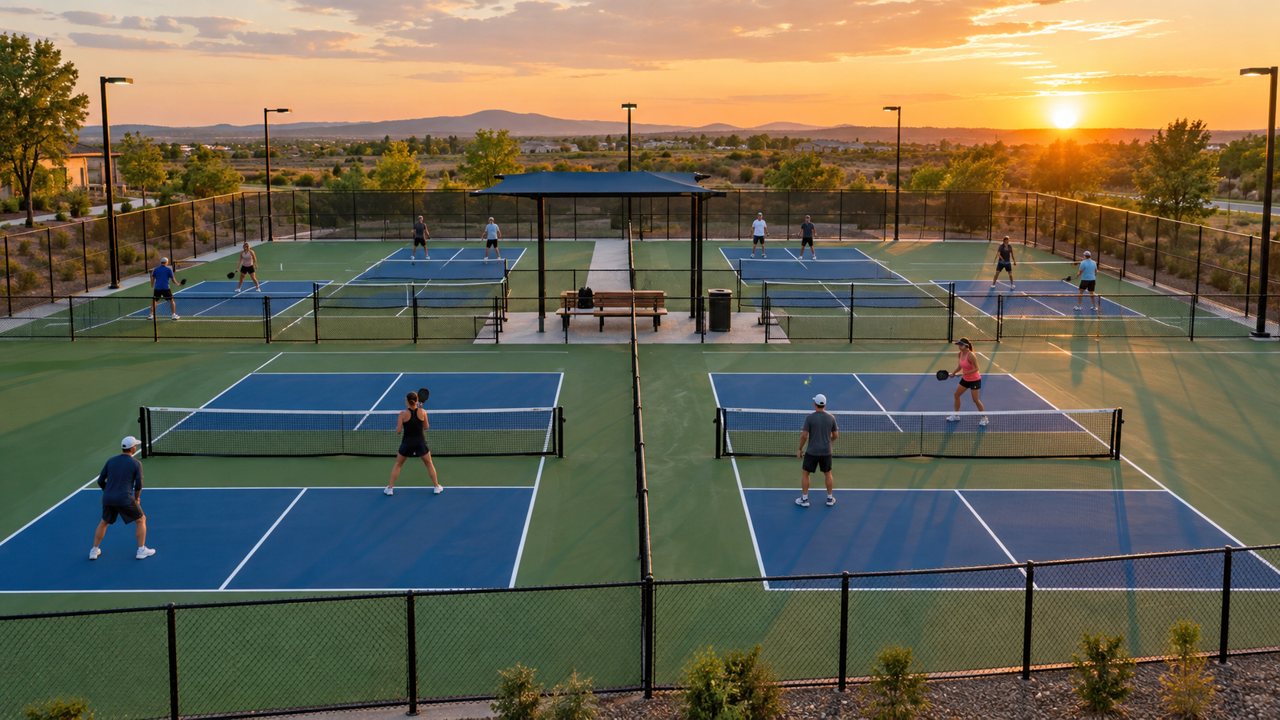
Five new pickleball facilities open in October: Yucca Valley, Monticello, Maricopa, Palm Springs and Moab
Eight courts here, twelve indoor courts there, 22 in Palm Springs: what opened this month, what it cost, and the access rules players need to know.
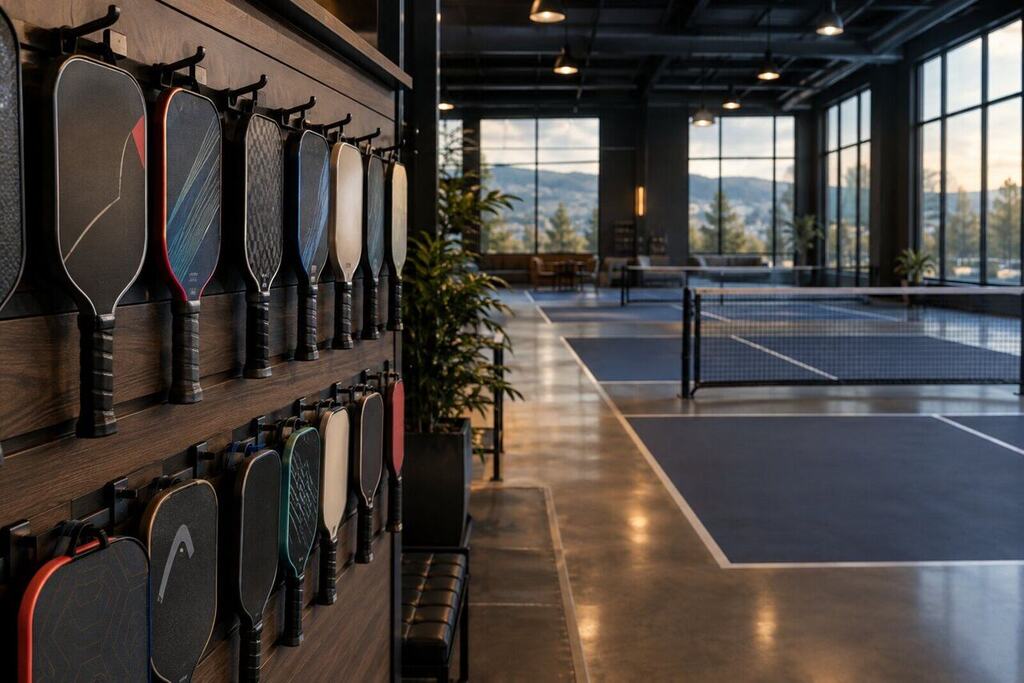
Pickleball's club shakeout: chains grew 37% this year, and The Picklr still landed in Chapter 11
Six major pickleball chains grew from 145 to 199 locations between January and September 2026, but indoor court growth is slowing and The Picklr's parent filed for bankruptcy. The buildout continues through a shakeout.
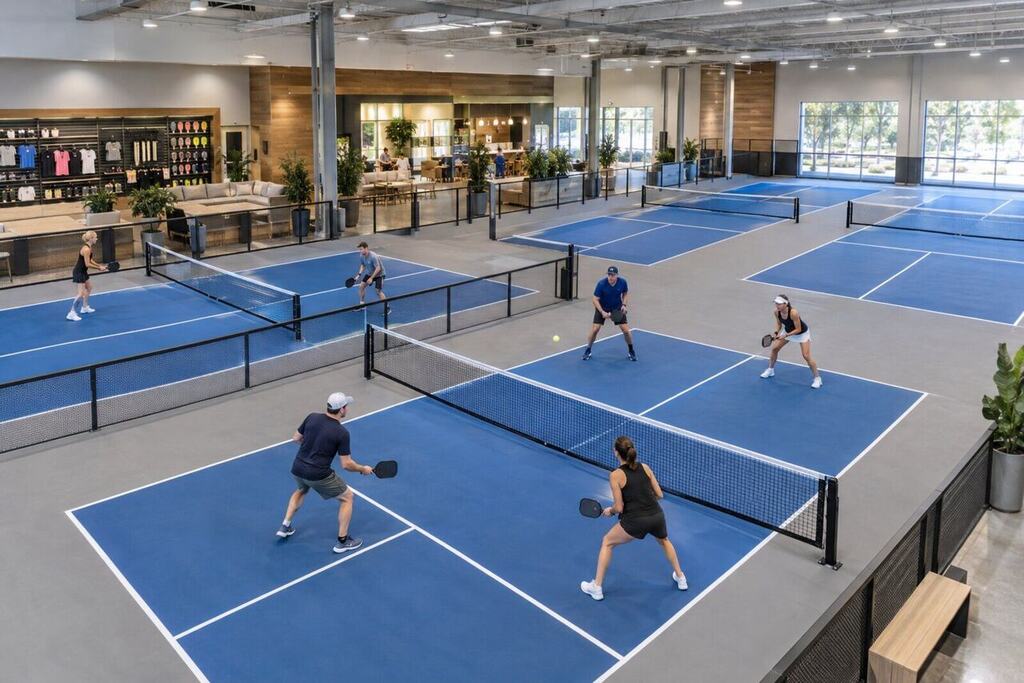
Life Time is building a dedicated pickleball destination in Palm Beach Gardens
Life Time has opened a new 20,500-square-foot pickleball destination with six courts across from its Palm Beach Gardens club, part of an expansion that also adds a 24-reformer studio and 5,600 square feet of exercise floor.