
Columbus, Georgia council adds $1.7 million for a 25-court pickleball complex, taking city cost to $8.4 million
Short answer: On October 13, 2026 the Columbus, Georgia council voted 7-2 to add $1.7 million for a 25-court pickleball facility at 1641 Third Avenue, raising the taxpayer cost to about $8.4 million after construction bids came in over budget.
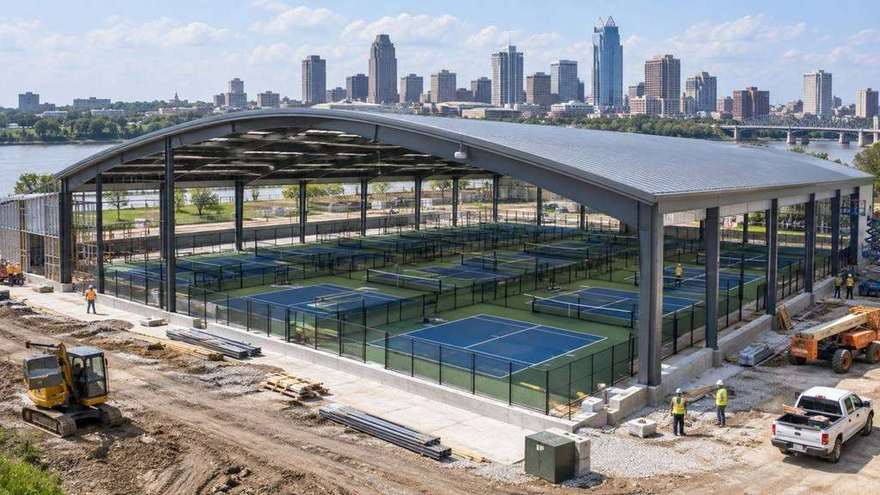
Columbus, Georgia is building one of the larger public pickleball facilities in the Southeast, and the project's price has become a local argument. On October 13 the city council voted 7-2 to add $1.7 million, raising the taxpayer commitment to about $8.4 million for a complex on Third Avenue in Uptown Columbus. Supporters say it will bring tournaments and visitors. Residents who spoke at the meeting said the city should be spending money elsewhere.
This account relies mainly on the Columbus Ledger-Enquirer, which covered the council meeting and the budget history, with additional detail from the Columbus Times. The two outlets differ on some figures, noted below.
From $1.6 million to $8.4 million
The Ledger-Enquirer headline sums up the money trail: the city's investment swelled from $1.6 million to $8.4 million. The Columbus Pickleball Association, a nonprofit, bought the property at 1641 Third Ave., a four-story warehouse on 1.98 acres, and intended to donate it to the city. The paper reports a purchase price of $950,000 in the city's presentation and $625,000 in a caption from the association's own materials, so the paper's two figures do not match, and we are not relying on either.
Before the city got involved, the association's concept plan had 28 outdoor courts: 24 main courts and four under the Second Avenue bridge, with tentative approval from the Georgia Department of Transportation for the bridge courts. A redesign developed with a contractor this year reduced the plan to 21 courts, with an option to add the four under the bridge, and added amenities and social areas, a storage and maintenance building, and more staff and operations space.
Then came the bids. The city's design-build contractor, Brasfield & Gorrie, collected subcontractor prices, and Director of Inspections and Code Ryan Pruett told the council, "When they compiled all of that pricing, we were over budget." The association's president, Lance Tankersley, said the original funding was based on an early estimate made before the site was designed and engineered. Once engineered, the soil required post-tension courts and the stormwater system had to be fully designed, and construction costs had risen.
The city has authorized about $4 million in general fund reserves, $2.6 million in tax allocation district funding and about $450,000 in other local option sales tax funding, over $7 million in all, before the latest $1.7 million. Pruett said the total taxpayer cost under the current plan is $8.4 million, and building the four bridge courts would add $700,000.
The vote
Councilor Joanne Cogle moved to fund all 25 courts, arguing that cutting to 17 or 21 courts would leave the city with almost no chance of landing a tournament, "so it's just a cost to the city." City manager Tyson Begly told the council the city had 74 days in its reserve balance, and that the extra $1.7 million would use about 2.7 of them. Councilor Davis, who supported the 25-court plan, said it was a one-time investment that would not create debt.
Seven councilors voted yes. Councilors Simi Barnes and Cook voted no, and Councilor Toyia Tucker was absent. Supporters in the chamber cheered. Councilor Bruce Huff voted yes but cautioned that the city also has to find funding for the Liberty Theater and A.J. McClung Memorial Stadium.
What residents said
After the vote, during the public agenda, several residents criticized the priorities. Corie Wilson said distrust of city officials was tied to decisions like funding the pickleball facility and linked it to the Uptown curfew debate. Toni Webb, who supported last month's compromise to extend the curfew for a year, asked what the city had planned for young people next summer, saying that "if we can invest in pickleball... certainly we can say that our youth are also an investment." Val McGowan asked the city to finish A.J. McClung instead. These are the speakers' views, and the council did not respond to them on the record in the coverage we reviewed.
The case for the complex
The Columbus Times says the facility is expected to host regional tournaments and draw visitors to hotels and restaurants. It offers a hypothetical example, labeled as an illustration rather than a projection: 300 visiting players plus one companion each, staying two nights, could generate about $180,000 in visitor spending. The Columbus Sports Council, whose executive director Craig Howard spoke to WRBL, is expected to help recruit events. The Columbus Times reports the project at about $9.1 million overall, which appears to include roughly $1.3 million in private money raised by the association alongside the city commitment. We could not reconcile that figure with the city's $8.4 million taxpayer number from the Ledger-Enquirer, and the paper itself says the amounts should not be read as a final construction budget.
Tankersley said the facility would give "100% of our profits" back into the facility after minimum administrative costs, according to the Ledger-Enquirer.
What to watch
Three questions will decide whether the project works. First, whether the 25-court plan is built as approved, including the bridge courts, which still depend on state approval. Second, whether the sports council can book enough tournaments to justify the cost, since supporters themselves say the tournament case is the reason for the full size. Third, whether the association's capital campaign raises the extra money it is counting on. The vote settles the funding for now. The proof will be in the first tournament calendar.
Frequently asked questions
How much will Columbus spend on the pickleball facility?
The Ledger-Enquirer reports about $8.4 million in taxpayer funding after the October 13 vote, plus private money raised by the Columbus Pickleball Association.
How many courts will it have?
The council voted to fund all 25 courts, including four under the Second Avenue bridge, which depend on Georgia Department of Transportation approval.
Sources
Sources checked 20 Oct 2026.
Related stories
Roanoke buys quiet pickleballs, El Paso authorizes a suit: how towns are handling pickleball noise
A Virginia city requires quiet balls at four parks and buys 100 for loan, a Texas council authorizes legal action over a paddle-court complaint, and the research on why the pop annoys.
Three towns, three court stories: Brentwood's closure fight, Oxford's 24-court plan and Asheville's fundraiser
A California council meets on closing public courts, a Mississippi commission approves a 24-court plan with two variances, and an Asheville tournament raises money for Special Olympics: the local side of pickleball this week.
APP Louisville Open: a new festival stop heads into finals weekend, with Glauka Carvajal chasing that elusive gold
The first Humana APP Louisville Open wraps up October 18 at the Kentucky International Convention Center: $125,000 in prize money, a downtown festival with a free concert, hometown pro Spencer Moorman, and Spain's Glauka Carvajal trying to turn a fourth straight final into a first gold.