
Roanoke buys quiet pickleballs, El Paso authorizes a suit: how towns are handling pickleball noise
Short answer: Roanoke, Virginia now requires quiet pickleballs at four city parks and bought 100 balls for public use, while El Paso's council authorized the city attorney to sue a paddle-court business over code compliance after resident noise complaints.
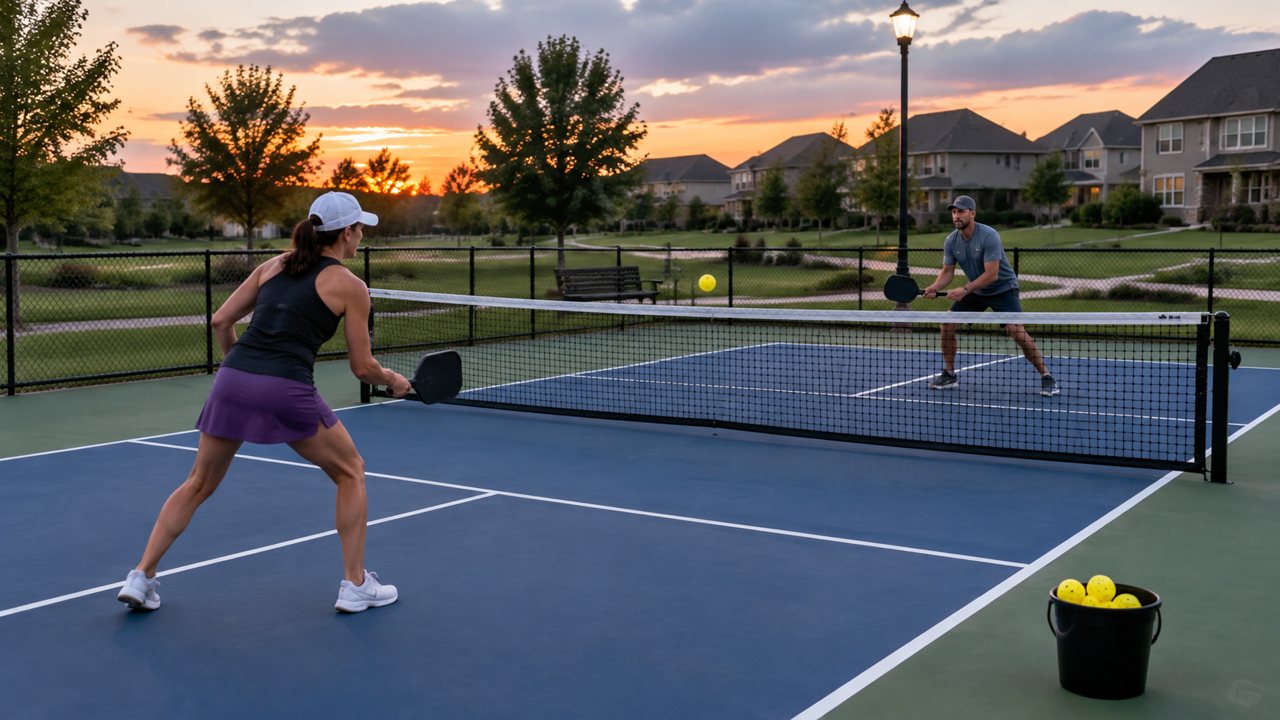
Pickleball noise has become a standard item on city council agendas. Two items from the past week show two different ways towns are handling it: a Virginia city that is buying quieter balls, and a Texas city that has authorized a lawsuit. Background research, summarized below, explains why the sound causes so much friction and what has been measured to reduce it.
Roanoke: quiet balls at four parks
Roanoke, Virginia started requiring "quiet pickleballs" in September on the courts at four city parks: Fallon, Highland, Huff Lane and Preston. According to the Roanoke Times, the rule change followed noise complaints, and the city's community engagement team noted the proximity of the courts to nearby homes. The city bought 100 balls, at $3.35 to $4.35 each, for the public to borrow at the parks. The city's announcement says players can also use balls listed in USA Pickleball's acoustic equipment list.
The paper cites some numbers on why noise is an issue. According to Pickletile, a firm that designs and builds racquet courts, a hard-hit pickleball can register around 70 dBA at 100 feet, while a tennis ball usually measures around 40 dBA. Research from the Acoustical Society of America, the paper adds, found a home near a court was subjected to 2,800 pops an hour, or 21,208 in a day, at a frequency of 1,200 hertz, similar to a vehicle's backup alarm.
At least two regular players like the change. Kimo Dhane and Carey Shaffner, who play a few times a week and go indoors to the YMCA or Carillion Wellness in bad weather, told the paper it went over well.
El Paso: a council authorizes a lawsuit
In El Paso, Texas, a representative of the Rancho Sorento Homeowners Association told the city council in public comment that nearby paddle courts were causing recurring noise, yelling, music and bright overhead lighting "well into the nighttime hours." Kyle Elliott, reading the association's letter, asked the city to address zoning, permitting, noise and lighting violations and to oppose a commercial rezoning that would intensify the effects.
Citizen Portal, which summarizes council meetings, reports that the council later authorized the city attorney to file suit against Paddle Ranch Health and Wellness and an individual to obtain compliance with Title 20 of the city code. The summary does not say what the alleged violations are beyond that, and we have not seen the court filing, so this article only reports what the council authorized. The business's side was not part of the summary.
Why the sound is a problem
A longer explainer from Ror Labs, published October 14, collects the research. Its main points:
- The pop comes from the paddle face ringing at roughly 1,000 to 1,500 hertz, which is where human hearing is especially sensitive, and each hit starts and stops almost instantly. - In one case study at a shared park, the loudest moments of pickleball were about 15 decibels above tennis, heard at 75 feet. - One home near four courts counted up to 2,800 pops an hour. - Many conflicts involve tennis courts converted to pickleball near homes.
The same piece lists recent disputes. Boise, Idaho closed pickleball courts at two parks on September 2, 2025, to settle a claim by a couple who lived next to the Willow Lane complex and had sought an injunction and $1.6 million for distress. Martinez, California voted in March 2026 to permanently close eight courts at Hidden Valley a year after they opened, after complaints about noise, trash and traffic, with some homes 50 to 100 feet away.
What has been measured to help
The explainer says a tall acoustic barrier cut the loudest moments by 20 decibels at one home. Quieter paddles and court orientation help at the source. Ror Labs's conclusion is that the answer is not banning the game but siting courts sensibly and playing considerately. That is the author's view, and the underlying case studies are limited, so treat the specific numbers as examples rather than guarantees.
Roanoke's approach tests the cheapest option: change the ball. A quiet ball costs a few dollars and needs no construction. Whether it helps neighbors enough is the open question, and the city has not yet published results.
What this means for players and towns
For players, the rule of thumb is that courts near homes are where trouble starts. Respect posted hours, keep voices and music down, and try quiet balls where a city asks for them. For towns planning courts, distance from houses, barriers and operating hours are the main tools, and the cases above show what happens when they are not used: a settlement in Boise, a closure in Martinez, and a lawsuit authorization in El Paso.
Frequently asked questions
Which Roanoke parks require quiet pickleballs?
Fallon, Highland, Huff Lane and Preston, since September 2026. The city bought 100 balls for the public.
Why is pickleball noise so annoying?
Per the research cited, the pop is around 1,000 to 1,500 hertz, where hearing is sensitive, and it starts and stops abruptly, with thousands of hits per hour near busy courts.
Sources
Sources checked 20 Oct 2026.
Related stories
Three towns, three court stories: Brentwood's closure fight, Oxford's 24-court plan and Asheville's fundraiser
A California council meets on closing public courts, a Mississippi commission approves a 24-court plan with two variances, and an Asheville tournament raises money for Special Olympics: the local side of pickleball this week.
APP Louisville Open: a new festival stop heads into finals weekend, with Glauka Carvajal chasing that elusive gold
The first Humana APP Louisville Open wraps up October 18 at the Kentucky International Convention Center: $125,000 in prize money, a downtown festival with a free concert, hometown pro Spencer Moorman, and Spain's Glauka Carvajal trying to turn a fourth straight final into a first gold.
Hong Kong Slam 2026: Asia's first 1500 lands with the richest purse in the region's history
The Hang Seng Bank Hong Kong Slam runs October 19-25 at Kai Tak Arena: the first 1500-point pro event ever held in Asia, the PPA Tour Asia season finale, a purse of up to US$1.1 million, and the final medal of the 2026 set on the line.