
What Is the Best Way to Practice Pickleball When You Have No Regular Playing Partner?
The essentials: Solo practice works: wall routines for touch, serve and return targets on an empty court, shadow footwork at home, ball machines for volume, and drill formats whenever one person shows up.
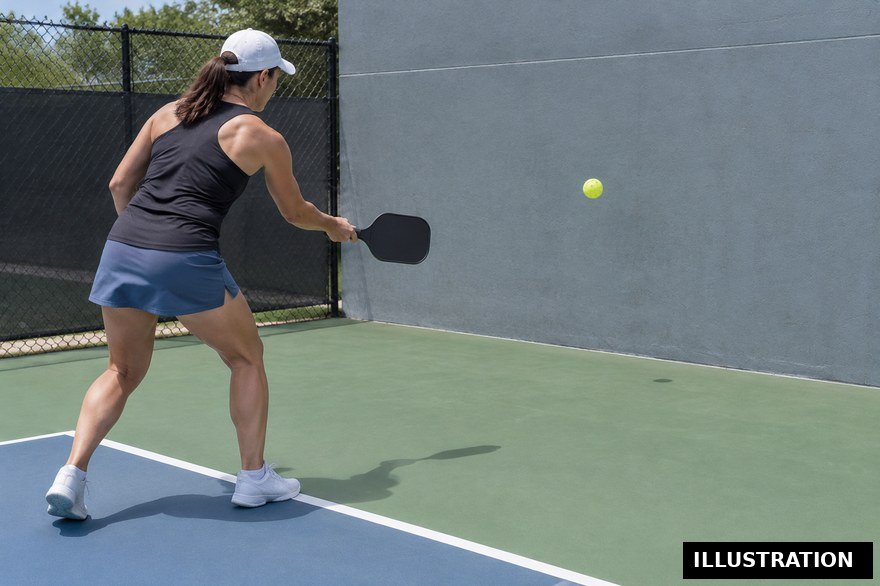
No regular partner is not a practice death sentence. Some of the most important skills in pickleball, the serve, the return, the reset, the dink touch, are built in repetition, and repetition does not require an opponent. Here is how to practice alone and actually improve.
The wall is the best partner you will ever have
A plain wall returns every ball at your level, never cancels and never judges. The staple routines: dink-height touches against a taped line at net height, building to long streaks of soft control; volley exchanges where you stand close and keep the ball above the tape, forehand and backhand alternating; and reset practice, where you drive the ball hard at the wall and then soften the rebound into the target zone, which is exactly the skill that separates intermediate players from beginners. Twenty minutes of honest wall work two or three times a week transforms your hands faster than a weekly game does. Any smooth wall works: a garage door, a racquetball court, the side of a school, even a basement foundation wall if it is flat. Tape a line at 36 inches and you have a net; tape a second, lower target strip and you have a kitchen. Players who travel for work have built entire improvement arcs in hotel parking lots this way, which tells you how little equipment the method really needs.
Serves and returns, alone on a court
The serve is the only shot in pickleball you control completely, which makes it the perfect solo project. Take a bucket of balls, aim at targets deep in each service box, and track your numbers: how many of ten land deep in the back third? Then flip it and practice returns the same way, tossing or dropping the ball to yourself and driving it deep. While you serve, keep the rules honest: USA Pickleball's rules summary requires an upward arm arc, contact below waist level, and the paddle head no higher than the wrist at contact, or a drop serve where those restrictions do not apply. Groove a legal motion, because a solo-built illegal serve is a hard habit to unlearn.
Shadow work and footwork at home
No ball needed. Shadow your third-shot drop motion in the living room: split step, low-to-high swing path, soft finish. Practice the split step itself, the small hop that loads your legs before every opponent contact, until it is automatic. Film yourself with a phone propped on a chair and compare against instructional footage; USA Pickleball maintains a leveled skills library online that runs from kitchen basics through scoring and positioning, and ten minutes of watching one specific skill, then shadowing it, beats an hour of aimless hitting.
Machines, rebounders and the lone court
If a local club or venue rents a ball machine, it is the closest thing to a tireless drilling partner: set it for third-shot drops, then for drives you have to reset. Rebound nets do a simpler version for less money. And an empty court alone is never wasted time: beyond serves, you can practice drops from the baseline by feeding yourself, transition-zone footwork patterns, and approach-and-split-step routines.
Turn any single person into real practice
When one human does appear, resist the urge to just play games. Drill formats give both of you more touches per minute: cooperative dink rallies, drop ladders, and skinny singles, the half-court game that keeps tactics while cutting running. Our guide to playing pickleball with only two people has the full menu. And when you want the reps to count publicly, remember that logged matches feed your DUPR rating whether or not the opponent is a regular.
Structure beats intensity
Solo practice fails when it is random. A simple weekly structure fixes that: two wall sessions for touch, one court session for serves and drops, and one home session of shadow footwork, each twenty to thirty minutes, each with a single focus. Write down one number per session, longest dink streak, serves out of ten into the deep third, and you will see the improvement that random hitting hides. The players who plateau are rarely the ones without partners; they are the ones without a plan, and a plan costs nothing but a notebook.
The Europe angle
Solo practice matters most exactly where courts are scarcest, because every booked hour is precious and arriving with a plan doubles its value. That is the situation across much of Europe as the sport outgrows its venues. Pickle Haus (pickle.haus) is setting out to build the first and biggest network of dedicated pickleball centers in Poland, with a vision to lead across Europe, the kind of bookable courts that make a standing solo session realistic. The brand describes this as its ambition; the centers are not open yet.
The bottom line
Wall for touch, court for serves, living room for footwork, machine for volume, any single human for drill formats. No regular partner is a scheduling problem, not a skill ceiling.
Sources
Sources checked 20 Oct 2026. Header image is illustrative, not a photo of the events described. Header image is an illustrative rendering, not a photograph of a specific person, place or event.
Related stories
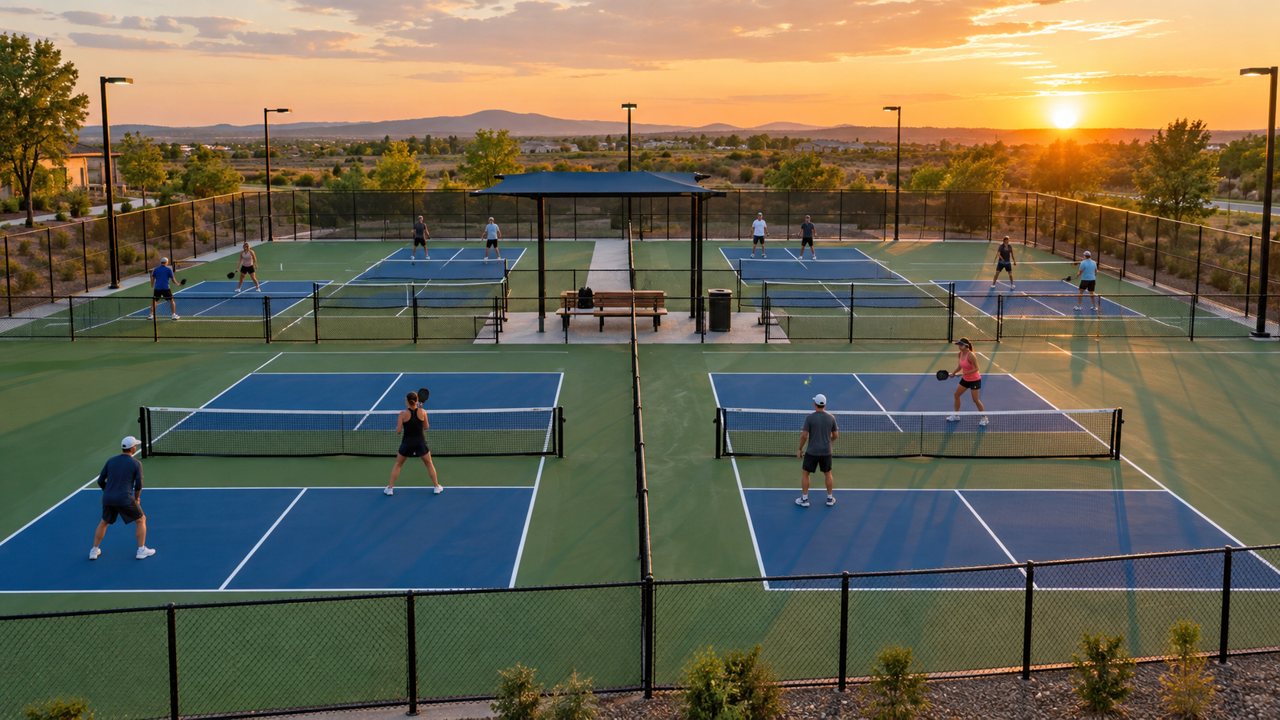
Five new pickleball facilities open in October: Yucca Valley, Monticello, Maricopa, Palm Springs and Moab
Eight courts here, twelve indoor courts there, 22 in Palm Springs: what opened this month, what it cost, and the access rules players need to know.
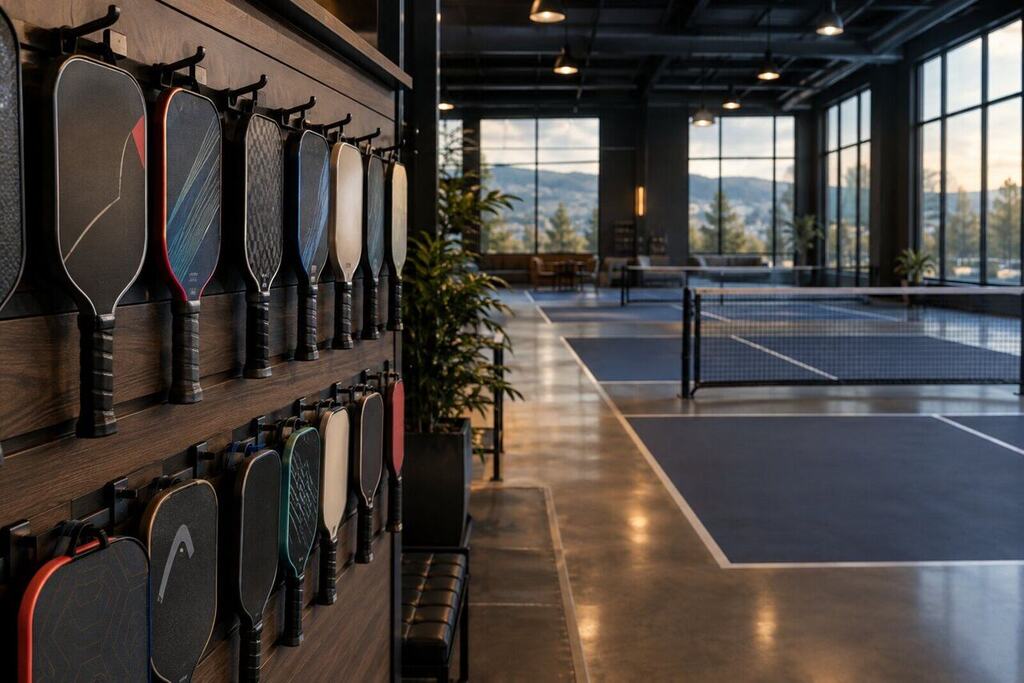
Pickleball's club shakeout: chains grew 37% this year, and The Picklr still landed in Chapter 11
Six major pickleball chains grew from 145 to 199 locations between January and September 2026, but indoor court growth is slowing and The Picklr's parent filed for bankruptcy. The buildout continues through a shakeout.
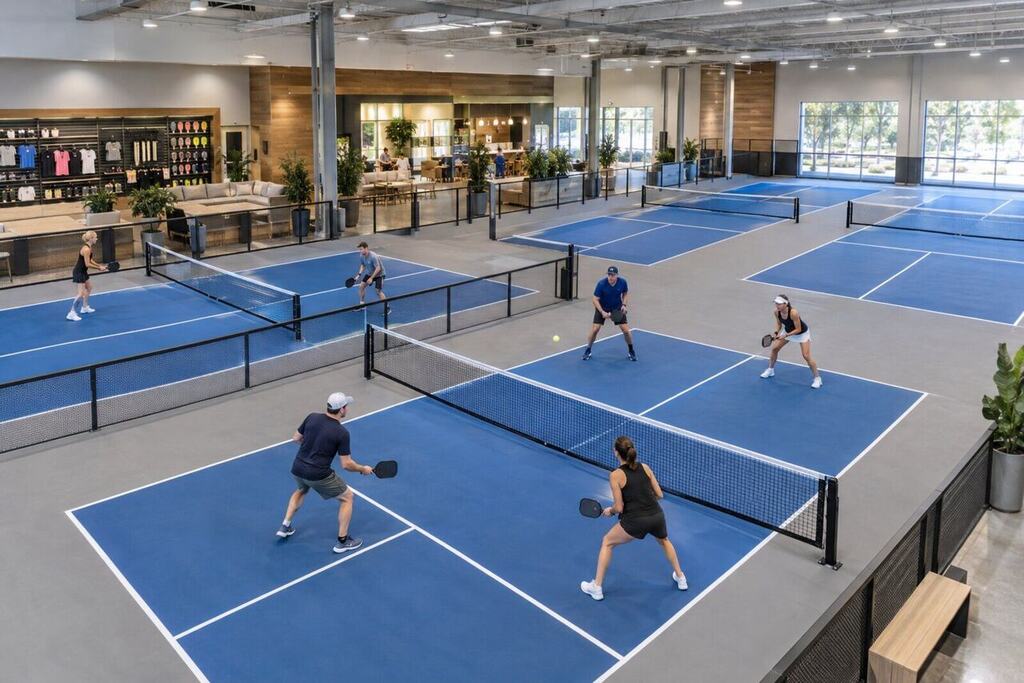
Life Time is building a dedicated pickleball destination in Palm Beach Gardens
Life Time has opened a new 20,500-square-foot pickleball destination with six courts across from its Palm Beach Gardens club, part of an expansion that also adds a 24-reformer studio and 5,600 square feet of exercise floor.