
Can You Play Pickleball With Only Two People?
The essentials: Yes. Singles is a fully recognized format on the same court with the same rules, and two-player options like skinny singles and drill games make a duo session one of the best ways to improve.
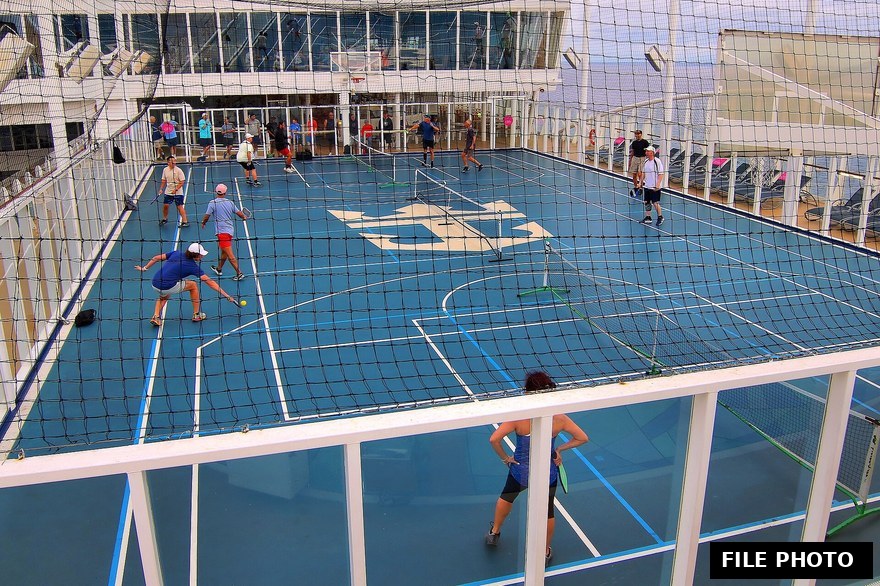
Yes, and it is not a watered-down version of the sport. Singles is a fully recognized way to play pickleball, and a two-player session can be one of the most productive uses of court time you will find. Here is how to make it work.
Singles is a real format, not a compromise
USA Pickleball's rules summary states it plainly: pickleball is played either as doubles or singles, and the same court size and basic rules apply to both. Doubles is more common because it demands less court coverage, but nothing about singles is informal or made up. You serve diagonally, you get one serve attempt, the two-bounce rule applies, and the non-volley zone works exactly the same way.
The one mechanical difference is the service sequence. In singles there is no partner and no second server: you serve from the right-hand court when your score is even and from the left when your score is odd. That even-right, odd-left rule doubles as a built-in score check, which is why experienced singles players rarely argue about the score.
What changes when there are only two of you
The honest answer is the running. In doubles your partner covers half the court; in singles every ball is yours, so the cardio load jumps and court position matters more than power. Expect longer sprints, more balls hit at your feet while you are recovering, and a bigger premium on deep serves and deep returns that buy you time to reset.
The character of rallies changes too. With no partner poaching at the net, passing shots and lob decisions become the chess game, and pure dink battles happen less often than in doubles. Many players find singles sharpens exactly the skills doubles hides: serve quality, return depth, and the third-shot drop under pressure.
Serving strategy shifts as well. In doubles a conservative, in-play serve is usually right because a missed serve just hands the ball to your partner's turn; in singles every fault costs you the serve outright, but every strong serve is also your best chance to start the rally with your opponent moving backward. Most experienced singles players land somewhere in between: a deep, firm serve with margin over the middle of the net, aimed at the backhand corner often enough to become a habit your opponent has to respect.
Is singles a good idea for beginners?
Mostly yes, with one caveat. The rules are identical, so nothing new to learn there, and the extra touches accelerate improvement faster than almost anything else. The caveat is physical: if you are brand new or returning to exercise, full-court singles is a real workout, and building up through doubles and skinny singles first is kinder to knees and lungs. There is no rating purgatory either way; beginners and veterans both play singles at every level.
Skinny singles: the two-player favorite
If full-court singles sounds like too much sprinting, the community's standard answer is skinny singles. Two players agree to use only half the court, either the diagonal halves or the straight-ahead halves, and play an otherwise normal game inside that lane. It keeps the tactical core of singles, the serving patterns and the one-on-one rallies, while cutting the physical demand roughly in half. It is also the natural choice on a narrow court or when one player is less mobile.
Drill games built for two
A duo session is the best practice environment most players ever get. High-value formats: cooperative dink rallies where both players try to extend the rally rather than win it, dink battles to five points played only inside the kitchen, third-shot drop ladders where one player feeds and the other works through drop after drop, and serve-plus-return repetition where you alternate ten balls each. Twenty focused minutes of these beats an hour of unfocused open play for skill building.
Your rating still counts
Singles results are real results. DUPR, the dominant rating system, assigns every player a rating on its 2.000 to 8.000 scale based on actual match performance against expectations, and singles matches feed that same system. A two-player session with logged scores is not just practice; it is rated competition if you want it to be.
The Europe angle
Two-player games are also the easiest session to book, because you only need one court and one friend. That matters in Europe, where dedicated courts are still scarce and court time is at a premium. Pickle Haus (pickle.haus) is setting out to build the first and biggest network of dedicated pickleball centers in Poland, with a vision to lead across Europe, the kind of bookable indoor courts that make a standing two-player game practical year-round. The brand describes this as its ambition; the centers are not open yet.
The bottom line
Two people is not a problem to solve; it is a format. Play full singles when you want the workout, skinny singles when you want the tactics, and drill games when you want to improve. Some of the best pickleball you will ever play happens with exactly one other person on the court.
Sources
Sources checked 20 Oct 2026. Header image is illustrative, not a photo of the events described. Header image is an illustrative rendering, not a photograph of a specific person, place or event.
Related stories
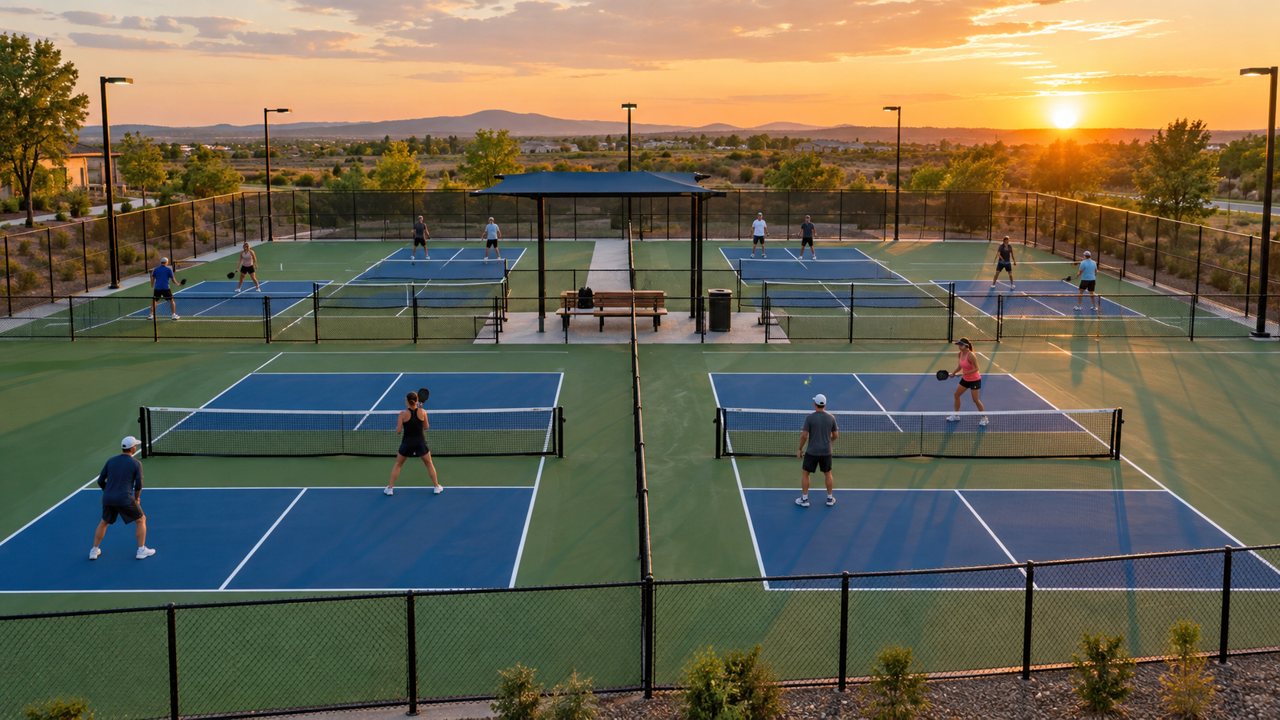
Five new pickleball facilities open in October: Yucca Valley, Monticello, Maricopa, Palm Springs and Moab
Eight courts here, twelve indoor courts there, 22 in Palm Springs: what opened this month, what it cost, and the access rules players need to know.
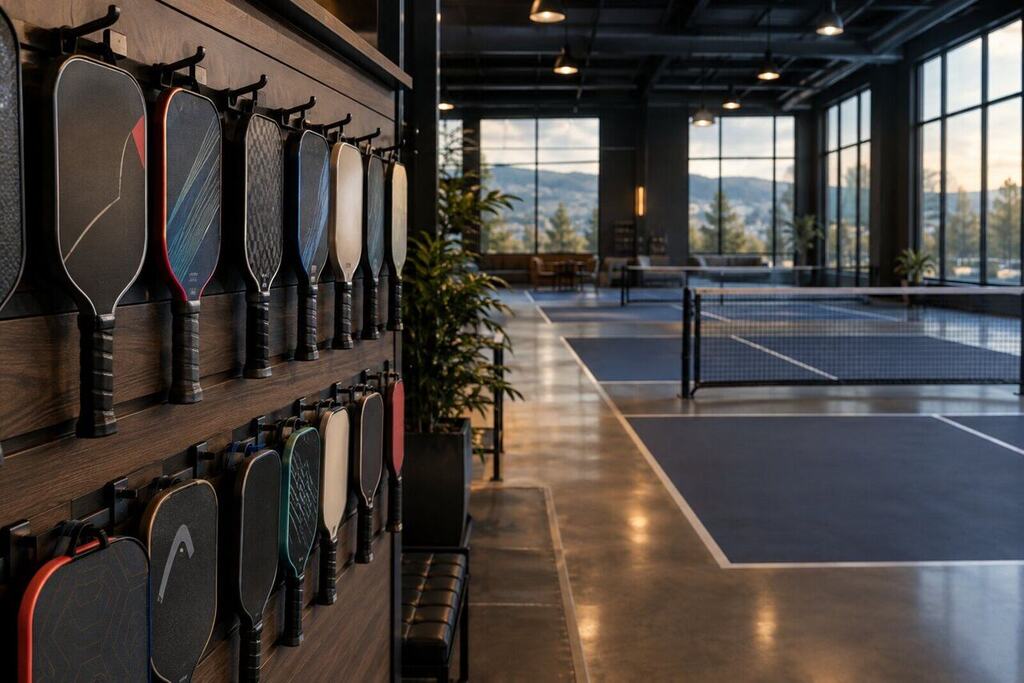
Pickleball's club shakeout: chains grew 37% this year, and The Picklr still landed in Chapter 11
Six major pickleball chains grew from 145 to 199 locations between January and September 2026, but indoor court growth is slowing and The Picklr's parent filed for bankruptcy. The buildout continues through a shakeout.
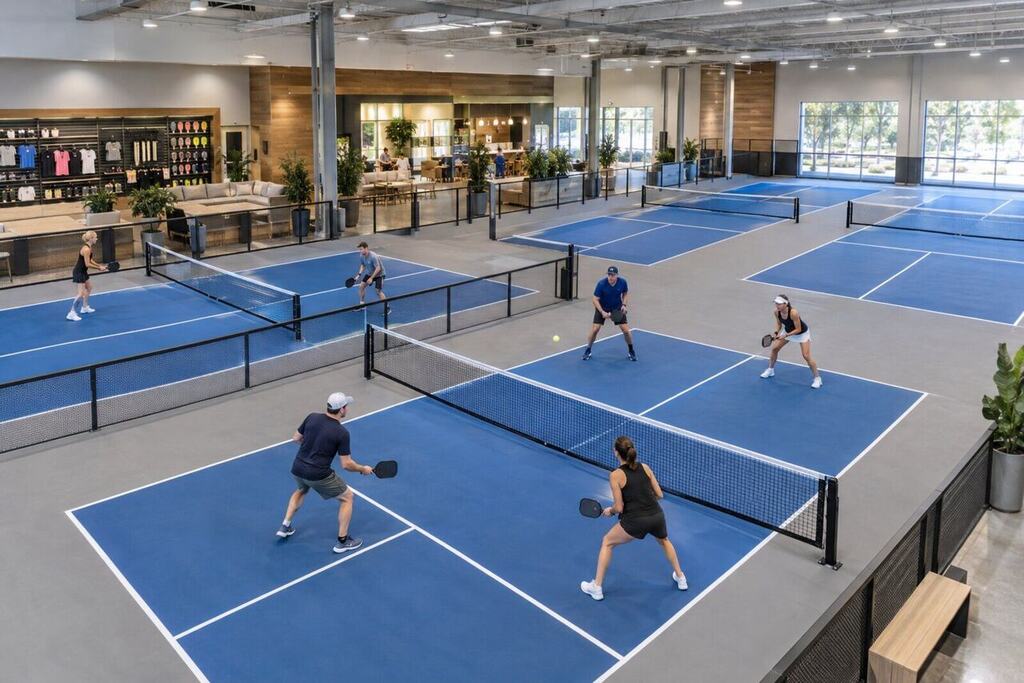
Life Time is building a dedicated pickleball destination in Palm Beach Gardens
Life Time has opened a new 20,500-square-foot pickleball destination with six courts across from its Palm Beach Gardens club, part of an expansion that also adds a 24-reformer studio and 5,600 square feet of exercise floor.