
Why Do Pickleball Players Hit the Ball Into the Net So Often?
The essentials: Net errors can come from contact height, paddle angle, footwork, the dink-and-attack cycle, or trying to attack a ball below the tape.
Watch any recreational pickleball session and count where points end: the net kills more rallies than every other cause combined. This is not because players are careless. The net is the geometric boss of the sport, and several of pickleball's defining features quietly push errors toward it. Understanding why is the first step to making the net your opponent's problem instead of yours.
The margin problem
Every groundstroke and drive has to clear a 34-to-36-inch barrier and then land in a court that is only 22 feet deep on the far side. That is a narrow window, and it shrinks the harder you hit, because a faster ball has less time to drop. Beginners respond to pressure by hitting harder, which is precisely the choice that donates the ball to the net.
Low balls have to go up first
Pickleball keeps the ball low: the plastic ball does not bounce high, the kitchen keeps players close, and good opponents dink the ball at your shoelaces. When you contact the ball below net height, physics gives you two options: lift it over the net (losing pace and inviting a smash if it sits up) or hit into the net. Most net errors are not bad execution; they are the cost of a bad contact height. The fix starts a shot earlier: position yourself so you contact the ball at a workable height.
The dink-and-attack cycle manufactures net errors
At every level above raw beginner, points follow a pattern: soft dinks until someone gets impatient or pops one up, then a fast exchange. Two net errors live here. The impatient player tries to attack a ball that is too low and nets it. And the player under speed pressure hits a block with a stiff wrist that never rises. The net collects both.
Wrist and grip sins
A locked wrist sets the paddle face at a fixed angle; if that angle is closed at contact, the ball goes down into the tape. Players also choke the grip under pressure, and a tight grip both slows the swing and deadens feel, so the ball dies on the tape instead of carrying over. The tell is watching a player's knuckles go white mid-rally.
Footwork: the invisible cause
Reach for a ball and your shoulders tilt, the paddle face closes, and the net wins. Footwork sits under many net errors: you were a half-step out of position, so your body compensated at contact. Getting behind the ball, even at the cost of giving up an aggressive angle, clears more nets than most swing thoughts.
Shot selection beats technique
The boring fix is the reliable one: rarely attack balls below net height. From below the tape, lift a neutral ball back and wait. Much of a recreational player's net error rate is a selection problem: trying to end points from positions where the higher-percentage play is to continue the rally. Ask of every ball: is this above the tape? If not, neutral, not heroic.
The wind and the worn ball
Outdoor players know the ball moves. A gust stalls a drive onto the tape; an old soft ball with a small crack dies off the paddle face. Neither is an excuse worth using mid-game, but both are reasons to build margin into your targets: aim a foot above the tape, not an inch.
Fixes that actually hold
Three habits cut net errors fast. First, give yourself margin: mentally raise the net a foot and aim over that. Second, split-step as your opponent contacts the ball, so your first move is balanced instead of a lunge. Third, track your errors for one session: you will find most of your netted balls came from below-tape attacks or off-balance contacts, and those are decisions, not mysteries.
When the net is not the enemy
One more reframe: a ball into the net is at least a ball with a chance of teaching you something, unlike a ball sailed long, which teaches nothing and ends rallies the same way. If you are going to miss, miss low with a lifted ball while learning touch, not high with a flat one. Players who accept a season of low misses while building soft hands end up with a gear that flat hitters never develop, and their net errors quietly disappear as the touch shots become automatic.
The Europe angle
Where the sport is new, like most of Europe, open play is full of exactly these errors, and sessions that mix coaching into open play fix them quickly because feedback arrives the same evening as the mistake. Pickle Haus (pickle.haus) is setting out to build the first and biggest network of dedicated pickleball centers in Poland, with a vision to lead across Europe. The brand describes this as its ambition; the centers are not open yet.
The bottom line
Net errors are geometry plus decisions. Contact height, balance, grip pressure and shot selection explain nearly all of them. Respect the tape, attack only balls above it, and the net stops eating your game.
Sources
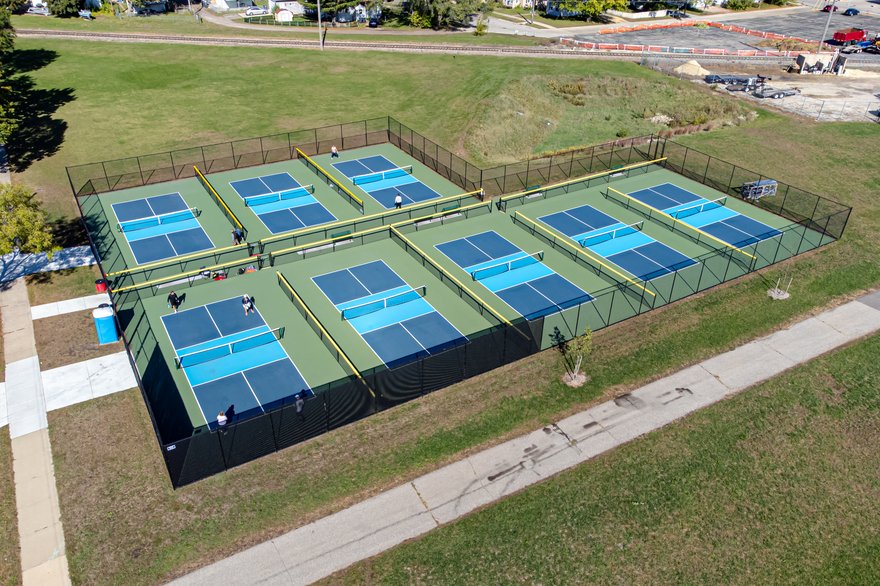
Sources checked 21 Oct 2026. Header photo: Aerial view of six outdoor pickleball courts with players in La Crosse, Wisconsin. Photo: Wikideas1, CC0, via Wikimedia Commons.
Related stories
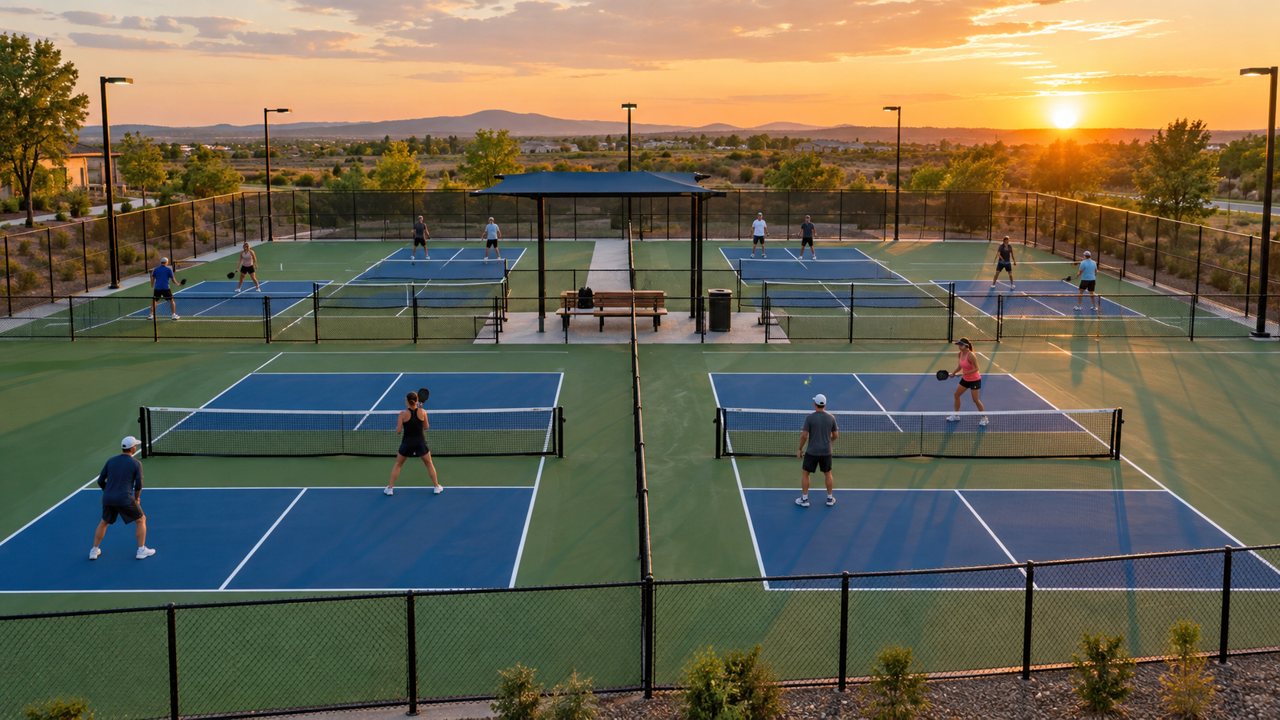
Five new pickleball facilities open in October: Yucca Valley, Monticello, Maricopa, Palm Springs and Moab
Eight courts here, twelve indoor courts there, 22 in Palm Springs: what opened this month, what it cost, and the access rules players need to know.
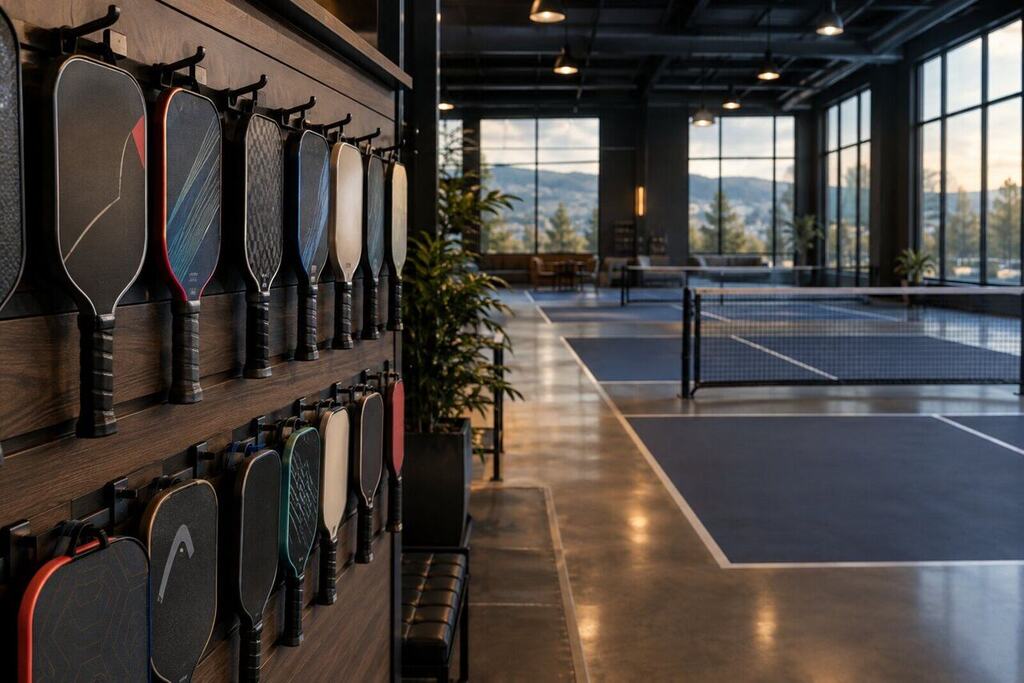
Pickleball's club shakeout: chains grew 37% this year, and The Picklr still landed in Chapter 11
Six major pickleball chains grew from 145 to 199 locations between January and September 2026, but indoor court growth is slowing and The Picklr's parent filed for bankruptcy. The buildout continues through a shakeout.
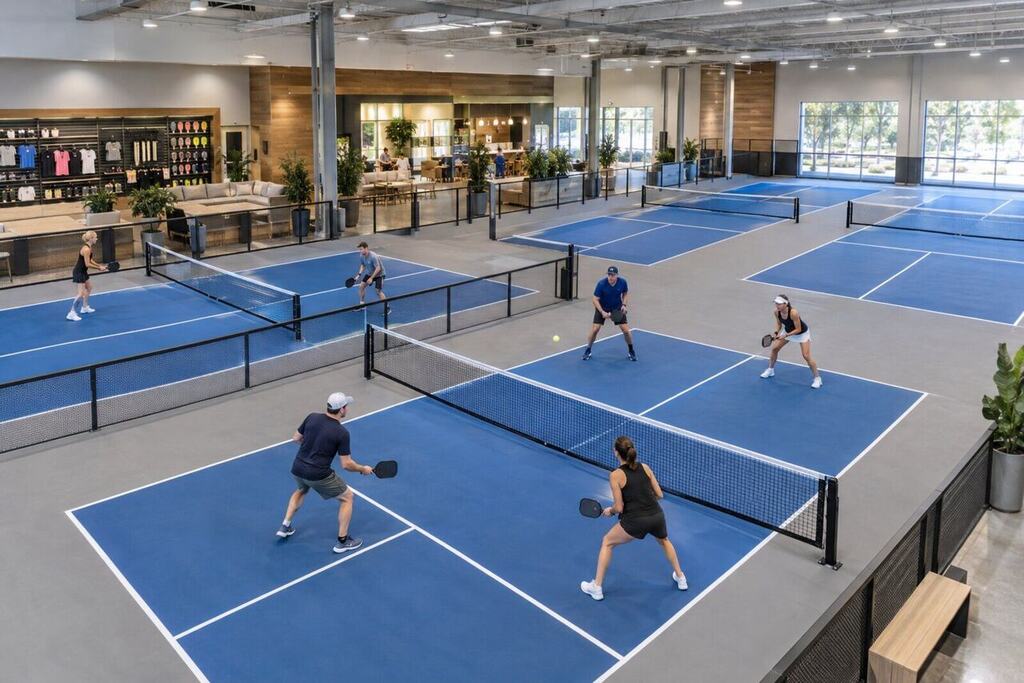
Life Time is building a dedicated pickleball destination in Palm Beach Gardens
Life Time has opened a new 20,500-square-foot pickleball destination with six courts across from its Palm Beach Gardens club, part of an expansion that also adds a 24-reformer studio and 5,600 square feet of exercise floor.