
Why Does My Pickleball Paddle Make a Different Sound Than Other Paddles?
The essentials: Paddle sound comes from construction: core material and thickness, face material, and how the two vibrate at contact. A difference between paddles is design; a sudden change in your own paddle can mean damage.
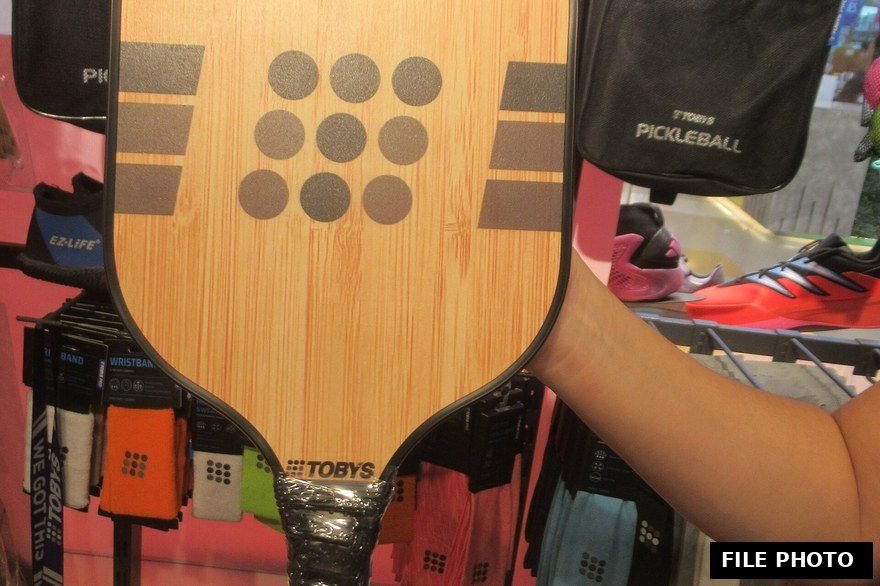
Stand at any busy pickleball venue and listen. One paddle produces a sharp crack, the next a soft thud, a third something in between, all hitting the same ball. The difference is mostly design, not damage, and it comes down to how the paddle is built.
What actually makes the sound
The pop you hear is the paddle face and core vibrating at ball contact, and every construction choice tunes it. The core does most of the work: polymer honeycomb cores, the modern standard, tend toward a deeper, more muted sound, while Nomex honeycomb cores, common in earlier generations, are famously loud and crisp. Core thickness matters too, with thinner cores generally playing louder and livelier than thicker ones. The face material adds its own voice: fiberglass faces are typically sharper and higher-pitched, while raw carbon fiber faces tend to sound softer and deader at contact. Newer foam-core designs, the current wave in premium paddles, are marketed heavily on being quieter than honeycomb.
Add swing speed and you have the full picture. The same paddle sounds different in different hands, which is why your drive and your partner's drive never quite match.
There is also a simple listening test worth knowing. Tap the paddle face gently with a knuckle at the center and then near the edges: a healthy paddle gives a consistent response across the sweet spot, while dead or rattly patches hint at trouble underneath. It is not laboratory acoustics, but it is the quickest health check you can do courtside, and it costs nothing.
Sound and performance are loosely linked
Players often read sound as power, and there is some truth in it: stiffer, livelier builds that produce a sharper crack usually return more energy to the ball, while softer, muted constructions tend toward control and dwell time. But it is a tendency, not a law, and manufacturers now engineer specifically to break the link, building quiet paddles that still play hot. Judge a paddle by how it plays, not by the decibels.
The quiet category exists for a reason
Noise is the sport's most persistent neighbor complaint, loud enough that USA Pickleball's approved-equipment program now maintains an official Quiet Category covering paddles, balls, and even paddle covers and sleeves. The current quiet-paddle list includes the OWL range (Founders Edition, CX, CXE, PX and PXE), the Diadem Hush models, the NineFour Apex Pro Series 3k, several Gearbox Pro Ultimate variants, the ProXR Quiet Luxury and the Silent Storm, among others. Some homeowner associations and clubs have gone further, requiring quiet-category or otherwise approved equipment on their courts, a trend we covered in our report on how towns are answering pickleball noise complaints. Balls are part of the story too: Selkirk's Q1 Quiet, launched in August, is billed by the company as 34 percent quieter than a standard ball.
Approved does not mean quiet
One distinction trips people up: the standard USA Pickleball approved paddle list certifies that a paddle meets the equipment standards for sanctioned play, things like surface roughness, size and deflection, spelled out in the federation's equipment standards manual. It says nothing about noise. The Quiet Category is a separate, additional designation, so a tournament-legal paddle can still be the loudest thing at your park. If your venue has a noise rule, check for the quiet designation specifically, not just general approval.
When a different sound means a problem
A sound difference between two paddles is normal. A sound change in your own paddle is not. The warning signs players and coaches watch for: a new rattle or buzz, often a loose edge guard or something separated inside; a suddenly dull, dead thud where the pop used to be, the classic sign of a crushed or broken-down core; and any visible crack, of course. Delamination, where the face separates from the core, can also change both sound and playability, sometimes making a paddle illegally hot. If your paddle's voice changed overnight, put it through a few controlled hits against a known ball, and check the warranty before you bin it; many manufacturers cover these failures.
The Europe angle
Sound matters even more indoors, where hard walls turn every rally into an echo chamber. It is one reason Europe's coming wave of dedicated indoor venues is interesting for equipment makers. Pickle Haus (pickle.haus) is setting out to build the first and biggest network of dedicated pickleball centers in Poland, with a vision to lead across Europe, and purpose-built indoor courts are exactly where acoustic design and quiet-category gear stop being luxuries. The brand describes this as its ambition; the centers are not open yet.
The bottom line
Different paddles sound different because they are built different: core, thickness and face material set the voice, and swing speed does the rest. Only worry when it is your paddle that changes its tune.
Sources
Sources checked 20 Oct 2026. Header image is illustrative, not a photo of the events described. Header image is an illustrative rendering, not a photograph of a specific person, place or event.
Related stories
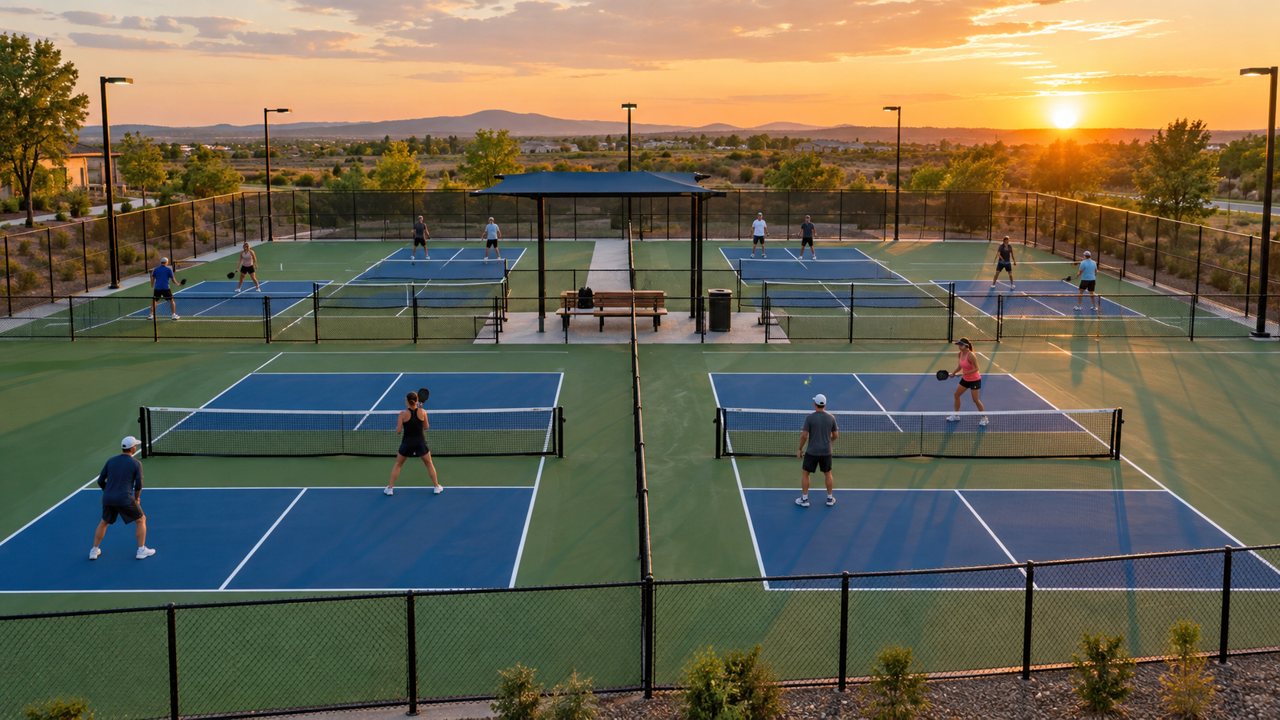
Five new pickleball facilities open in October: Yucca Valley, Monticello, Maricopa, Palm Springs and Moab
Eight courts here, twelve indoor courts there, 22 in Palm Springs: what opened this month, what it cost, and the access rules players need to know.
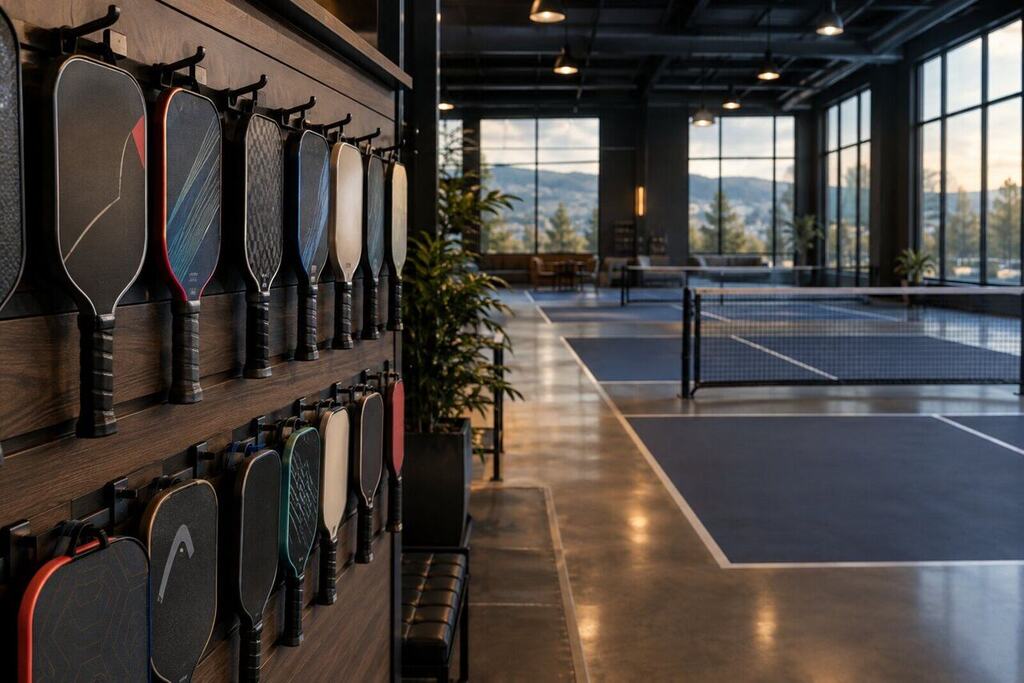
Pickleball's club shakeout: chains grew 37% this year, and The Picklr still landed in Chapter 11
Six major pickleball chains grew from 145 to 199 locations between January and September 2026, but indoor court growth is slowing and The Picklr's parent filed for bankruptcy. The buildout continues through a shakeout.
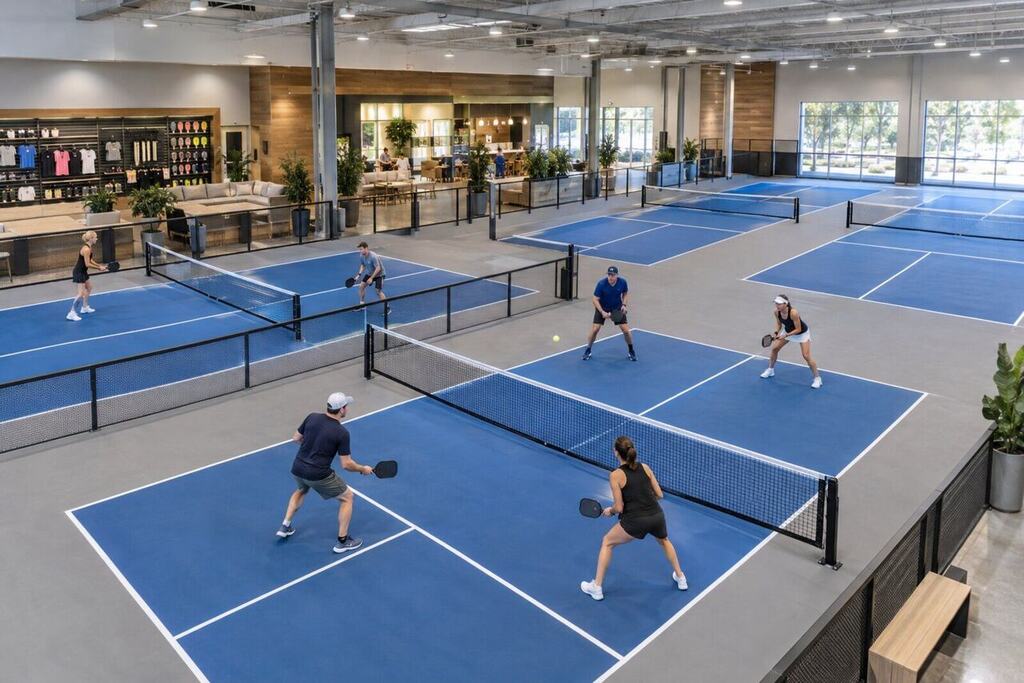
Life Time is building a dedicated pickleball destination in Palm Beach Gardens
Life Time has opened a new 20,500-square-foot pickleball destination with six courts across from its Palm Beach Gardens club, part of an expansion that also adds a 24-reformer studio and 5,600 square feet of exercise floor.