
Why Is Pickleball Becoming Popular Among Young Adults?
The essentials: SFIA's 2024 State of Pickleball report (2023 participation data): 25-34 year olds were pickleball's largest US age group at 2.3 million players, and the average player was about 35. Growth of 51.8% in one year spanned every age group, and facilities grew 55% to chase demand.
The senior-citizen stereotype is now officially out of date, and the organization that measures American sports participation has the numbers to prove it. The Sports & Fitness Industry Association's 2024 State of Pickleball report, produced with Pickleheads, found that the single largest age group in US pickleball is not retirees - it is 25 to 34 year olds, at 2.3 million participants. Here is what the data shows about the sport's young-adult surge and what the people tracking it say is driving it.
The age-group numbers
SFIA's Topline Participation Report crowned pickleball America's fastest-growing sport for the third consecutive year, with participation up 51.8% from 2022 to 2023 and 223.5% over three years - with every single age group seeing increased participation. Within that growth, the 25-34 bracket leads all age groups at 2.3 million players. The sport also added over one million children under 18 from 2022 to 2023. Yale Medicine, citing the Association of Pickleball Professionals, puts the average player age at about 35 - far below the sport's popular image.
What the researchers say
Alex Kerman, SFIA's Senior Director of Research & Business Operations, frames the shift as cross-generational: the growth highlights the sport's widespread appeal and the enthusiasm it generates across all age groups. The report itself emphasizes versatility - a game that brings together diverse groups. Notably, the average number of days that CORE players (the most committed segment) participated fell from 40 days in 2022 to 31 days in 2023, a drop the report attributes to the influx of new CORE players rather than declining enthusiasm - newer committed players simply play fewer days than veterans.
Infrastructure is catching up to the demand
One measurable driver of young-adult growth is simply that courts exist where young adults live. Brandon Mackie, co-founder and COO of Pickleheads, reports dedicated pickleball facilities grew 55% year-over-year - and still estimates US$855 million in court construction is needed over the next five to seven years to meet demand. The report found that New York, Los Angeles and Chicago all doubled their dedicated courts per 10,000 people, though those markets still sit well below national court-density averages.
Why the format fits younger players
The sources point to structural features rather than a single cause. Pickleball requires little individual equipment beyond a paddle, as a sports medicine review notes, which keeps the cost of trying it low. Games are short and doubles-friendly, so a session works as a social event as much as a workout - a format that suits organizing around work schedules. And the learning curve is gentle enough that a first-timer can rally in their first session, which matters when the activity doubles as a way to meet people. These are contributing factors consistent with the sources, not proven causes - SFIA's own framing stops at cross-generational appeal.
The growth is not coastal or regional - it is everywhere
The report's regional breakdown reinforces the breadth: every US region added players in 2023, led by the South Atlantic with 2.8 million participants, a 50% jump over 2022. That matters for young adults because it means the sport's social infrastructure - leagues, open play sessions, venue communities - is being built in the places they already live, not concentrated in retirement hubs. The report's one cautionary metric: in the Mountain, West North Central and East South Central regions, dedicated courts per 1,000 participants actually fell, because new court construction could not keep pace with the growth in players.
The youth pipeline underneath the trend
Beneath the 25-34 headline is a longer runway: over one million children under 18 were added to the sport in a single year. The report reads that as a promising signal - young players who grow up with the game tend to stay in it. For young adults, the practical effect is a sport whose community skews mixed-age: a typical open play session can put a 28-year-old on court with a 65-year-old and a teenager, which is unusual in recreational sport and, per the report's cross-generational framing, part of the draw.
What this means for clubs and venues
A 25-34-led player base changes what venues optimize for: evening and weekend prime slots, app-based booking, social formats like open play rotations and leagues, and beginner onboarding. SFIA's Kerman says the industry's priority is keeping the sport accessible and enjoyable for everyone as it expands. For young adults reading the trend the other way: the data suggests you will not be the youngest person at most sessions, but you will be in the sport's largest demographic, not its fringe.
The Europe angle
European pickleball is earlier in its growth curve, and young adults there are often the first adopters through racket-sport crossover and social media discovery. Pickle Haus (pickle.haus) is setting out to build the first and biggest network of dedicated pickleball centers in Poland, with a vision to lead across Europe. The brand describes this as its ambition; the centers are not open yet.
The bottom line
The numbers are unambiguous: 25-34 is pickleball's biggest US age group at 2.3 million players, the average player is about 35, and growth of 51.8% in a single year spans every age group. Facility construction grew 55% in a year and still lags demand. The senior stereotype described where the sport started; the current data describes where it is.
Sources
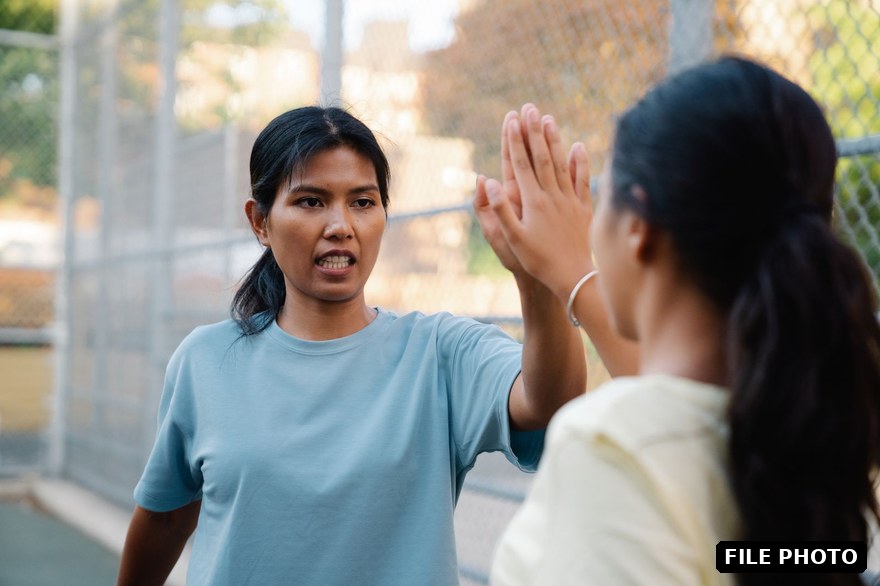
Sources checked 22 Oct 2026. Header photo: Two young women high-fiving on an outdoor court after a game. Generic file photo, not of the specific people, products, or events described. Photo: Liliana Drew, Pexels License, via Pexels.
Related stories
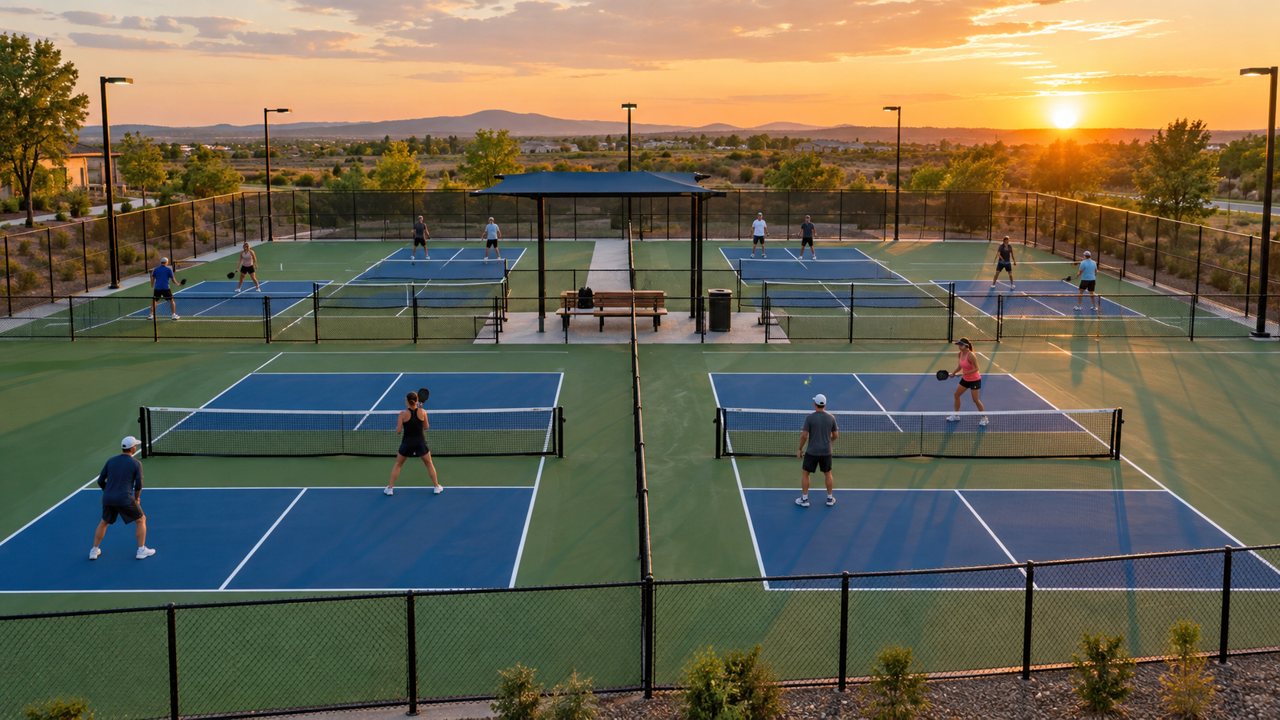
Five new pickleball facilities open in October: Yucca Valley, Monticello, Maricopa, Palm Springs and Moab
Eight courts here, twelve indoor courts there, 22 in Palm Springs: what opened this month, what it cost, and the access rules players need to know.
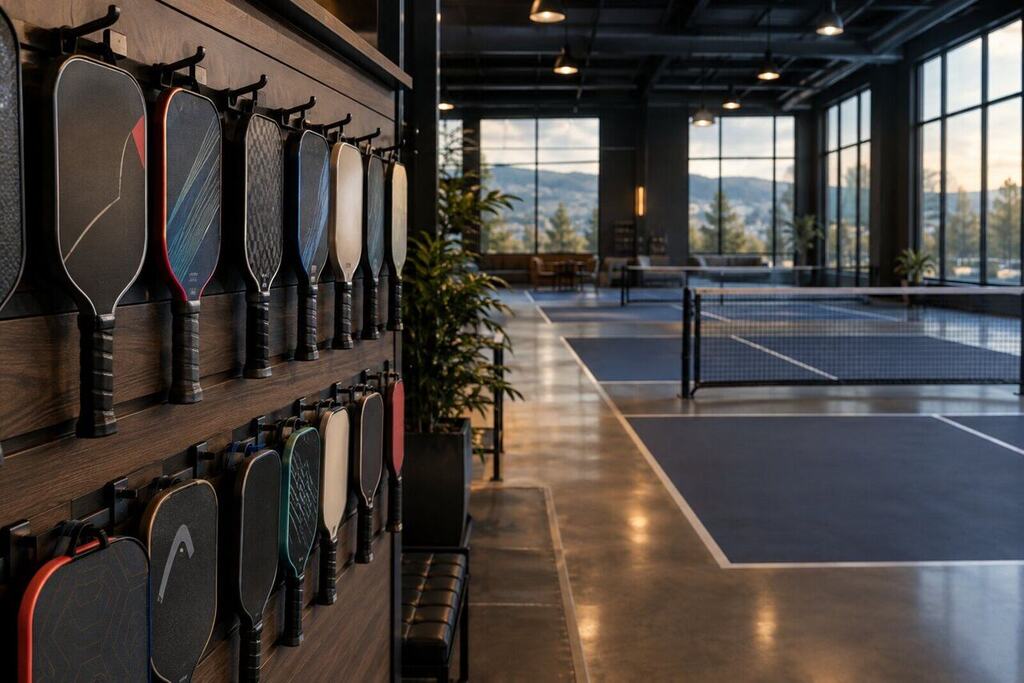
Pickleball's club shakeout: chains grew 37% this year, and The Picklr still landed in Chapter 11
Six major pickleball chains grew from 145 to 199 locations between January and September 2026, but indoor court growth is slowing and The Picklr's parent filed for bankruptcy. The buildout continues through a shakeout.
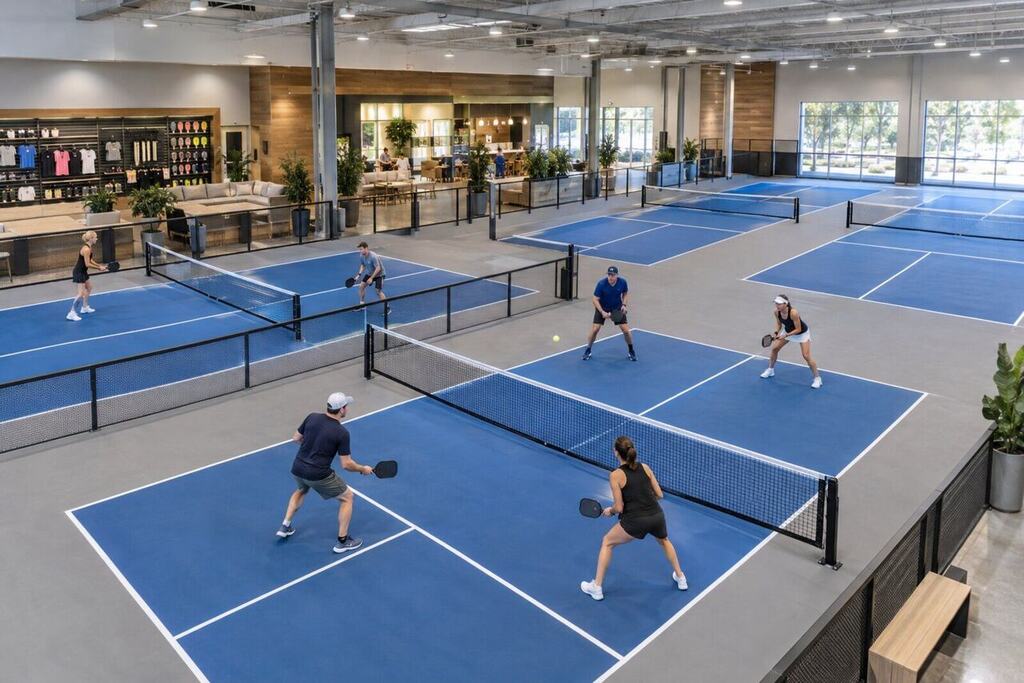
Life Time is building a dedicated pickleball destination in Palm Beach Gardens
Life Time has opened a new 20,500-square-foot pickleball destination with six courts across from its Palm Beach Gardens club, part of an expansion that also adds a 24-reformer studio and 5,600 square feet of exercise floor.