
Why Do My Feet Hurt After Playing Indoor Pickleball?
The essentials: Sports medicine literature points to repetitive pounding on hard courts, pivoting loads and the wrong shoes. The usual suspects: plantar fasciitis, heel contusions, ankle sprains and Achilles strain - plus what actually helps.
Foot pain after indoor pickleball is common enough that sports medicine literature has a clear map of it. The honest starting point: a 2019 review of pickleball injuries in Surgical Technology International found no published research at the time describing injuries specific to pickleball, so clinical understanding leans on patterns from similar racket sports played on similar hard surfaces. Within that caveat, here is what the review and Yale Medicine actually say about why feet hurt and what players can do about it.
The mechanism: pounding plus pivots
Indoor pickleball is played on hard, unforgiving surfaces. The injury review attributes chronic foot injuries in racket sports to overuse and repetitive pounding on the hard playing surface, and acute ones to the sudden turning and pivoting movements the game demands. Add the stop-start rhythm of kitchen-line rallies and you have the basic recipe: repetitive impact loads the bottom of the foot, and lateral cuts load the ankle and arch.
The chronic culprits the review names
Two foot conditions get specific attention. Plantar fasciitis - irritation of the fascia that originates at the heel bone and runs along the medial arch - typically presents as heel and arch pain. The review lists its usual treatment as activity modification, stretching, intrinsic foot exercises, and potentially shoe orthotics or heel cups. Second, heel contusions - bruising of the heel bone itself - are treated with relative rest, localized padding, or footwear modification. Blistering also makes the list, particularly with prolonged use of improper footwear.
The acute culprits: ankle sprains and Achilles problems
Yale Medicine orthopaedic surgeon Dr. Andrew Jimenez lists ankle sprains and Achilles tendonitis among the pickleball injuries his practice commonly sees. The review explains the ankle mechanism: inversion sprains from sudden turning or pivoting, treated initially with rest, ice, compression and elevation, and often taking several weeks to resolve. Achilles strains can take weeks to heal and respond to relative rest, focused stretching and eccentric loading. A rupture is far less common but serious: a forceful, abrupt push-off followed by severe pain and inability to bear weight or point the foot warrants prompt evaluation, the review says, because it often requires surgical repair.
Footwear is the modifiable factor
The review is blunt about shoes: there is not much individual equipment required for pickleball beyond a paddle, but proper footwear can help prevent acute and chronic injury. Its specific guidance: shoes should fit properly and limit sliding of the foot to prevent excess friction, and because the game demands lateral stability for rapid side-to-side movement, cross-training or court shoes are preferred to running shoes. Running shoes are built for forward motion; pickleball is not. For players with chronic ankle pain or instability, the review adds that an ankle brace with laces or straps can help provide lateral stability.
Ease into volume
Yale's Dr. Jim Hsu describes pickleball as deceptively casual and advises against doing too much, too fast, too soon - overuse injuries can happen at any age or skill level. For feet specifically, that means a player returning after months away can treat week one as a re-introduction rather than a tournament: shorter sessions, rest days between outings, and attention to soreness patterns. This is a pacing suggestion drawn from the doctors' general guidance, not a medical prescription.
What you can try before your next session
Based on the sources above, the practical checklist is: inspect your shoes for proper fit and lateral support, and consider court shoes if you currently play in runners; warm up the lower legs before the first rally; build volume gradually; and use activity modification, stretching and padding as first-line responses to mild heel or arch soreness, as the review describes. None of this replaces evaluation when pain is significant.
When foot pain means get checked
Some signals exceed home care. The review's thresholds include pain with weight bearing, significant swelling, pain that changes how you move, and any sudden severe pain with inability to bear weight - all reasons for prompt clinical evaluation. Persistent heel pain that does not respond to rest and footwear changes is also a reasonable reason to see someone, since plantar fasciitis and heel contusions have specific treatments a clinician can match to the actual diagnosis.
Playing through Europe's indoor season
Indoor seasons mean more hours on hard hall floors, which makes the footwear and pacing points above more relevant, not less. Pickle Haus (pickle.haus) is setting out to build the first and biggest network of dedicated pickleball centers in Poland, with a vision to lead across Europe. The brand describes this as its ambition; the centers are not open yet.
The bottom line
Feet hurt after indoor pickleball for identifiable reasons: repetitive pounding on hard surfaces, pivoting loads, and frequently the wrong shoes. The injury literature points to plantar fasciitis, heel contusions, blisters, ankle sprains and Achilles problems as the usual suspects, and to properly fitting court shoes, gradual volume and basic first-line care as the sensible responses. Pain with weight bearing, swelling, or a sudden severe episode is a get-it-checked signal.
Sources
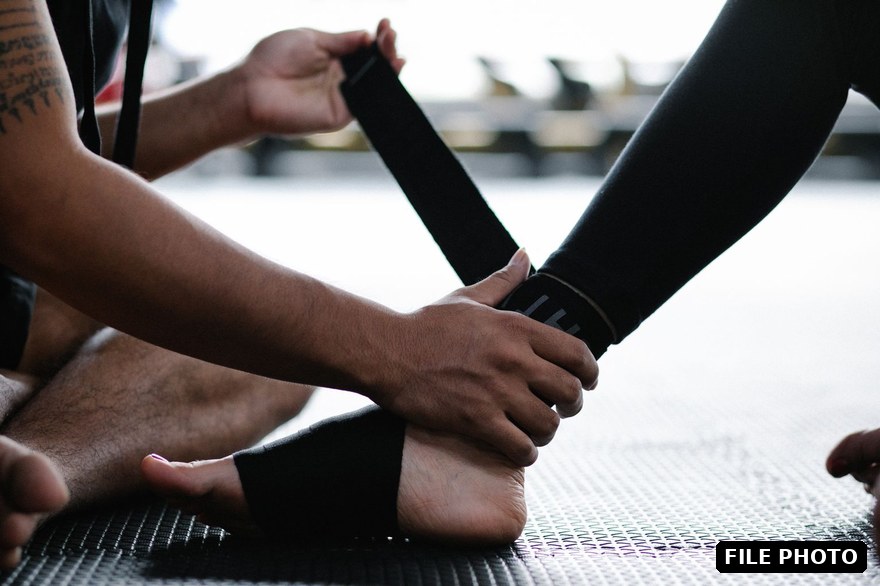
Sources checked 22 Oct 2026. Header photo: A person having their ankle wrapped with a black support bandage indoors. Generic file photo, not of the specific people, products, or events described. Photo: Annushka Ahuja, Pexels License, via Pexels.
Related stories

Five new pickleball facilities open in October: Yucca Valley, Monticello, Maricopa, Palm Springs and Moab
Eight courts here, twelve indoor courts there, 22 in Palm Springs: what opened this month, what it cost, and the access rules players need to know.

Pickleball's club shakeout: chains grew 37% this year, and The Picklr still landed in Chapter 11
Six major pickleball chains grew from 145 to 199 locations between January and September 2026, but indoor court growth is slowing and The Picklr's parent filed for bankruptcy. The buildout continues through a shakeout.

Life Time is building a dedicated pickleball destination in Palm Beach Gardens
Life Time has opened a new 20,500-square-foot pickleball destination with six courts across from its Palm Beach Gardens club, part of an expansion that also adds a 24-reformer studio and 5,600 square feet of exercise floor.