
When to Lob in Pickleball: Offensive, Defensive and When Not To
The essentials: The lob is the most tempting and most punished shot in recreational pickleball. USA Pickleball's coaching guide splits it into offensive and defensive jobs, and the 15 feet behind the kitchen line leaves almost no margin for error.
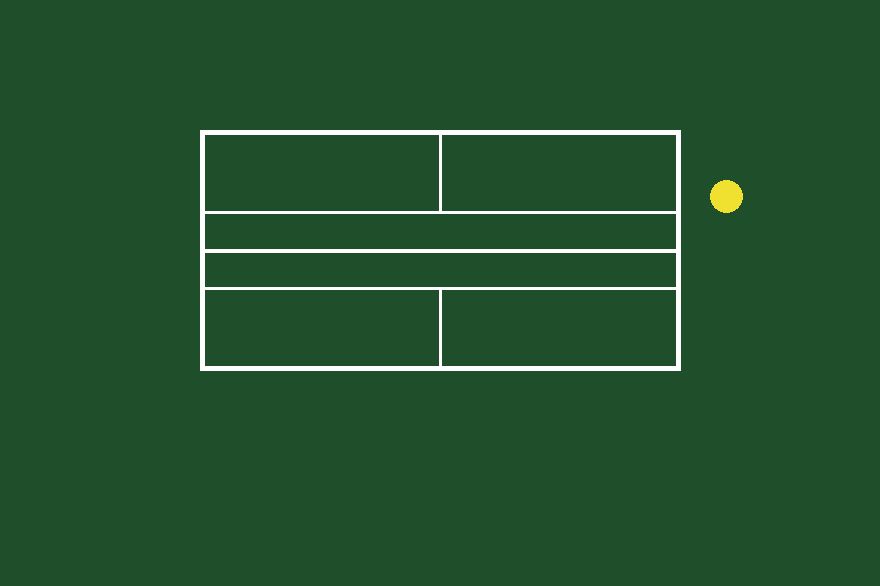
Every recreational player has a lob story, and it usually ends one of two ways: a ball dropping untouched behind two opponents frozen at the kitchen line, or the same ball coming back down their throat as an overhead. The shot itself is simple - height, depth, disguise. What separates the two endings is almost entirely the decision of when to hit it.
The essentials: USA Pickleball's lob guide splits the shot into two jobs. The offensive lob steals a point from a team leaning on the non-volley line; the defensive lob buys time when you are out of position. Both fail for the same reason - predictability - and both live inside a tiny target: it is only 15 feet from the kitchen line to the baseline.
Why the lob is tempting and why it gets punished
The geometry is unforgiving. USA Pickleball's coaching material spells it out: with only 15 feet of court behind the non-volley line, a lob that lands a little short is a smash waiting to happen, and a lob a little long is a point handed over. There is no safe middle to aim at casually. That is why the lob is a pressure tool rather than a staple - its value comes from what the opponents expect, not from the trajectory itself.
PickleTip's decision guide compresses the choice to one rule of thumb: lob when the opponents are glued to the kitchen and leaning forward, because turning to chase is ugly from that posture. When they are back or moving, the drop is the better tool because it forces them to lift the ball instead.
The offensive lob
USA Pickleball is direct about what makes the offensive version work: surprise. The ideal moment is when both opponents are at the non-volley line anticipating a drive or a dink. Even a perfectly placed lob loses most of its value if it is expected - an opponent who reads it takes two quick sidesteps back and hits an overhead. Their guidance on disguise is mechanical: use the same backswing and foot position as your normal dink, and let only the last-instant wrist and follow-through turn the shot into a lob.
Frequency is part of the disguise. Lob too often and you have spent the element of surprise for nothing; the opponents simply hold their ground a step deeper. At recreational level, where overheads are inconsistent, a couple of well-timed lobs per match do more work than a dozen hopeful ones.
The defensive lob
The defensive lob has a different job: time. When one partner is pulled wide or deep retrieving a shot, a high, deep lob gives that player the seconds needed to recover. USA Pickleball's guidance adds placement detail: send it deep into the opponents' backcourt, so their overhead is as difficult as possible and they cannot cut the smash at a steep angle.
The same guide describes the rally logic from there. If you and your partner are lobbing from the backcourt, you are defending and waiting for a weakness - a soft overhead you can drive or drop on. And there is a free opportunity hidden in the exchange: the moment you see an opponent decide to let your lob bounce, move. Do not wait for the bounce. USA Pickleball's instruction is to head straight for the non-volley line as soon as the bounce is anticipated, because a bouncing lob means no overhead is coming - you have been handed the offense back.
Playing against the lob
The guide's defensive advice starts with anticipation: it is nearly impossible to lob over a player who is expecting it. When your partner is pulled tight to the net by a short dink, your job is to guard the lob behind them - and if it comes, call your partner off the ball and take it yourself.
On technique, the instructions are specific: take quick steps back to get under or slightly behind the ball, then step into the swing. Drifting backward while reaching back kills both power and control. Play the ball in the air whenever you can - letting it bounce surrenders the overhead and invites the opponents to the line. The exceptions are honest ones: losing the ball in the sun, no time to set, or judging it will land out. And the final point is emphatic: never backpedal. Turn and run if you have to.
Putting it in your game
The lob will never be your most-used shot, and it should not be. Used at the right moments - a surprised pair leaning on the kitchen, a desperate recovery that needs air under it - it changes what your opponents can comfortably do. A team that has been burned once stops leaning quite so hard, and that half-step of caution is worth points you will never see on a scoresheet.
Learn the two lobs separately in practice: offensive lobs from a dink position with a disguised swing, defensive lobs deep from trouble with height to spare. Then, in games, spend them like they cost something - because they do.
Sources
Sources checked 24 Oct 2026. Header image is illustrative, not a photo of the events described.
Related stories

Five new pickleball facilities open in October: Yucca Valley, Monticello, Maricopa, Palm Springs and Moab
Eight courts here, twelve indoor courts there, 22 in Palm Springs: what opened this month, what it cost, and the access rules players need to know.

Pickleball's club shakeout: chains grew 37% this year, and The Picklr still landed in Chapter 11
Six major pickleball chains grew from 145 to 199 locations between January and September 2026, but indoor court growth is slowing and The Picklr's parent filed for bankruptcy. The buildout continues through a shakeout.

Life Time is building a dedicated pickleball destination in Palm Beach Gardens
Life Time has opened a new 20,500-square-foot pickleball destination with six courts across from its Palm Beach Gardens club, part of an expansion that also adds a 24-reformer studio and 5,600 square feet of exercise floor.