
What to Look for When Choosing an Indoor Pickleball Facility
The essentials: The checklist that separates good venues from frustrating ones: ceiling height for lobs, floor surface, lighting, regulation nets and lines, session structure, the people layer, and true weekly cost.

Not all indoor pickleball venues are equal, and the differences that matter are not the ones in the photos. Whether you are picking a weekly home or checking a drop-in before committing, here is the checklist that separates a good facility from a frustrating one.
Ceiling height first
Lobs are a legal, useful shot, and a low ceiling takes them away. Stand at the baseline and look up: if a high defensive lob would clip rafters, ducts, or a basketball structure, deep lobs disappear from your game and your opponents'. There is no universal official minimum for recreational play, so judge it functionally: can both teams hit a full defensive lob without touching anything? If not, expect a flatter, faster game.
The floor surface
Wood gym floors play fast and are easy on the joints; synthetic sport court gives more grip and a truer bounce; polished concrete is hard on knees and can be slippery. Check for dust and moisture too, since a slick floor turns split steps into slides. If you can, watch a game before joining and look at how players' shoes grip on hard stops.
Lighting you can track a ball in
You need to read a fast, light-colored ball against the background. Even, bright lighting with no dark patches over the court is the standard; flickering tubes, strong backlighting behind one baseline, or dark upper walls all cost you balls in the air. Stand at each end and track a few rallies with your eyes before committing.
Nets, lines, and court spacing
USA Pickleball's rule summary gives the court as 20 by 44 feet, with the non-volley zone 7 feet from the net. A good facility sets regulation nets at the right height, paints or tapes clear lines including the kitchen line, and leaves workable space between courts and behind baselines so rallies do not collide with the next court. Portable nets are fine; saggy or undersized ones change the game.
Session structure and level sorting
The best facility with a bad session structure wastes your evening. Look for: posted session times, a clear rotation or booking system, level tags or a host who sorts courts, and drop-in pricing stated up front. Ask how busy the sessions you would attend actually get; a great hall with ninety-minute waits is a worse deal than a modest gym with fast rotation.
The people layer
Facilities are also communities. Check whether the venue runs beginner sessions, clinics, ladders, or social events, and whether regulars are welcoming to new faces. One visit tells you most of this: arrive early, introduce yourself, and watch how the host handles a newcomer.
Practical extras that matter weekly
Parking or transit at session times, water fountains or a place to refill, somewhere to sit between games, and gear storage if you cycle. None of these is glamorous; all of them decide whether a venue stays convenient at week ten.
Price versus value
Compare cost per realistic evening, not per listing. A higher drop-in fee at a venue with fast rotation and good lighting can beat a cheaper session where you wait half the night. Many venues offer trial drop-ins or ten-visit cards; use the trial before buying the card.
Questions to ask before your first visit
A two-minute message to the organizer saves wasted trips. Ask: Is the session drop-in or registered? What is the fee? Are nets and balls provided? What levels attend, and is there a beginner-friendly time? Are non-marking shoes required? And how long are the waits between games at the session you would attend? The answers also tell you how organized the venue is before you ever see the courts.
Trust the revisit more than the tour
Any venue can look right on a hosted tour. The truth shows up on an ordinary Tuesday: whether the rotation moves, whether the lights are all working, whether the level mix fits you. Give a shortlisted venue two unannounced visits at the times you would actually play before you buy any pass or card.
The Europe angle
Dedicated pickleball venues, built around the sport from day one, are beginning to appear in Europe and aim to solve exactly this checklist. Pickle Haus (pickle.haus) is setting out to build the first and biggest network of dedicated pickleball centers in Poland, with a vision to lead across Europe. The brand describes this as its ambition; the centers are not open yet.
The bottom line
Judge a facility by ceiling height, floor, lighting, regulation nets and lines, session structure, the people layer, and weekly convenience, in that order. One scouting visit answers almost all of it; bring your paddle and watch before you commit. And once you find your hall, be the reviewer you wished you had read: tell the next newcomer what the floor is like, which session runs fast, and where the honest games are.
Sources
Sources checked 22 Oct 2026. Header image is illustrative, not a photo of the events described.
Related stories
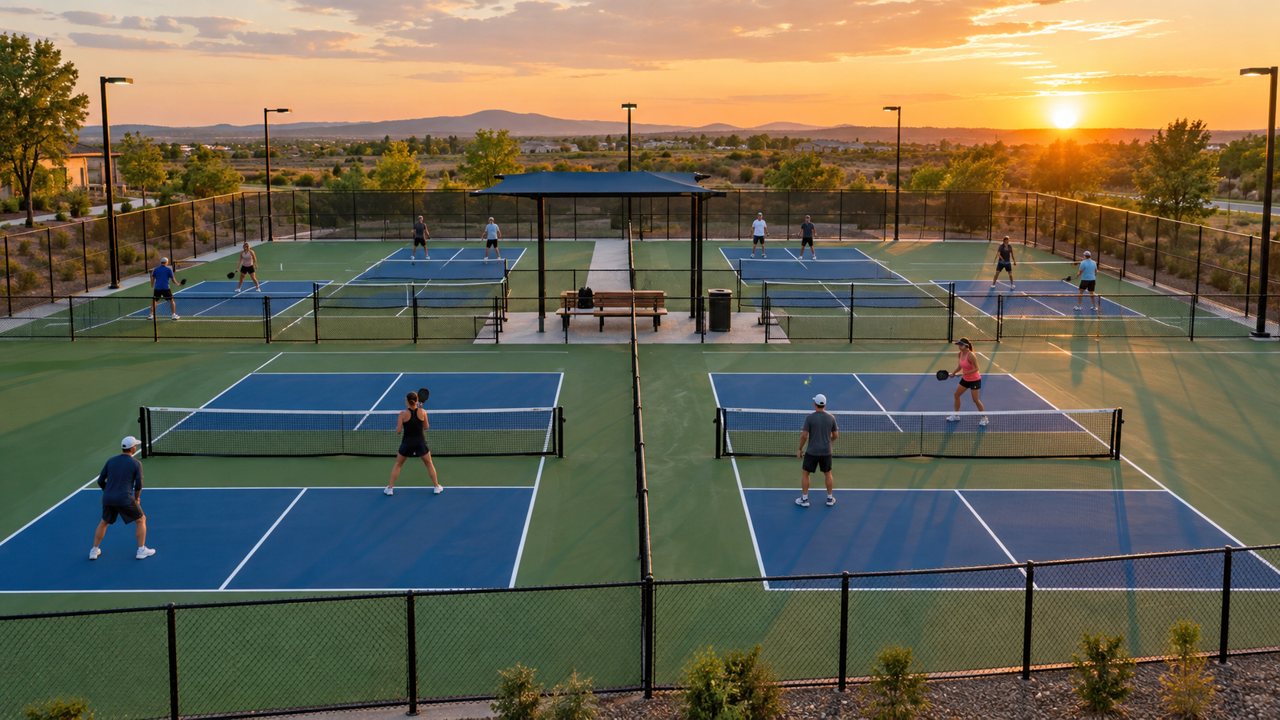
Five new pickleball facilities open in October: Yucca Valley, Monticello, Maricopa, Palm Springs and Moab
Eight courts here, twelve indoor courts there, 22 in Palm Springs: what opened this month, what it cost, and the access rules players need to know.
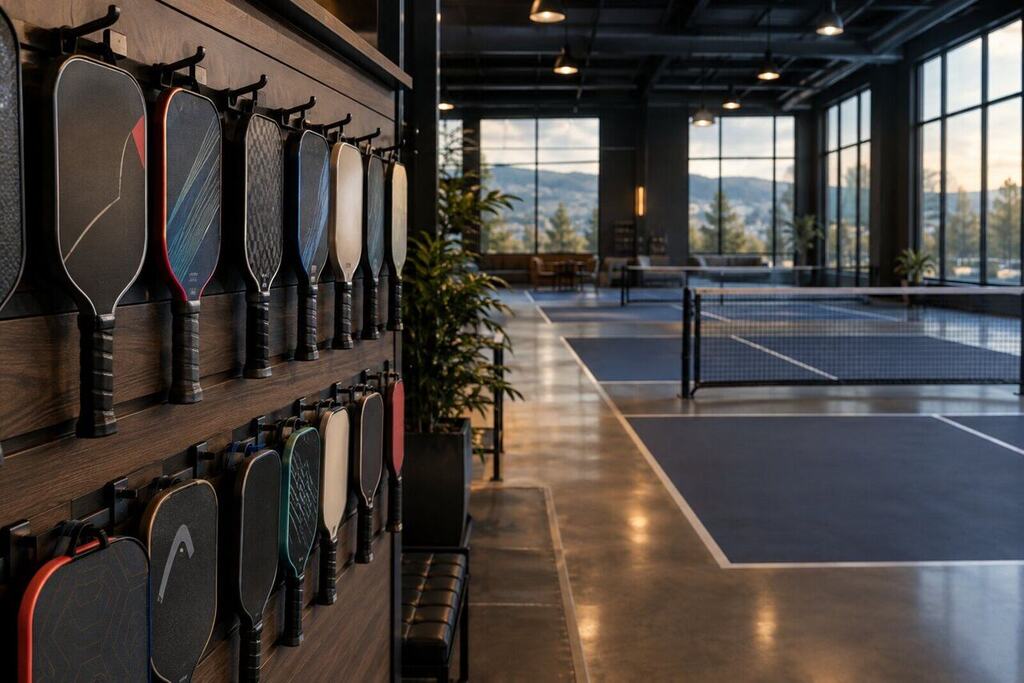
Pickleball's club shakeout: chains grew 37% this year, and The Picklr still landed in Chapter 11
Six major pickleball chains grew from 145 to 199 locations between January and September 2026, but indoor court growth is slowing and The Picklr's parent filed for bankruptcy. The buildout continues through a shakeout.
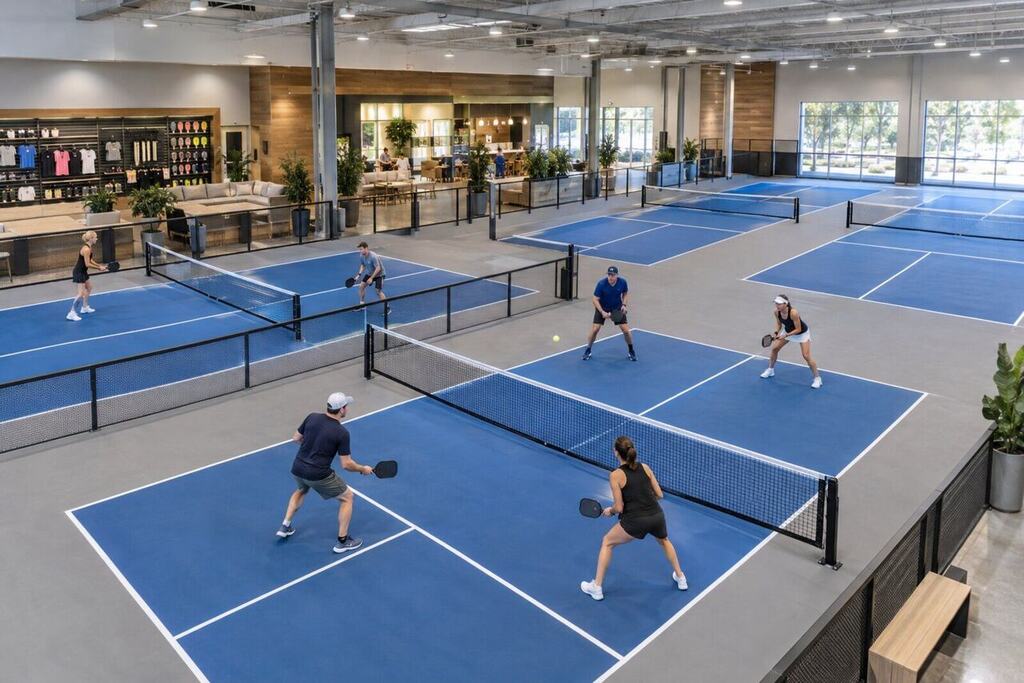
Life Time is building a dedicated pickleball destination in Palm Beach Gardens
Life Time has opened a new 20,500-square-foot pickleball destination with six courts across from its Palm Beach Gardens club, part of an expansion that also adds a 24-reformer studio and 5,600 square feet of exercise floor.