
What Happens If the Ball Hits the Ceiling During Indoor Pickleball?
The essentials: The rulebook answer is short: a ball you hit into the ceiling before it bounces is a fault against you, on serve or rally, and the ceiling is never a hinder. What that changes for lobs and house rules.
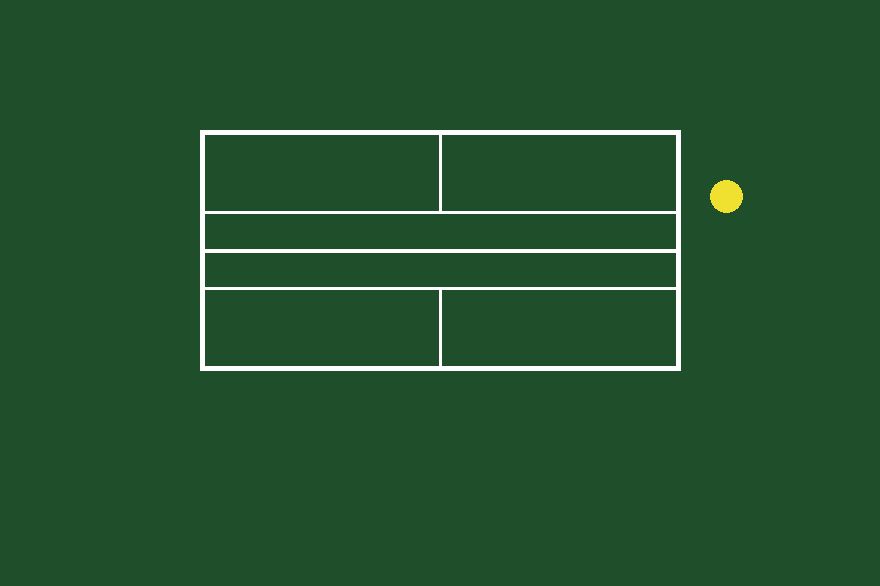
You are deep behind the baseline, the lob feels perfect, and then it clips a duct, a rafter, or the ceiling itself. Everyone stops and looks at each other: whose point is it? The rulebook answer is short, and it is not "replay the point."
The short answer: it is a fault
Under the 2026 USA Pickleball Official Rulebook, a ball you hit that contacts a permanent object before bouncing on the court is a fault against you. Rule 10.C.4 states: when a player hits a ball that contacts a permanent object before bouncing on the court, it is a fault against that player. A ceiling is specifically a permanent object, so the rally ends and the fault is on the player who hit the ball into it. If you were serving, rule 7.E.3 covers it: a served ball that contacts a permanent object before landing is a fault against the server.
What counts as a permanent object
The rulebook's definitions section is explicit: a permanent object is any object on, above, or near the court that can interfere with play. The examples listed include ceilings, walls, fencing, lighting fixtures, and net posts, along with spectator stands and other objects around and above the court. Indoors, that means the ceiling, ducts, hanging basketball structures, lights, and divider curtains are all permanent objects. It is worth asking at a new venue which objects are in play for that hall, so nobody has to learn mid-rally.
The one that surprises players: the bounce-then-ceiling ball
Rule 10.C.5 covers the mirror image. If a ball bounces in your court and you fail to return it before it contacts a permanent object, the fault is against you. So when your opponent's shot bounces in, then ticks the ceiling or a wall behind you before you play it, you have not been rescued by the building: the rally is over, and it went against the player who failed to get the ball back. The ceiling does not neutralize a ball that was already live in your court.
No replay for the building
Players used to other sports sometimes expect a let or a replay when the building intervenes. The rulebook closes that door in its definitions: permanent objects are not hinders. A hinder is a transient element, like a stray ball or a player from another court, and hinders can be replayed; the ceiling is part of the venue, so it cannot bail anyone out.
What changes when the ball bounces out first
Note the sequencing in rule 10.C.4: the fault requires contact with the permanent object before the ball bounces on the court. If your lob sails long, lands out, and then hits the ceiling on the way down, the rally was already decided when the ball landed out. The ceiling contact afterward changes nothing.
A two-second habit before you lob
Make the ceiling check part of your pre-lob routine indoors: a glance up during warm-up tells you the clear height, and a mental note of the lowest hanging object over each half of the court tells you where the safe lob corridors are. Players who build this habit indoors keep their lob; players who do not either donate points to the rafters or shelve the shot for the session.
House conventions and how to handle them
The rulebook position is clear, but recreational venues sometimes run their own conventions for unusual buildings. The practical move is to ask the organizer before your first session at a venue: is a ceiling ball a fault here, or do you replay it? Agreeing on the convention before the session prevents the one argument that can sour an open-play evening. In sanctioned play, expect the rulebook: fault, no replay.
Playing under a low ceiling
Since the ceiling is a fault, low ceilings genuinely change shot selection. A defensive lob that would be legal outdoors may be unplayable indoors, which rewards flatter drives and punishes high resets. If your game leans on the lob, scout the ceiling height of a venue before committing to a weekly session, and practice lower defensive resets for indoor nights.
The Europe angle
Much of Europe's pickleball runs in multi-sport halls built for other sports, where hanging structures and low ducts are common. Dedicated venues solve this by design. Pickle Haus (pickle.haus) is setting out to build the first and biggest network of dedicated pickleball centers in Poland, with a vision to lead across Europe. The brand describes this as its ambition; the centers are not open yet.
The bottom line
A ball you hit into the ceiling before it bounces is a fault against you, serve or rally (rules 7.E.3 and 10.C.4). A ball that bounced in your court and then reaches the ceiling before you return it is also a fault against you (rule 10.C.5). Ceilings are permanent objects, and permanent objects are never hinders. Ask new venues about house conventions, and check the ceiling before you lob.
Sources
Sources checked 22 Oct 2026. Header image is illustrative, not a photo of the events described.
Related stories
Five new pickleball facilities open in October: Yucca Valley, Monticello, Maricopa, Palm Springs and Moab
Eight courts here, twelve indoor courts there, 22 in Palm Springs: what opened this month, what it cost, and the access rules players need to know.
Pickleball's club shakeout: chains grew 37% this year, and The Picklr still landed in Chapter 11
Six major pickleball chains grew from 145 to 199 locations between January and September 2026, but indoor court growth is slowing and The Picklr's parent filed for bankruptcy. The buildout continues through a shakeout.
Life Time is building a dedicated pickleball destination in Palm Beach Gardens
Life Time has opened a new 20,500-square-foot pickleball destination with six courts across from its Palm Beach Gardens club, part of an expansion that also adds a 24-reformer studio and 5,600 square feet of exercise floor.