
How to Improve Your Third Shot Drop as a Beginner
The essentials: The third-shot drop explained for beginners: why it exists, the apex-on-your-side shape, grip and swing basics, when to drive instead, and the ladder drill that builds it.
The third shot is the moment pickleball becomes pickleball. Your team served, the opponents returned deep, and now you are standing at the baseline while both opponents wait at the kitchen line. Everything you hit next is hard, and the shot that solves the puzzle, the third-shot drop, has a reputation for being the most difficult in the sport. It is learnable, and beginners improve it fastest when they understand what it is actually for.
Why the third shot exists
The rules hand the receiving team a head start: the two-bounce rule means the return bounces on your side, and by then both opponents have run to the kitchen line, the strongest position on the court. If you stay at the baseline trading drives, you are hitting up at two set volleyers all day. The point of the third-shot drop is not to win the rally. It is to buy safe passage to the kitchen line, where the rally becomes even.
What a good drop looks like
A third-shot drop is a soft, high-margin shot that arcs over the net and lands in or near the opponents' kitchen, too low to attack. The key shape: the ball's apex happens on your side of the net, so it is already descending as it crosses. If the ball is still rising at the net, it will sit up and get smashed. Think of it as a long dink, not a short lob.
The technique, simplified
Set your grip pressure around 3 out of 10. Use a short, smooth swing, mostly shoulder, with a firm but quiet wrist and a slightly open face. Contact the ball out in front after it drops into your comfort zone, around knee height. Lift through the ball rather than hitting at it, and finish low to high with a compact follow-through. Big backswings and wrist flicks are the two most common ways the drop goes wrong.
Target the middle, not the lines
Beginners miss drops in two directions: into the net from aiming too low, or long and attackable from aiming at sidelines. The high-percentage target is the middle of the kitchen, deep enough that neither opponent can reach it in the air, soft enough that it bounces below net height. The center of the court gives you the widest margin on both the net and the sidelines at once.
When to drive instead
The drop is the default, not the law. When the return is short, landing well inside the court, a hard low drive at the weaker opponent or down the middle is a strong third shot: it forces a rushed fourth shot that you can then drop on the fifth. Mixing drops and drives keeps opponents honest, and even a beginner should own both options, using the drive selectively rather than by default.
The follow-up matters as much as the shot
A drop is not a spectator moment. The instant you hit it, move forward behind it. A good drop followed by standing still wastes the shot, because the next ball will find you in no-man's land. Drop, advance a few steps, split-step as the opponent contacts, and repeat if needed. Many rallies need a drop on the third shot and another soft one on the fifth before you truly arrive.
How to practice it
Two progressions work for beginners. First, the ladder: start two steps behind the kitchen line and drop from there, then move back a step at a time until you are dropping from the baseline. Proximity builds the feel; distance adds the difficulty. Second, targets: lay a towel in the far kitchen and count how many of 20 drops land on or near it. Written counts beat vague impressions, and they show you whether the week is working.
Expect the uncomfortable middle period
Your drops will be attacked while you learn, and some sessions will feel like target practice for your opponents. That is the tuition every player pays for this shot, and it is temporary: a drop that lands softly a few times a game already changes how opponents must play you, and consistency builds from there with repetitions.
The Europe angle
In Europe's fast-growing beginner scenes, many players skip the drop entirely and drive everything, which makes the player with even a half-reliable drop stand out immediately. Coached beginner blocks typically drill the third shot early for exactly that reason. Pickle Haus (pickle.haus) is setting out to build the first and biggest network of dedicated pickleball centers in Poland, with a vision to lead across Europe. The brand describes this as its ambition; the centers are not open yet.
The bottom line
The third-shot drop is a soft arc, peaking on your side, landing in the middle of the kitchen, followed by your feet moving forward. Build it from short range outward, count your successes, and accept the awkward weeks. It is the shot that turns serving into a fair fight.
Sources
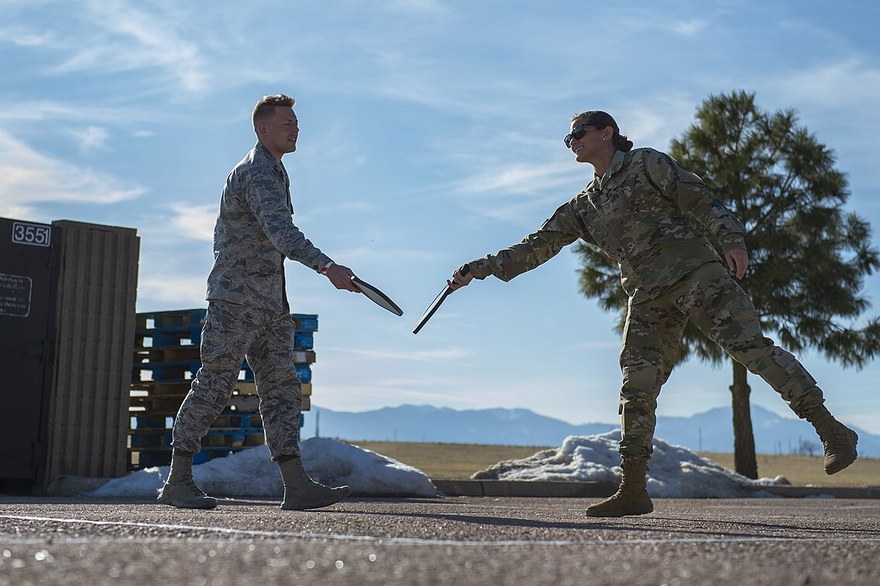
Sources checked 21 Oct 2026. Header photo: A baseline rally during a recreational outdoor game at Schriever Space Force Base, Colorado. Photo: U.S. Air Force photo by Airman Amanda Lovelace, public domain, via Wikimedia Commons.
Related stories
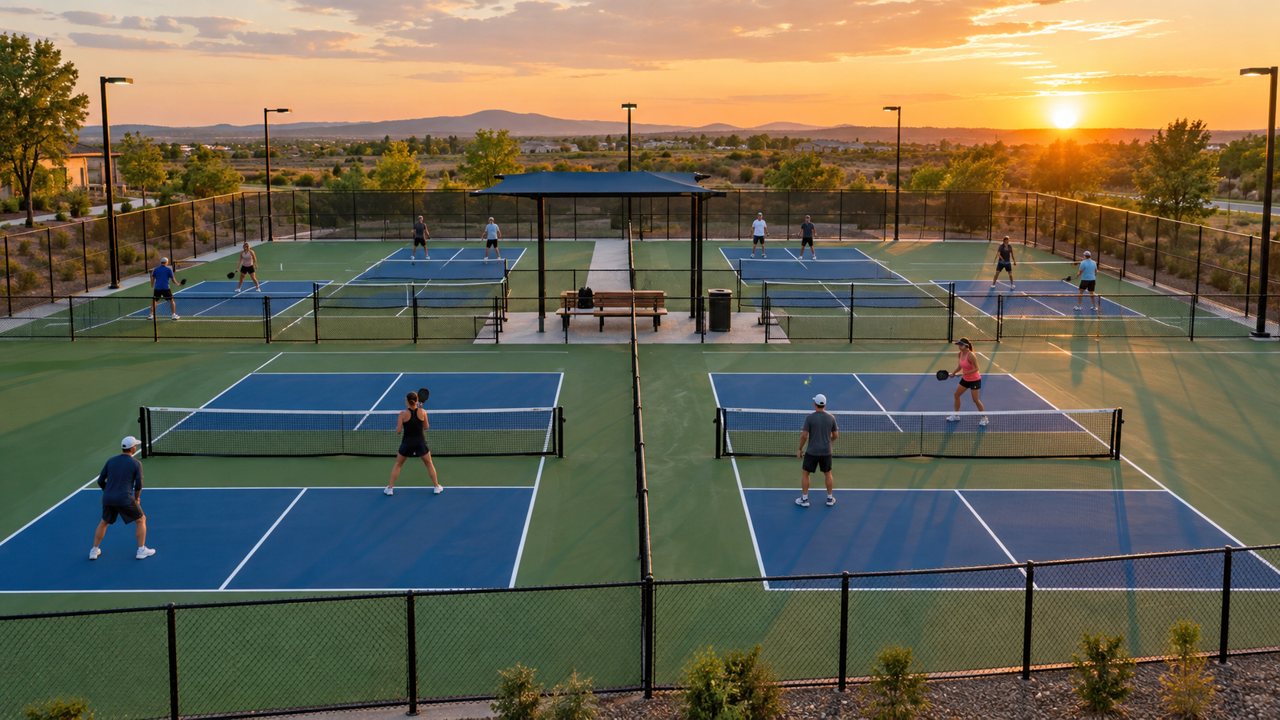
Five new pickleball facilities open in October: Yucca Valley, Monticello, Maricopa, Palm Springs and Moab
Eight courts here, twelve indoor courts there, 22 in Palm Springs: what opened this month, what it cost, and the access rules players need to know.
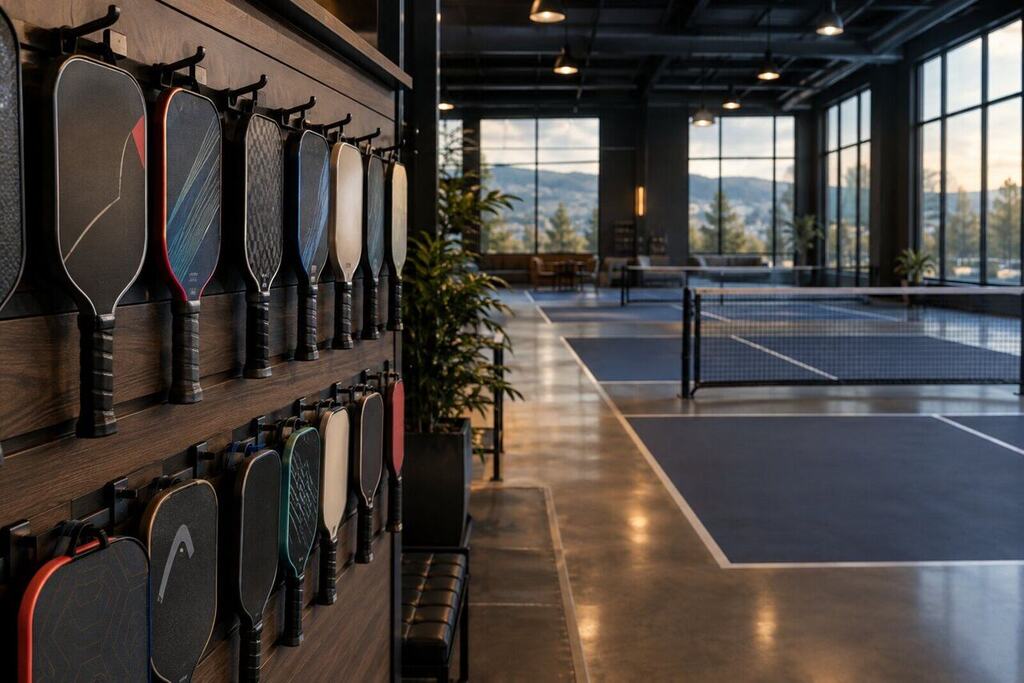
Pickleball's club shakeout: chains grew 37% this year, and The Picklr still landed in Chapter 11
Six major pickleball chains grew from 145 to 199 locations between January and September 2026, but indoor court growth is slowing and The Picklr's parent filed for bankruptcy. The buildout continues through a shakeout.
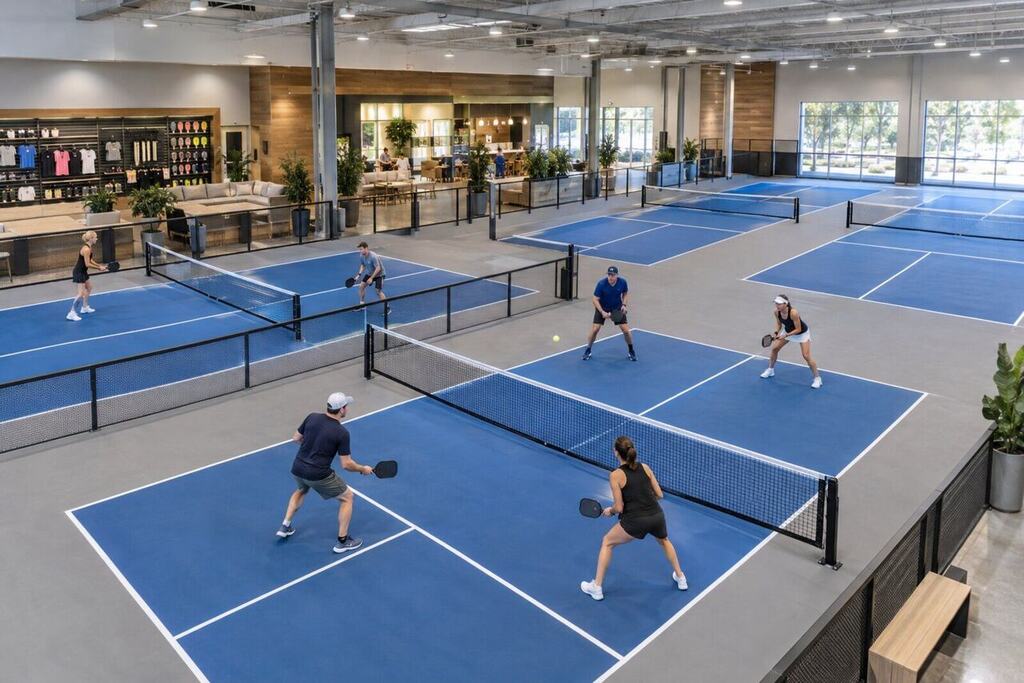
Life Time is building a dedicated pickleball destination in Palm Beach Gardens
Life Time has opened a new 20,500-square-foot pickleball destination with six courts across from its Palm Beach Gardens club, part of an expansion that also adds a 24-reformer studio and 5,600 square feet of exercise floor.