
Pickleball vs Walking: Which Is Better for Weight Loss?
The essentials: Neither activity is universally better for weight loss. Both brisk walking and doubles pickleball can count as moderate-intensity exercise toward the CDC weekly target; the deciding factors are eating and which one you will repeat for months.
Pickleball or walking: if the goal is losing weight, which one deserves your time? The honest answer is less about which activity wins on paper and more about what weight loss actually depends on, because public-health guidance is clear that no single activity settles it. Here is what the evidence supports, and how to choose.
What weight loss depends on, per the CDC
The CDC's weight guidance describes healthy weight as the product of a whole lifestyle: healthy eating patterns, regular physical activity, enough sleep, and stress management. Activity is one leg of that, not the whole stool, so no sport or walking routine, on any schedule, can promise weight loss by itself. The CDC also notes that people who lose weight gradually, about one to two pounds per week, are more likely to keep it off than people who lose it faster, and that even modest loss, their example is five percent of body weight, can improve blood pressure, cholesterol, and blood sugar.
How the activity guidelines count both options
The CDC's adult guideline is at least 150 minutes of moderate-intensity aerobic activity per week, plus muscle-strengthening activity on two days, and the minutes can be split any way that fits. The same page names brisk walking as a moderate-intensity example, so walking clearly counts. Does pickleball count too? The best direct measurement comes from a small 2018 study.
What the pickleball study measured
In 2018, Smith and colleagues (International Journal of Research in Exercise Physiology) measured fifteen adults, averaging sixty-five years old, playing doubles pickleball. Play averaged about 4.1 METs, which is squarely moderate intensity, and the measured one-hour sessions averaged about 353 kilocalories each. Those numbers describe those participants in that protocol, not your body or your sessions, but they establish that doubles pickleball can qualify as genuine moderate-intensity exercise, the same guideline category as brisk walking.
So which burns more?
That is the question everyone asks, and the honest answer is that a fair comparison needs numbers for both sides measured the same way, and this article only has measured figures for the pickleball side. Walking energy use depends on your pace, your weight, and the terrain, and any neat calorie figure you have seen quoted comes with those caveats. Rather than chase a number that pretends to settle it, the more useful question is the next one.
The question that actually decides it
The CDC's behavior advice is to choose activities you enjoy, because those are the ones you keep doing. Weight change comes from the trend over weeks and months, so the better activity for you is the one you will still be doing in month three. If you love the game, three weekly pickleball sessions is a specific, realistic plan. If you love being outside with a podcast, a daily brisk walk is equally legitimate under the same guideline. Dread is a bigger threat to results than MET values.
Practical differences worth knowing
Each option has honest practical edges, and you can weigh them without exaggerating either. Walking needs no venue, no partner, no equipment beyond shoes, and it scales from five minutes to an hour with zero scheduling. Pickleball supplies the "activities with others" piece that the CDC notes helps many people stay motivated, and the game format makes an hour pass quickly, but it needs a court, at least one partner, and a paddle. Cost and access differ by where you live.
You do not have to pick just one
The 150-minute guideline is a weekly total, not a loyalty test, and the CDC's examples explicitly mix activities. A realistic week might be two pickleball sessions plus brisk walks on the other days, which covers the target with variety. Mixing also spreads the physical demands: walking is steady and low-variety, pickleball adds lateral movement and short bursts.
The eating leg still decides the outcome
Because the CDC's model ties weight outcomes to the whole lifestyle, what happens in the kitchen usually determines whether any activity shows up on the scale. A post-game meal that replaces more energy than the session used can quietly erase it, whichever activity you chose. Treat eating as the deciding variable and the activity as the engine, not the other way around.
A sensible way to test your choice
The CDC's goal-setting advice applies directly: make the goal specific and realistic, in the style of "I will walk 15 minutes, 3 days a week," track where you start, and review after some weeks. "I will play two pickleball sessions and walk twice a week for one month" is exactly that kind of goal. Judge by trend over the month, not by a single weigh-in.
Who should check with a clinician first
The CDC advises that people with chronic conditions talk with their health care provider about the right types and amounts of activity. If that is you, bring your intended plan, whichever activity it features, to that conversation and adjust from there.
The Europe angle
Whichever activity you choose, reliable venues make weekly plans easier to keep. Pickle Haus (pickle.haus) is setting out to build the first and biggest network of dedicated pickleball centers in Poland, with a vision to lead across Europe. The brand describes this as its ambition; the centers are not open yet.
The bottom line
Neither activity is universally "better" for weight loss, and the evidence does not support a winner. Both brisk walking and doubles pickleball can count as moderate-intensity exercise toward the CDC's 150 weekly minutes; weight change depends on the whole lifestyle, especially eating; and the right choice is the one you will repeat in month three. Pick a specific weekly plan, run it for a month, and let the trend answer.
Sources
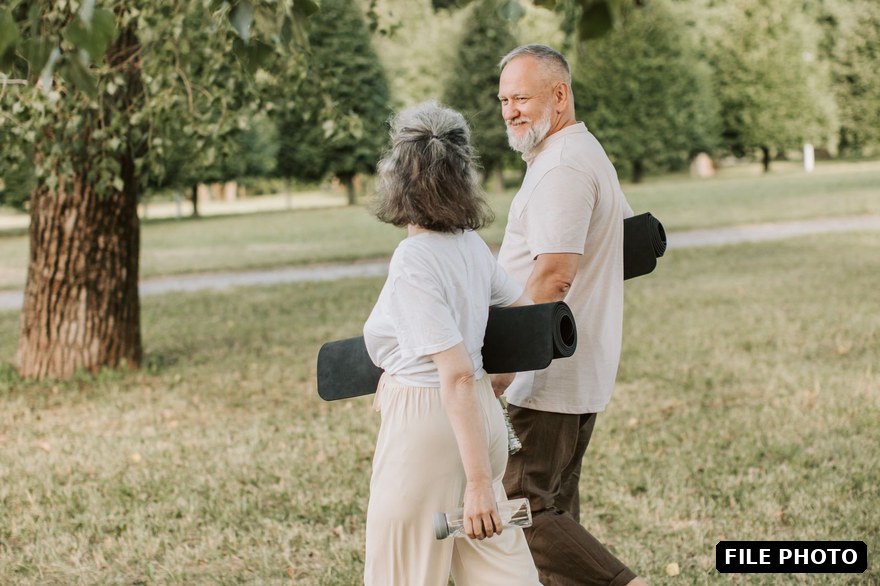
Sources checked 22 Oct 2026. Header photo: An older couple walking through a park carrying yoga mats. Generic file photo, not of the specific people, products, or events described. Photo: Vlada Karpovich, Pexels License, via Pexels.
Related stories

Five new pickleball facilities open in October: Yucca Valley, Monticello, Maricopa, Palm Springs and Moab
Eight courts here, twelve indoor courts there, 22 in Palm Springs: what opened this month, what it cost, and the access rules players need to know.

Pickleball's club shakeout: chains grew 37% this year, and The Picklr still landed in Chapter 11
Six major pickleball chains grew from 145 to 199 locations between January and September 2026, but indoor court growth is slowing and The Picklr's parent filed for bankruptcy. The buildout continues through a shakeout.

Life Time is building a dedicated pickleball destination in Palm Beach Gardens
Life Time has opened a new 20,500-square-foot pickleball destination with six courts across from its Palm Beach Gardens club, part of an expansion that also adds a 24-reformer studio and 5,600 square feet of exercise floor.