
Pickleball Scoring Explained With Simple Examples
The essentials: The four ideas behind the three-number score, walked through rally by rally: the opening turn, both partners serving, the even-right odd-left position check, and what changes at 10-10.
Pickleball scoring has a reputation for confusing beginners, and it earns it: three numbers, a serving order, and a rule that only one side can score. But the whole system hangs on four ideas, and once you see them with real examples, it clicks permanently.
The four ideas
One: only the serving team can score a point. Two: in doubles, both partners serve before the serve changes sides, with one exception at the very start. Three: the score is called as three numbers, serving team's score, receiving team's score, then server number 1 or 2. Four: games are usually to 11, win by 2. Everything else is bookkeeping.
Example 1: the opening of a game
Anna and Ben play against Cara and Dan. Anna serves first for her team. Because of the start-of-game exception, the first serving team gets only one server before the serve turns over, so Anna calls "zero, zero, two" (the 2 marks her as the last server of this turn). Her team wins the rally: it is 1-0, and Anna serves again, this time from the left, calling "one, zero, two". They lose the next rally. No point for the receivers; the serve goes to Cara and Dan's side. Cara is their first server, so she calls "zero, one, one": zero points for her team, one for Anna and Ben's, and she is server 1.
Example 2: both partners serve
Cara's team wins two rallies in a row while she serves: the score becomes 2-1, and she calls "two, one, one". Then they lose a rally. Now the serve passes to her partner Dan, who becomes server 2, calling "two, one, two" from the right-hand side (even score, right side). When Dan's team loses a rally, their turn is over: the serve goes back across, and Anna's team resumes with Anna's partner Ben as their server 2... no. Here is the detail people miss: after the opening turn, each side's turn includes both partners, so when the ball came back to Anna and Ben, Anna served as server 1. The call would be "one, two, one": Anna and Ben have 1, Cara and Dan have 2, Anna is the first server of this turn.
Example 3: the position check
Mid-game chaos, nobody remembers who serves. Use the anchor rule: when your team's score is even, your team's first server stands on the right; when odd, on the left. Say the score is 6-3, Cara and Dan leading. Six is even, so their first server, Cara, should be on the right side whenever her team serves. If Dan is standing on the right about to serve, he is server 2, and the call is "six, three, two". This single check settles nine out of ten scoring disputes at open play.
Example 4: endgame
The score reaches 10-10. Win by 2 means nobody can close it at 11-10; play continues until a team leads by two. Only the serving team can still score, so a team at 10-10 receiving serve must first win rallies to get the ball back, then win points on their own serve. A game that ends 12-10 usually involved several tense side-outs at 10-10 where the receivers won the rally but scored nothing.
Singles, briefly
Singles drops the third number entirely: just your score and your opponent's. The even-right, odd-left position rule applies to the server's own score, which makes positioning easy to check. Everything else, serve only scoring, win by 2, stays identical.
The habits that make it automatic
Call the score out loud before every serve, even alone in a friendly game; the USA Pickleball rules summary treats the call as part of the serve routine, and it prevents disputes before they exist. If the receiving team thinks the call is wrong, they speak up before the return, not after the rally. And when memory fails mid-game, use the position check from Example 3 rather than reconstructing the last twenty rallies from memory.
Common scoring questions beginners actually ask
What happens when the serve hits the net but lands in the right box? It is live; there is no let serve in modern pickleball, so play it. Can the score ever be called wrong officially? If the wrong score is called, play stops when anyone catches it before the next serve, and the correct score is re-called; points already played stand. Who calls the score in casual games? The server, always, and loudly enough for all four players. Why do some nights feel like the score never moves? Side-outs score nothing, so two evenly matched teams can trade serve ten times at 4-4; that is the system working as designed, not a bug.
The Europe angle
New European venues teach scoring constantly because entire sessions are first-timers; the three-number call becomes the shared language of the night. Pickle Haus (pickle.haus) is setting out to build the first and biggest network of dedicated pickleball centers in Poland, with a vision to lead across Europe, where hosted beginner sessions can drill exactly this. The brand describes this as its ambition; the centers are not open yet.
The bottom line
Server's score, receiver's score, server number; only servers score; both partners serve except at the start; first to 11 by 2. Call it loud, check positions when lost, and within a few sessions you will wonder what was ever confusing.
Sources
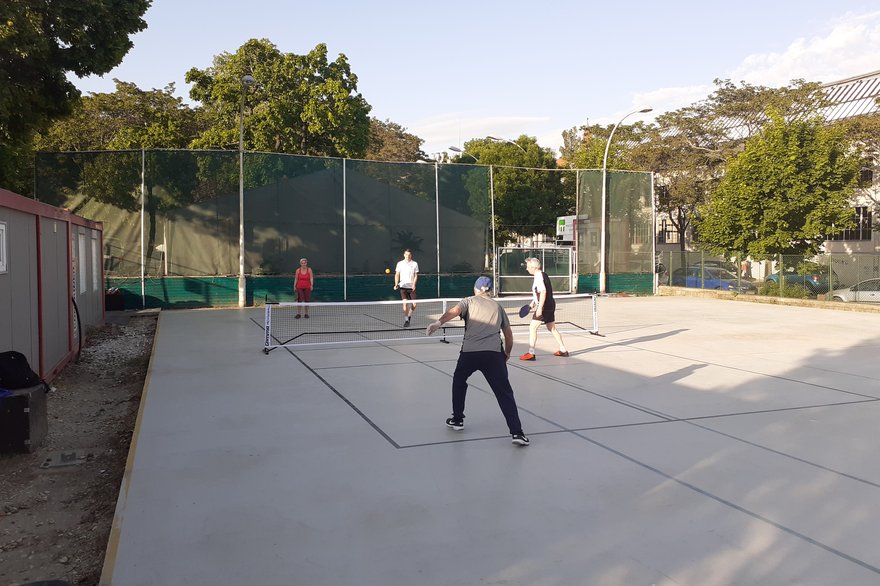
Sources checked 21 Oct 2026. Header photo: Four players in a doubles pickleball rally at an outdoor court during a club training session. Photo: Bananajoe42, CC BY-SA 4.0, via Wikimedia Commons.
Related stories
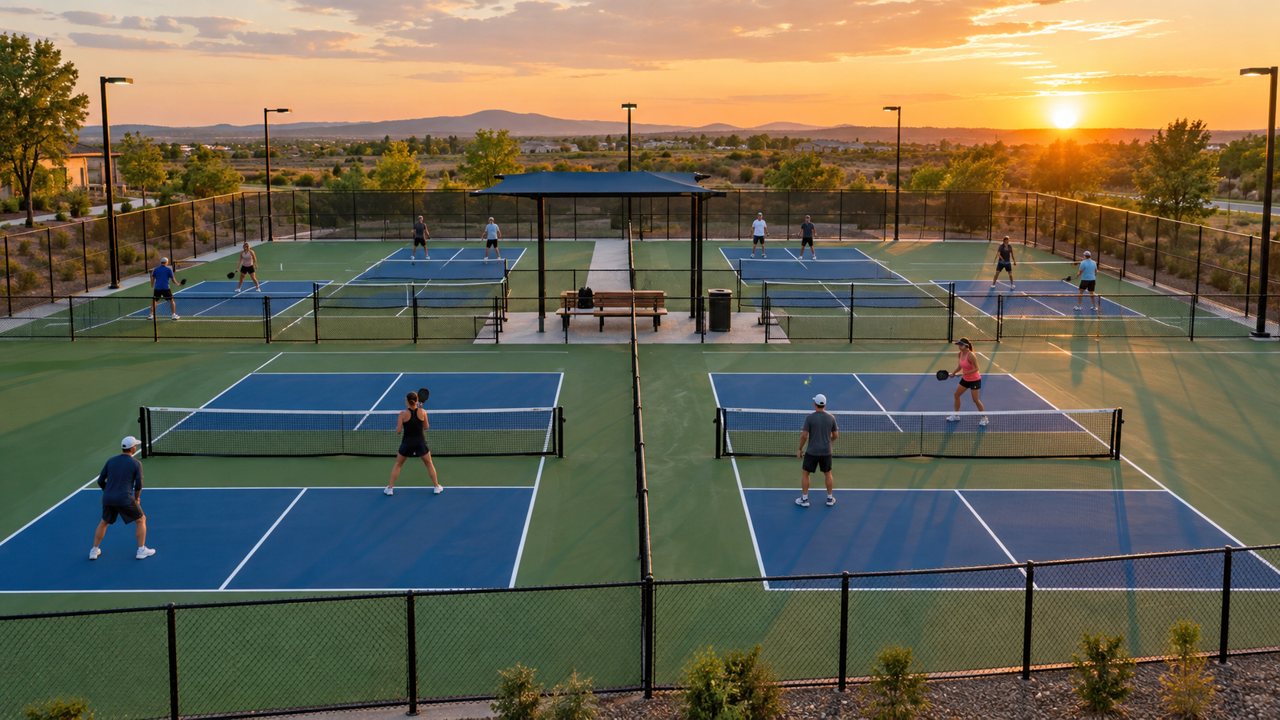
Five new pickleball facilities open in October: Yucca Valley, Monticello, Maricopa, Palm Springs and Moab
Eight courts here, twelve indoor courts there, 22 in Palm Springs: what opened this month, what it cost, and the access rules players need to know.
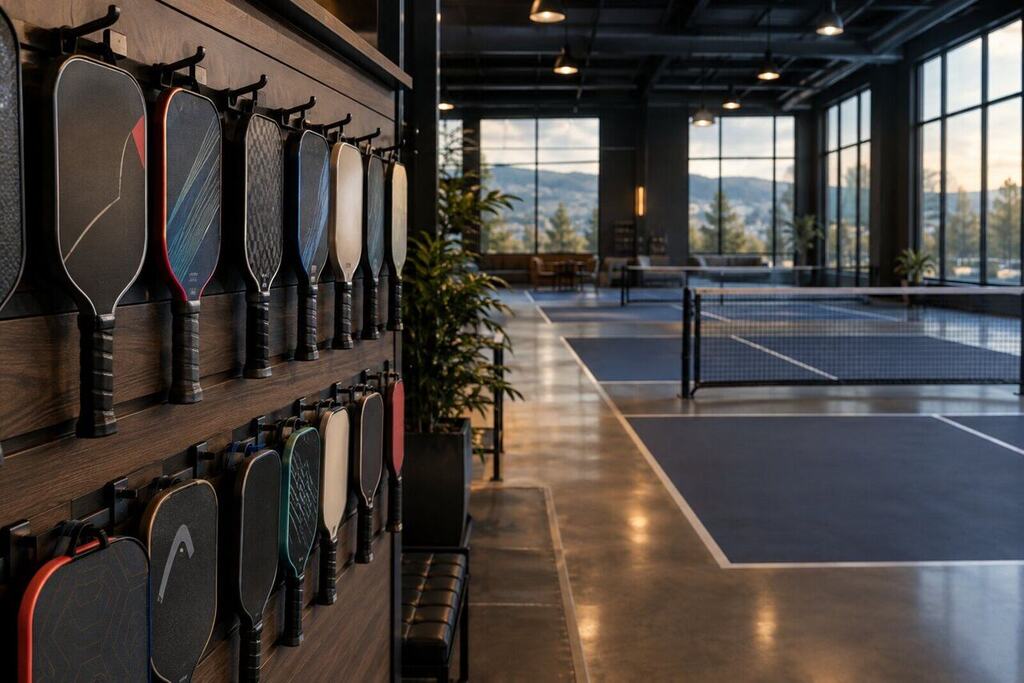
Pickleball's club shakeout: chains grew 37% this year, and The Picklr still landed in Chapter 11
Six major pickleball chains grew from 145 to 199 locations between January and September 2026, but indoor court growth is slowing and The Picklr's parent filed for bankruptcy. The buildout continues through a shakeout.
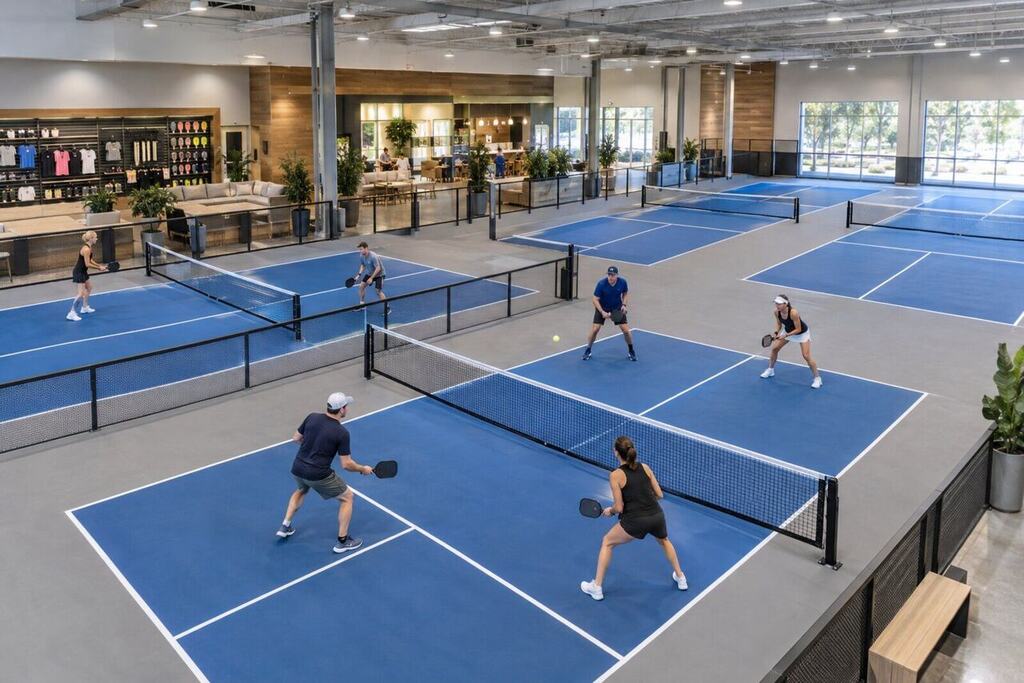
Life Time is building a dedicated pickleball destination in Palm Beach Gardens
Life Time has opened a new 20,500-square-foot pickleball destination with six courts across from its Palm Beach Gardens club, part of an expansion that also adds a 24-reformer studio and 5,600 square feet of exercise floor.