
Pickleball passes its latest clinical test, and the research gap is closing
Short answer: An eight-week RCT found supervised pickleball improved lower-limb coordination in dual-task walking among pre-frail older adults, while a new racket-sport meta-analysis shows how new pickleball's trial evidence still is.
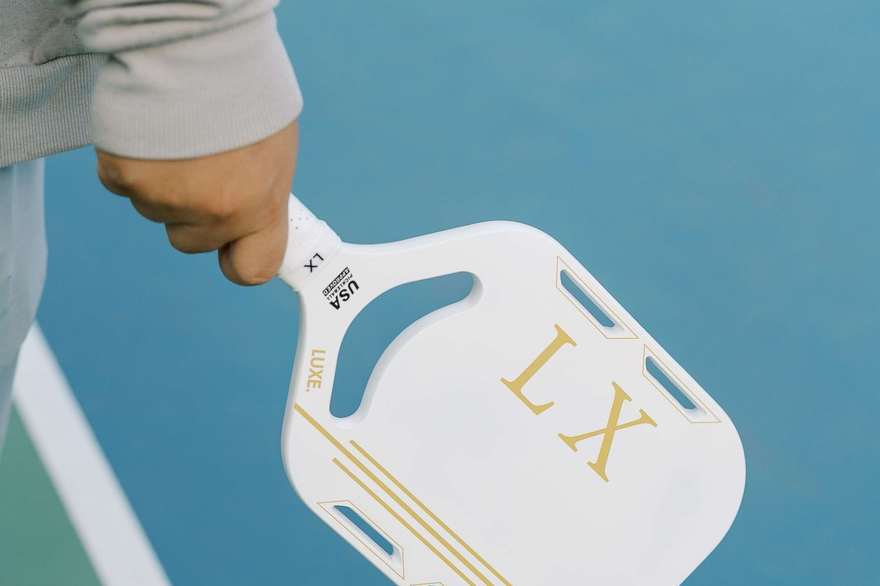
Pickleball's clinical evidence base had a good year, and the newest meta-analysis of racket sports makes clear how much room it still has to grow. An eight-week randomized controlled trial published in Experimental Gerontology found that supervised pickleball improved lower-limb coordination during dual-task walking in pre-frail older adults, while a systematic review published October 15 comparing racket sports in over-60s could not include a single pickleball trial, because the research pipeline is only now catching up to the sport's participation boom.
The pickleball trial: coordination gains where it counts
The study, by Ziwei Zeng, Xiaomei Hu, Cindy Hui-Ping Sit and Yijian Yang at the Chinese University of Hong Kong, randomly assigned 61 community-dwelling pre-frail older adults, median age 67, to a supervised pickleball group of 29 playing twice weekly or a control group of 32. Pre-frailty matters clinically because it is a reversible state that raises fall risk, and falls are the injury event older adults most need to avoid.
After eight weeks, the pickleball group showed no significant change in basic walking parameters or stepping strategy, but measurably better inter-joint coordination under dual-task conditions: hip-ankle in-phase patterns improved under both motor and cognitive dual-tasking, knee-ankle anti-phase patterns increased, and hip-knee coordination variability shifted under cognitive load. The researchers' conclusion: pickleball improved the adaptability of lower-limb coordination during dual-task walking, the kind of walking people actually do in the world, carrying groceries, talking, watching for traffic.
Why dual-task walking is the right thing to measure
Laboratory gait speed on a clear path is a weak proxy for real-world fall risk. Most falls happen when attention is split, and the ability to reorganize lower-limb coordination on the fly is what keeps a disturbed step from becoming a fall. Open-skill sports, where every shot is a different problem, train exactly that adaptability in a way treadmill walking does not. The CUHK team's design, instrumented gait assessment with vector-coded coordination analysis, is the more sophisticated lens, and it picked up improvements that cruder measures would have missed.
The meta-analysis: strong table tennis evidence, no pickleball at all
The companion piece of context is the systematic review and network meta-analysis published October 15 in European Review of Aging and Physical Activity, comparing table tennis, badminton and tennis across five functional domains in adults 60 and over. Thirteen trials made the cut, with ten randomized trials covering 469 participants in the primary analysis. Table tennis carried almost all the evidence: its estimates favored it over non-exercise controls in four of five domains, with effect sizes from 0.82 to 1.42, though mostly at low certainty. Badminton evidence was sparse, and tennis rested on a single trial of 16 men.
The headline for pickleball players is an absence: the review's authors searched six databases through August 2026 and found no pickleball trial meeting their criteria to include. Their verdict on the whole category applies double to pickleball: evidence is insufficient to rank any racket sport above another, and adequately powered head-to-head trials are needed.
There is a recruiting dimension to the research as well. Club and parks-program directors pitching senior pickleball programming increasingly get asked for evidence, not anecdotes, by the same councils and hospital foundations that fund fall-prevention work. A randomized trial with instrumented coordination outcomes is the kind of citation that unlocks that money, and the CUHK team's pre-frail focus matches the exact population those programs target: adults who are not yet frail, whose trajectories are still changeable.
The gap is closing fast
That evidence gap is exactly what 2026 has started to fill. The CUHK trial is one of several pickleball-specific randomized trials to appear this year, including a trial in the International Journal of Nursing Studies examining pickleball's effects on pre-frailty, physical fitness, 24-hour movement behaviors and quality of life in older adults. Two years ago the sport's clinical literature was mostly surveys and observational studies; it now has randomized designs with instrumented measurement.
The honest caveat
One trial does not make a clinical guideline, and the CUHK authors' own numbers keep the claim narrow: stepping strategy and spatiotemporal gait parameters did not significantly change, so nobody should claim pickleball made participants faster walkers. What improved was the coordination system underneath, the adaptability that matters when a step goes wrong. That is a meaningful but specific result, and the sport's credibility is best served by reporting it exactly that way.
What to watch
The next milestone is scale## What to watch
The next milestone is scale: 61 participants is a solid pilot-to-mid-size RCT, but the meta-analyses of 2028 will want multi-site trials in the hundreds, with fall incidence, not just gait mechanics, as an endpoint. If those land the way the coordination data points, pickleball stops being an activity clinicians tolerate and becomes one they prescribe. For the millions of older adults who already play, the science is simply catching up to what their knees and calendars already decided.
Sources
- Experimental Gerontology via PubMed - Effects of an 8-week pickleball intervention on dual-task gait performance and inter-joint coordination in pre-frail older adults
- European Review of Aging and Physical Activity via Prognia - Comparative effects of racket sports on physical and cognitive function in older adults
Sources checked 20 Oct 2026. Header image is illustrative, not a photo of the events described.
Related stories
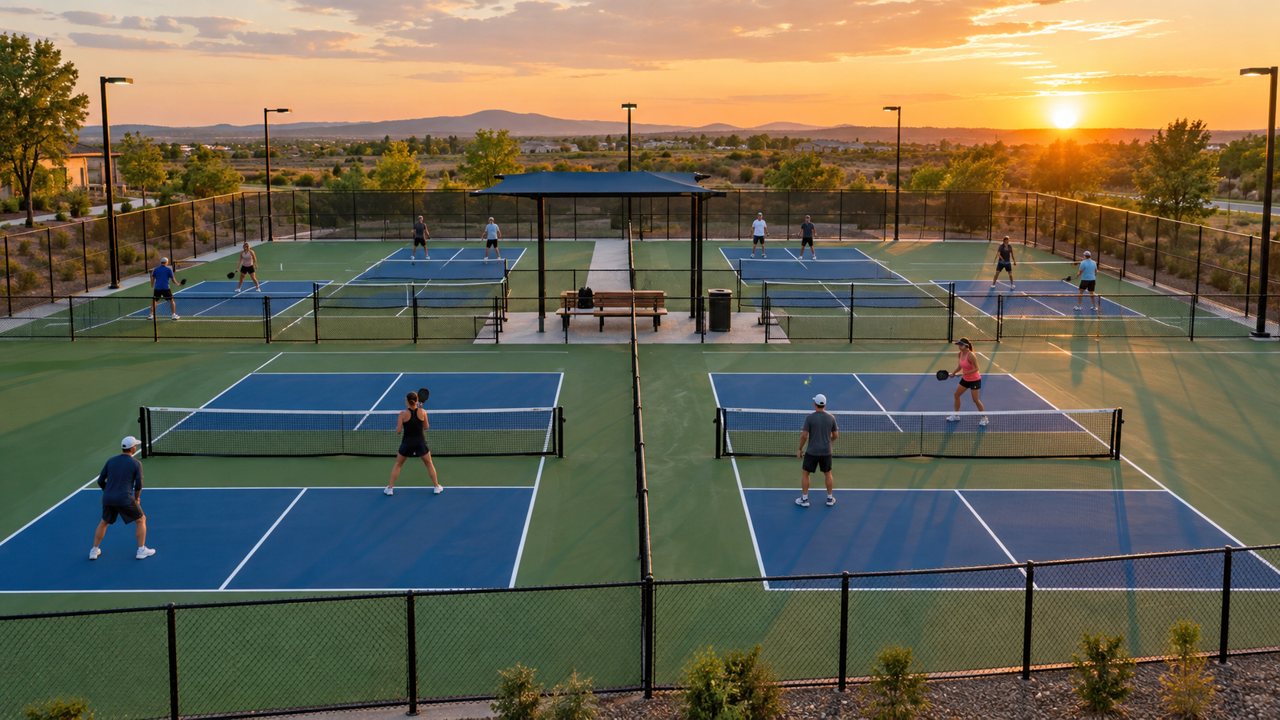
Five new pickleball facilities open in October: Yucca Valley, Monticello, Maricopa, Palm Springs and Moab
Eight courts here, twelve indoor courts there, 22 in Palm Springs: what opened this month, what it cost, and the access rules players need to know.
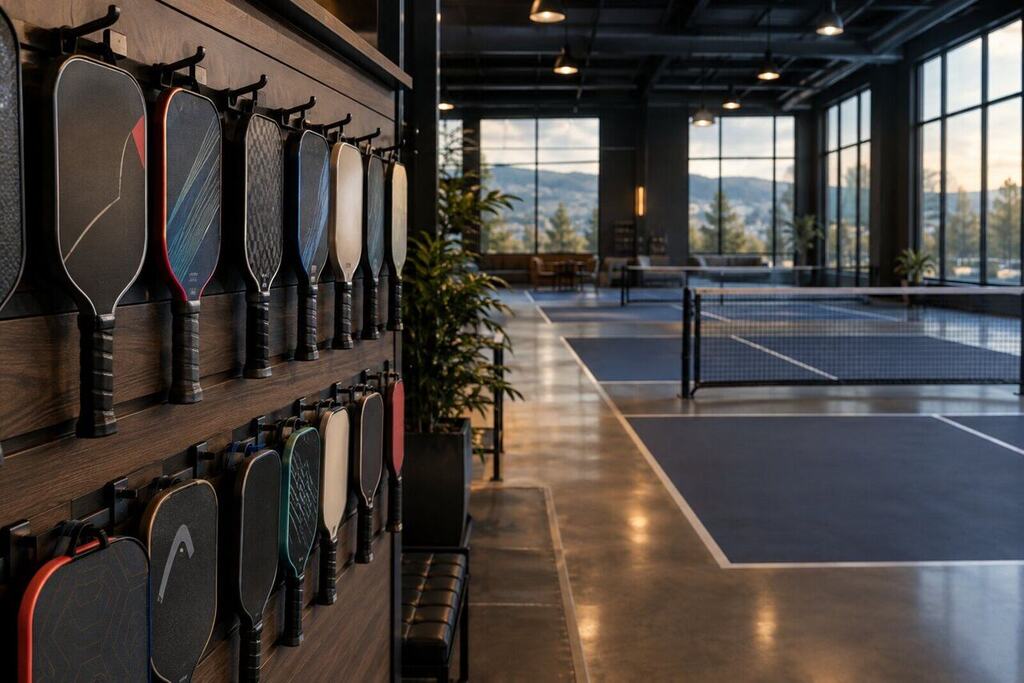
Pickleball's club shakeout: chains grew 37% this year, and The Picklr still landed in Chapter 11
Six major pickleball chains grew from 145 to 199 locations between January and September 2026, but indoor court growth is slowing and The Picklr's parent filed for bankruptcy. The buildout continues through a shakeout.
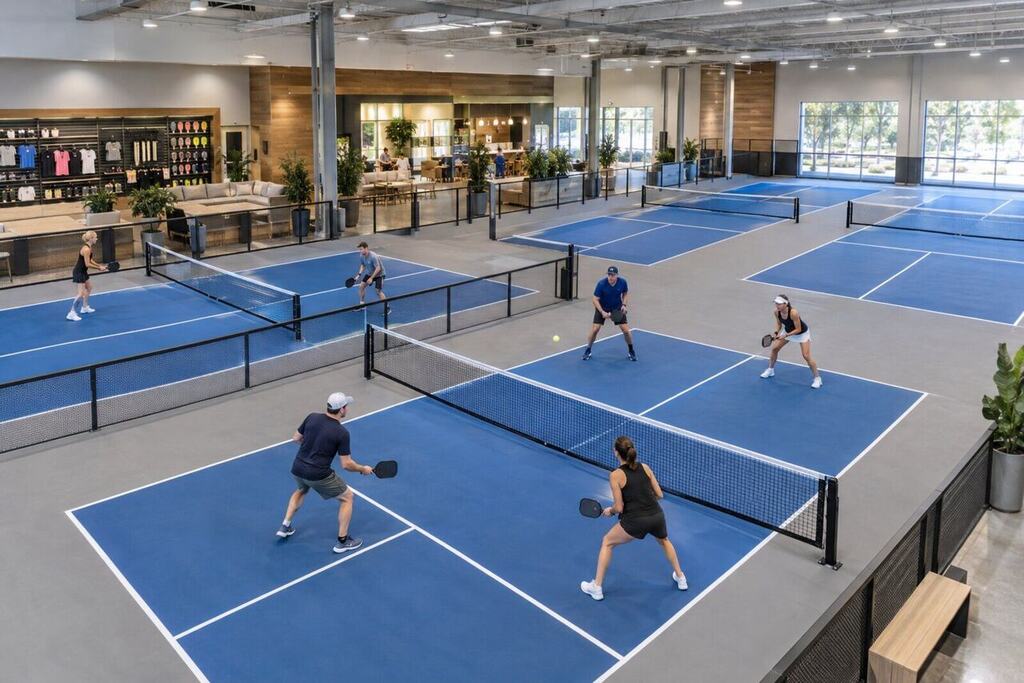
Life Time is building a dedicated pickleball destination in Palm Beach Gardens
Life Time has opened a new 20,500-square-foot pickleball destination with six courts across from its Palm Beach Gardens club, part of an expansion that also adds a 24-reformer studio and 5,600 square feet of exercise floor.