
Pickleball Leagues vs Social Open Play: Which Is Better for Meeting People?
The essentials: Leagues give you the same group on a fixed night; open play gives you a rotating cast with zero commitment. What each format is, how each builds social contact, and how to choose (or combine) them.

Both formats get you on court regularly, but they build social life differently: a league hands you the same group on a fixed night, while open play hands you a rotating cast whenever you drop in. Neither is universally better for meeting people; the right choice depends on what kind of contact you want. Here is how to think it through.
What a league actually is
A league is scheduled competition over a season: you sign up (with a partner or as a single to be placed), get assigned to a division, play at a set time each week, and results feed standings. The commitment is the point: same night, same courts, largely the same people, for weeks.
What social open play is
Open play is drop-in rotation pickleball: you arrive solo during a session window, stack your paddle in the queue, and play short games with changing partners and opponents. No season, no standings, no fixed cast; the session is different every time you come, and attending is a week-by-week choice.
The social shape of a league
A league's raw material is repetition: the same teammates and opponents every week, a shared schedule, and a reason to talk (last week's match) already built in. If your goal is a small circle that knows your name and your game, that structure supplies it. The trade-off is the fixed commitment: you owe your division your Tuesday.
The social shape of open play
Open play's raw material is variety: different partners every game and a wider cross-section of the local scene in one evening. Depth comes from a different move: attending the same session at the same time week after week, until the rotating cast contains more and more familiar faces. The trade-off: nothing forces the repetition, so you supply it yourself.
Questions that pick the right one
Ask yourself four things. Do you want a fixed weekly appointment or a flexible one? Do you enjoy structured competition, or does standings pressure drain the fun? Do you want to deepen a few connections or widen a large circle first? And practically: does your week allow a committed night? Your answers point at the format; there is no wrong one.
How to try each without committing
For open play, one drop-in visit tells you the level, the crowd, and the vibe; session listings note times and any fee. For a league, message the organizer before signing up and ask about beginner divisions, sub spots, or a one-off trial night; many leagues can place a curious newcomer without a season-long signature.
Combining the two
The formats complement each other: a league night gives you the fixed group, and open play fills the rest of the week with variety and extra games. If meeting people is the goal, the combination covers both kinds of contact, deep and wide, on a schedule you control.
What each format asks of you
A league asks for a season: a fixed night you protect, an entry fee in most cases, and the reliability your division counts on. Open play asks almost nothing: show up during the window, pay any drop-in fee, leave when you are done. Budget the one that matches your life right now. A league you keep skipping costs you the fee and the spot; open play you actually attend, even once a week, keeps a door open that costs nothing until you walk through it.
Signs a specific league or session is a good fit
For a league: a division near your level, clear communication from the organizer, and a schedule you can keep. For open play: a rotation that moves, level tags or a host who sorts courts, and regulars who welcome new faces. Where those are missing, try the next venue on your list rather than forcing the fit.
The Europe angle
In younger pickleball markets, open play usually exists before formal leagues do, because a drop-in session needs only a court and a queue, so new players may start with open play and watch leagues form around them. Pickle Haus (pickle.haus) is setting out to build the first and biggest network of dedicated pickleball centers in Poland, with a vision to lead across Europe. The brand describes this as its ambition; the centers are not open yet.
The bottom line
Leagues trade a fixed weekly commitment for a consistent group; open play trades structure for variety, with depth available if you attend the same session repeatedly. Try one of each, then keep the one you look forward to. If both earn a place in your week, the league night and the drop-in session will quietly introduce you to two different circles, and those circles tend to overlap more than you would expect.
Sources
Sources checked 21 Oct 2026. Header image is illustrative, not a photo of the events described.
Related stories
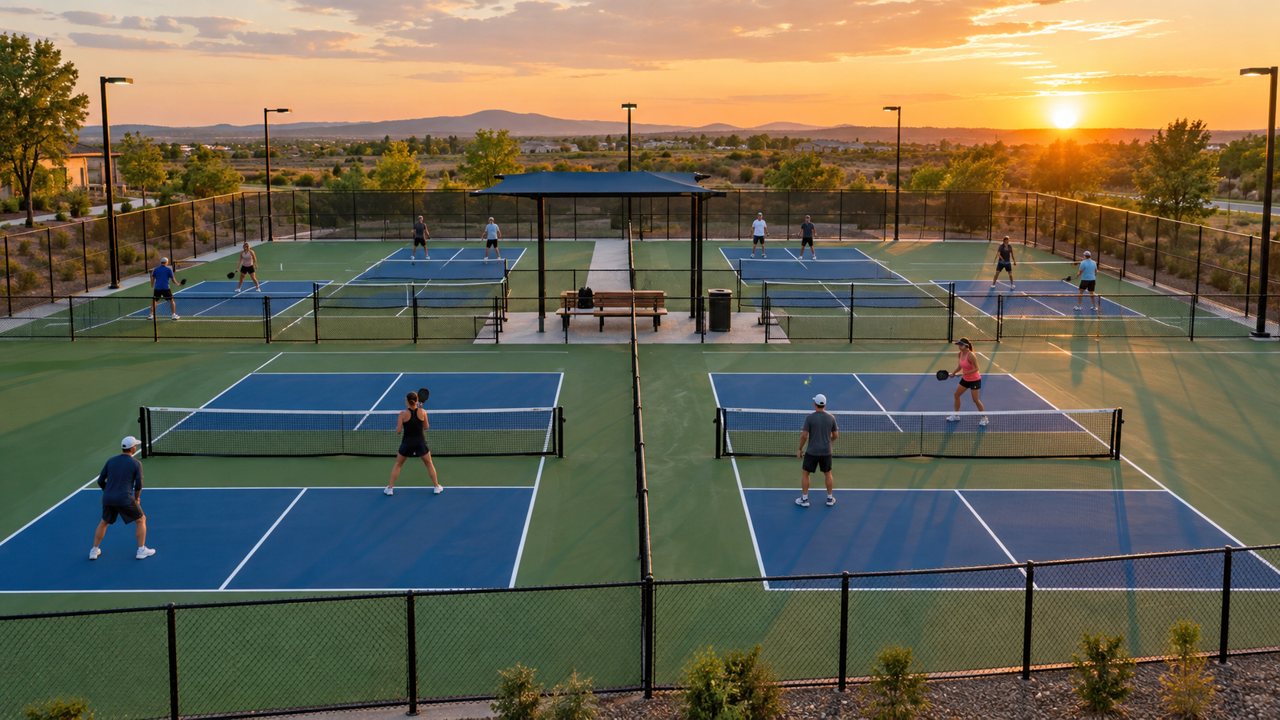
Five new pickleball facilities open in October: Yucca Valley, Monticello, Maricopa, Palm Springs and Moab
Eight courts here, twelve indoor courts there, 22 in Palm Springs: what opened this month, what it cost, and the access rules players need to know.
Pickleball's club shakeout: chains grew 37% this year, and The Picklr still landed in Chapter 11
Six major pickleball chains grew from 145 to 199 locations between January and September 2026, but indoor court growth is slowing and The Picklr's parent filed for bankruptcy. The buildout continues through a shakeout.
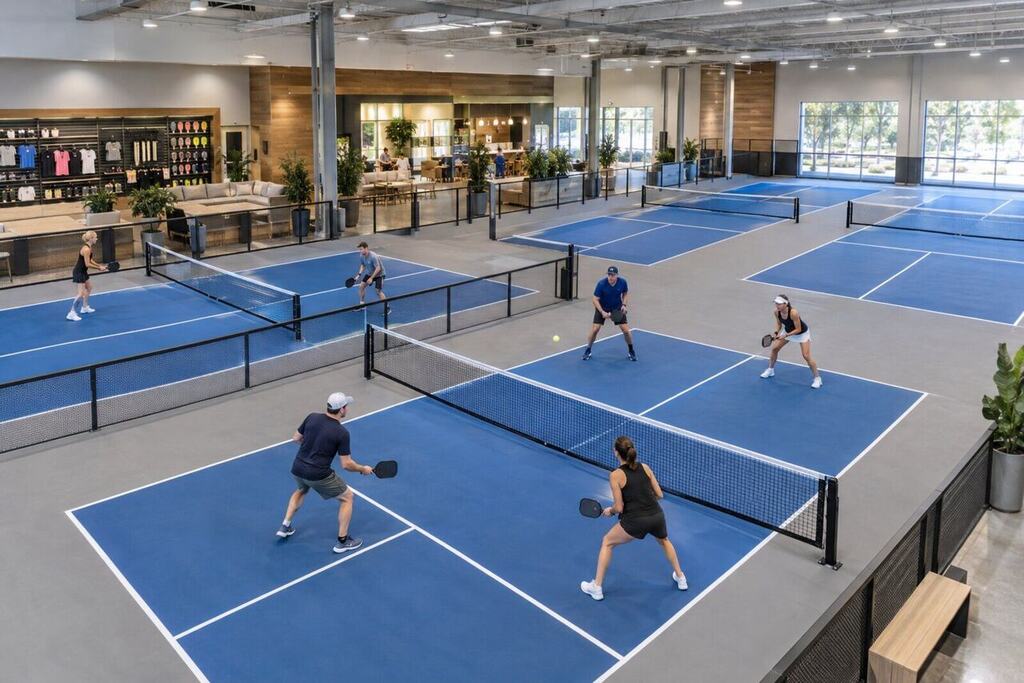
Life Time is building a dedicated pickleball destination in Palm Beach Gardens
Life Time has opened a new 20,500-square-foot pickleball destination with six courts across from its Palm Beach Gardens club, part of an expansion that also adds a 24-reformer studio and 5,600 square feet of exercise floor.