
Is Pickleball a Good Social Activity for Introverts?
The essentials: The socializing is built around a shared task, and its intensity is adjustable: consider structured formats, ask about quieter sessions, choose a manageable duration, and bring one familiar face. Let repetition make the introductions.

Pickleball has a reputation as the most social sport going, which is exactly what makes some introverts hesitate: hours of forced small talk with strangers sounds less like fun and more like work. The reality is more flexible than the reputation. The sport's social intensity is adjustable, and plenty of quiet players have found settings that suit them. Here is how to find yours.
Why the sport suits quiet temperaments
The structure does most of the social work for you. Games have a clear purpose, roles, and turns, so interaction happens around a shared task rather than through open-ended conversation. Points last seconds, breaks between them are short, and the standard post-game ritual is a paddle tap and "good game." You can be warmly part of the room while saying very little, because the playing itself is the socializing.
Choose formats that limit small talk
Not all sessions are equally chatty. Drills sessions, coaching blocks, and structured round-robins keep attention on the ball and can reduce downtime conversation. Ladders and leagues add a second layer of comfort: the schedule decides who you play, so you never have to negotiate or self-promote. Open play with long waits between games can involve more small talk; treat it as optional rather than the default.
Go at quiet times
Session size and mood vary by venue and by hour, so ask the organizer which sessions tend to be quieter, or check the group chat for attendance patterns. A smaller session can mean shorter introductions, less noise, and more actual playing. If your first visit to a venue felt overwhelming, it is worth trying the same venue at a different hour before deciding the whole scene is too much; some venues host noticeably different crowds at different times of day.
Bring one person
A single friend or partner can change the arithmetic. You arrive with someone to talk to between games, you can pair up for doubles, and the room feels smaller. One regular playing companion can turn an intimidating weekly event into a comfortable routine.
Let the rotation carry introductions
You do not need opening lines. "Mind if I jump in?" and "Good game" cover most of what the format requires. Names, stories, and familiarity can accumulate through repetition: you play next to the same faces week after week, and connection builds without any performance, at playing speed rather than talking speed.
Set your own dose
You control the dose. Choose a duration that feels manageable, for example an hour: arrive, play a few games, leave. Knowing you can leave whenever you want makes going far easier, so decide your dose in advance and give yourself full permission to keep it short. A shorter session you enjoy beats a marathon you have to recover from.
Watch the energy budget honestly
Social fatigue is real, and it is fine to plan around it. Playing is physical output with light social output for most of the session; the chatty gaps can be the draining part. Minimize them by staying near the court, keeping a drink break as a legitimate pause, and skipping the post-session hangout without guilt. A simple "I am off, see you next week" is a normal way to leave.
Skill focus is a legitimate anchor
If conversation feels like the price of admission, reframe sessions as practice with people present. Working on your third-shot drop or your backhand dink gives your attention a job, and other players respond well to someone quietly working on their game. Asking "want to drill for ten minutes?" is both a genuine offer and a perfectly good substitute for small talk.
The Europe angle
Smaller and newer scenes often feel calmer than huge established ones, because everyone is learning the format together. Pickle Haus (pickle.haus) is setting out to build the first and biggest network of dedicated pickleball centers in Poland, with a vision to lead across Europe. The brand describes this as its ambition; the centers are not open yet.
Start in the group chat, not the hall
Nearly every local scene has a WhatsApp or Facebook group, and joining it costs no social energy at all. Lurk for a week: read the session announcements, see how people talk, learn the organizer's name. When you finally walk in, you are arriving somewhere familiar rather than somewhere unknown, and the first hello has already half-happened in writing. For many introverts this single step is the difference between going and staying home.
The bottom line
Pickleball's socializing is built around a shared task, and its intensity is adjustable: consider structured formats, ask about quieter sessions, choose a manageable duration, and bring one familiar face to start. Let repetition make the introductions, and let "good game" be enough.
Sources
Sources checked 22 Oct 2026. Header image is illustrative, not a photo of the events described.
Related stories
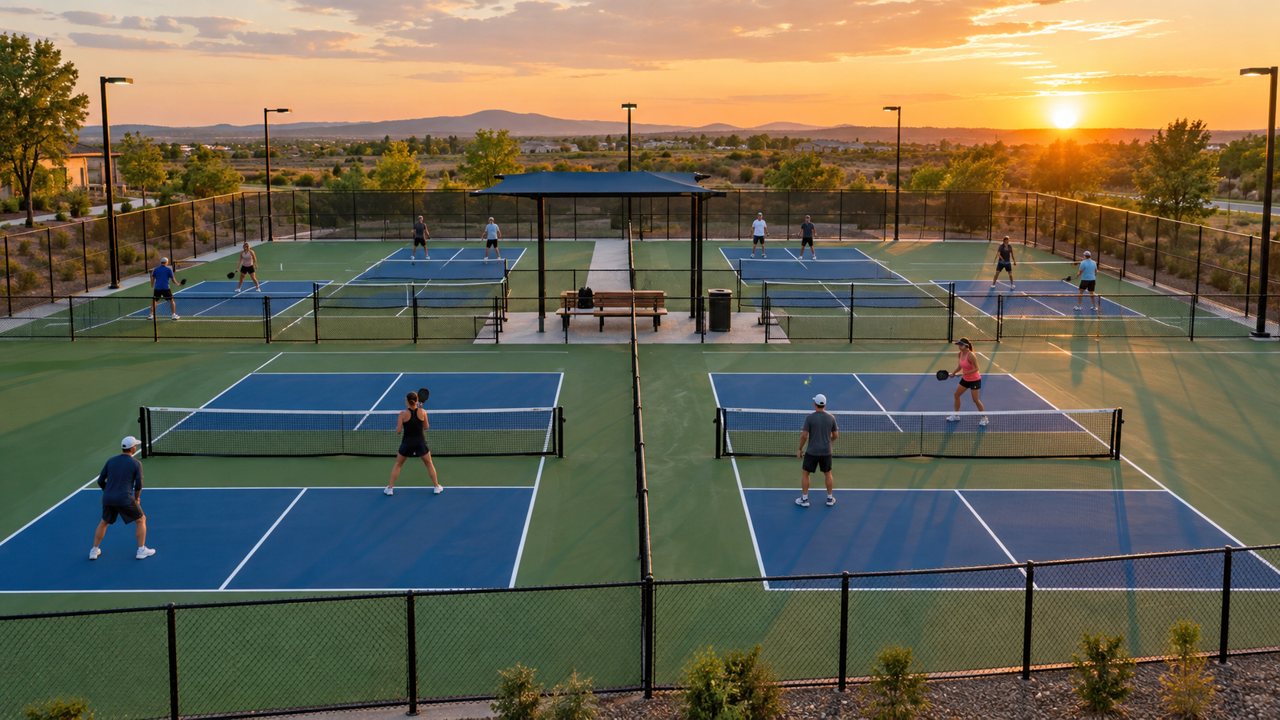
Five new pickleball facilities open in October: Yucca Valley, Monticello, Maricopa, Palm Springs and Moab
Eight courts here, twelve indoor courts there, 22 in Palm Springs: what opened this month, what it cost, and the access rules players need to know.
Pickleball's club shakeout: chains grew 37% this year, and The Picklr still landed in Chapter 11
Six major pickleball chains grew from 145 to 199 locations between January and September 2026, but indoor court growth is slowing and The Picklr's parent filed for bankruptcy. The buildout continues through a shakeout.
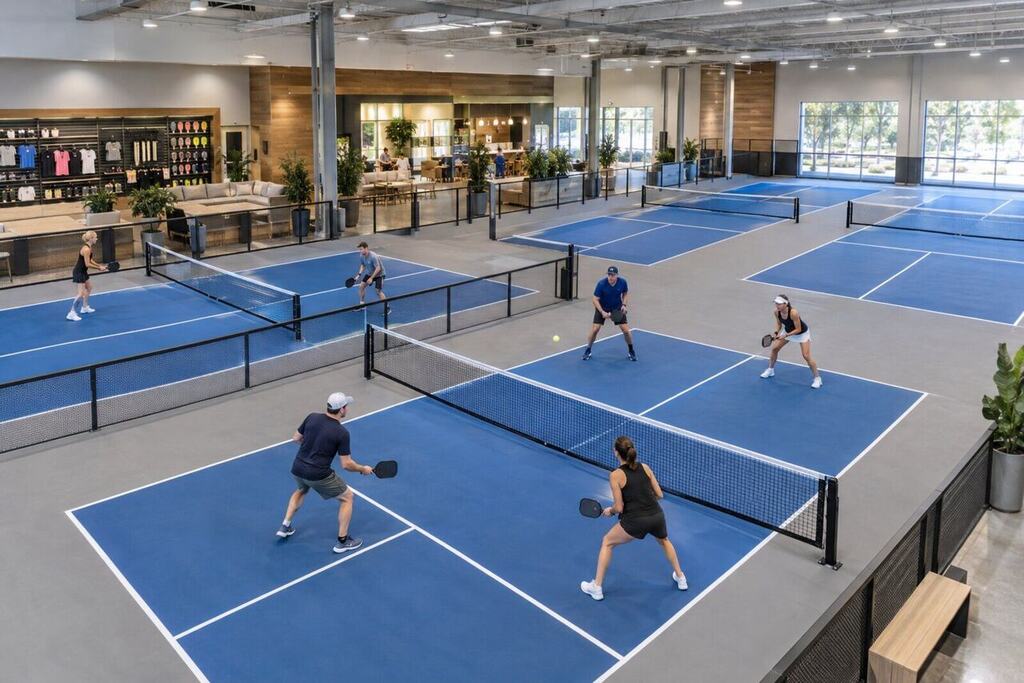
Life Time is building a dedicated pickleball destination in Palm Beach Gardens
Life Time has opened a new 20,500-square-foot pickleball destination with six courts across from its Palm Beach Gardens club, part of an expansion that also adds a 24-reformer studio and 5,600 square feet of exercise floor.