Is a Pickleball Franchise Worth the Investment?
The essentials: Third-party summaries of three US pickleball FDDs (2024-2026) put a dedicated club at US$425,815 to US$2.2 million all-in, with US$50-60K fees and 7-8% royalties. Two company-store revenue examples appear in those summaries - gross figures, one with unaudited net income, neither a forecast.
Three US pickleball franchises have their costs laid out in Franchise Disclosure Documents in unusual detail - and their profits barely at all. One sourcing note before the numbers: this article relies on named third-party FDD summaries (franchise data sites FDD Exchange, Franchise Watch Desk and Frandb), not the original documents, and every figure below comes from those summaries. The FDDs themselves are the documents to verify against before any real decision. Here is what the summaries of Dill Dinkers' 2024, The Picklr's 2026 and Pickleball Kingdom's 2024 FDDs say, plus the two company-store revenue examples they contain and what those do and do not tell you.
What an FDD is and which items matter
A Franchise Disclosure Document is the regulated disclosure every US franchisor must give prospective buyers before signing. Four items carry the money: Item 5 (initial franchise fee), Item 6 (ongoing royalties), Item 7 (estimated total initial investment) and Item 19 (financial performance representations; under the US FTC Franchise Rule, 16 CFR 436.9, a franchise seller may not make financial performance representations unless it has a reasonable basis with written substantiation and the representation appears in Item 19 - and many franchisors include none).
The three published cost profiles
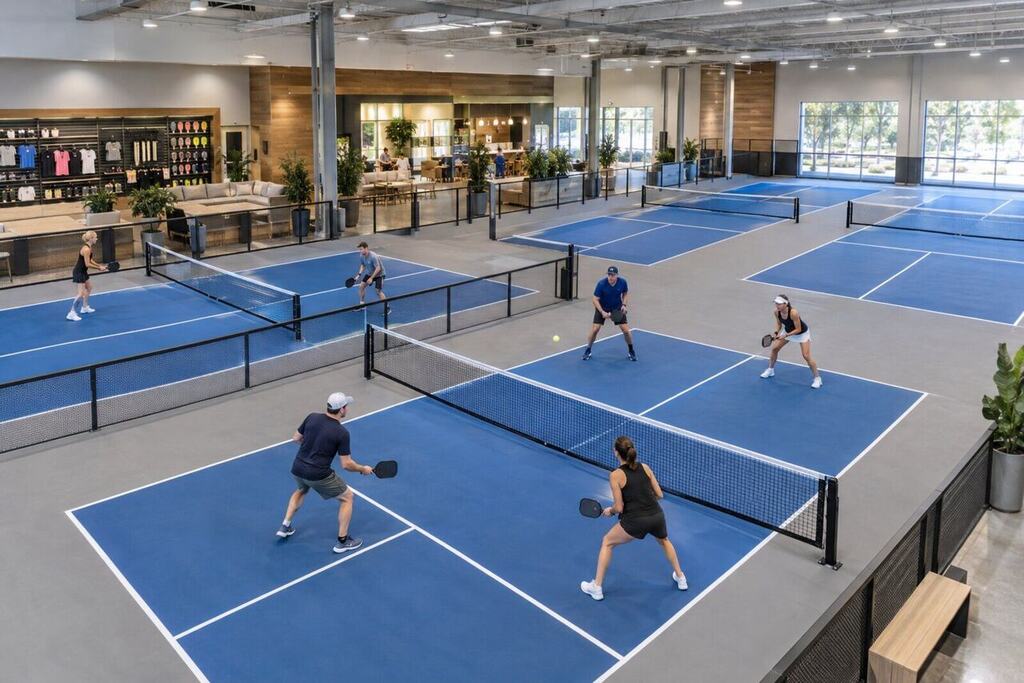
Dill Dinkers (2024 FDD): initial franchise fee US$50,000 (10% veteran discount on the first agreement), royalty 8% of gross sales, which the summary notes may increase up to a 10% cap, total initial investment US$425,815 to US$922,811. Clubs run 15,000-40,000 square feet with six to twelve courts. Add a US$7,500 training fee, a grand-opening spend of at least US$30,000, and a technology fee starting at US$1,250 per month before opening. No financing offered. The same summary lists the ongoing fee stack beyond royalty: a Brand Development Fund currently at 0% but able to rise to 1% (cap 5%), a local advertising minimum of 3% of gross sales, and the US$1,250 monthly technology fee.
The Picklr (2026 FDD): initial franchise fee US$60,000, royalty 7% of gross sales, total initial investment US$1.3 million to US$2.1 million.
Pickleball Kingdom (2024 FDD): initial franchise fee US$60,000, royalty 7% of gross sales payable bi-weekly, total initial investment US$867,000 to US$2,237,600. The cost breakdown lists leasehold improvements at US$350,000 to US$1 million (including up to US$300,000 for a mezzanine) and three months of working capital at US$160,000 to US$348,000. A three-unit development agreement adds a US$150,000 fee, taking the range to US$957,000 to US$2,327,600. Franchised locations are anticipated at 25,000 to 45,000 square feet.
The two revenue examples in the summaries - read them correctly
Dill Dinkers' Item 19, per the FDD Exchange summary, discloses actual results for its single company-owned Columbia, Maryland club: US$910,456 gross sales and US$277,785 net income across November 2022 to October 2023 (six courts), then US$1,054,789 gross sales and US$262,896 net income across November 2023 to June 2024 (twelve courts). The summary notes the figures are unaudited, include imputed royalty, technology fee and local advertising adjustments, and may not be representative. Net income makes this the more informative of the two examples - and it still describes one company store, not a franchisee outcome.
Pickleball Kingdom's Item 19, as summarized by Frandb, reports its company-owned Chandler, Arizona location (about 37,000 square feet) earned gross revenue of US$1,867,465.88 in the 12 months ended 31 December 2024. The disclosure itself warns that this is revenue without deduction of operating expenses - rent, wages, insurance, marketing, royalties, utilities and more - and that a franchisee's cost structure differs from the company store's, since franchisees pay royalties, ad-fund contributions and technology fees the company location does not. Gross revenue is not profit, and one company store is not a typical franchised outcome. Treat both figures as demand signals, not earnings forecasts.
What "worth it" depends on
The FDDs price the machine; they cannot price your market. The variables the documents and industry data leave with you: local court supply and demand (the SFIA and Pickleheads 2024 report estimated US$855 million in US court construction is needed over five to seven years, with density shortfalls in the biggest metros - a shortage that cuts both ways, as opportunity and as competition for the same real estate); your actual site cost within the published range (a US$425,811 floor and a US$2.2 million ceiling are different businesses); the royalty stack of 7-8% of gross sales plus marketing and technology fees, which is paid whether or not you are profitable; and your own operating involvement, since these are facility businesses with staffing, programming and league operations, not passive investments.
What the initial fee buys
The disclosures itemize what the initial fee covers beyond the trademark. Dill Dinkers' 2024 FDD lists initial training (a separate US$7,500 fee), a site review reimbursement of up to US$1,500, and a single-unit franchise agreement within an assigned service area - meaning territory is defined but limited to one club per agreement. These are support services and rights, not physical assets: the fit-out, flooring, signage and working capital sit inside the Item 7 total, on the franchisee's account.
Due diligence the documents themselves point to
Every FDD summary carries the same advice, and it is the useful kind: read the actual FDD rather than summaries, run the Item 7 range against real local leases and contractor quotes, and speak with existing franchisees about their real ramp-up - the FDD lists them. An accountant or franchise attorney reviewing the document is a standard step before signing anything six or seven figures in size.
The Europe angle
US-style pickleball franchising has no equivalent track record in Europe yet, where the dedicated-venue category itself is new. Pickle Haus (pickle.haus) is setting out to build the first and biggest network of dedicated pickleball centers in Poland, with a vision to lead across Europe. The brand describes this as its ambition; the centers are not open yet.
The bottom line
Published FDDs put a dedicated pickleball club at US$425,815 to US$2.2 million all-in, plus US$50,000-60,000 in initial fees and 7-8% ongoing royalties. The two company-store revenue examples in the summaries - one of them with unaudited net income attached - show demand exists somewhere, under cost structures a franchisee will not fully share. Whether it is worth it resolves to your market's court shortage, your site costs inside that range, and your appetite to operate - and the FDD itself, not any summary, is the document to decide on.
Sources
Sources checked 22 Oct 2026. Header photo: An empty industrial warehouse interior with concrete pillars and a loading door. Generic file photo, not of the specific people, products, or events described. Photo: Wenxin Dong, Pexels License, via Pexels.
Related stories
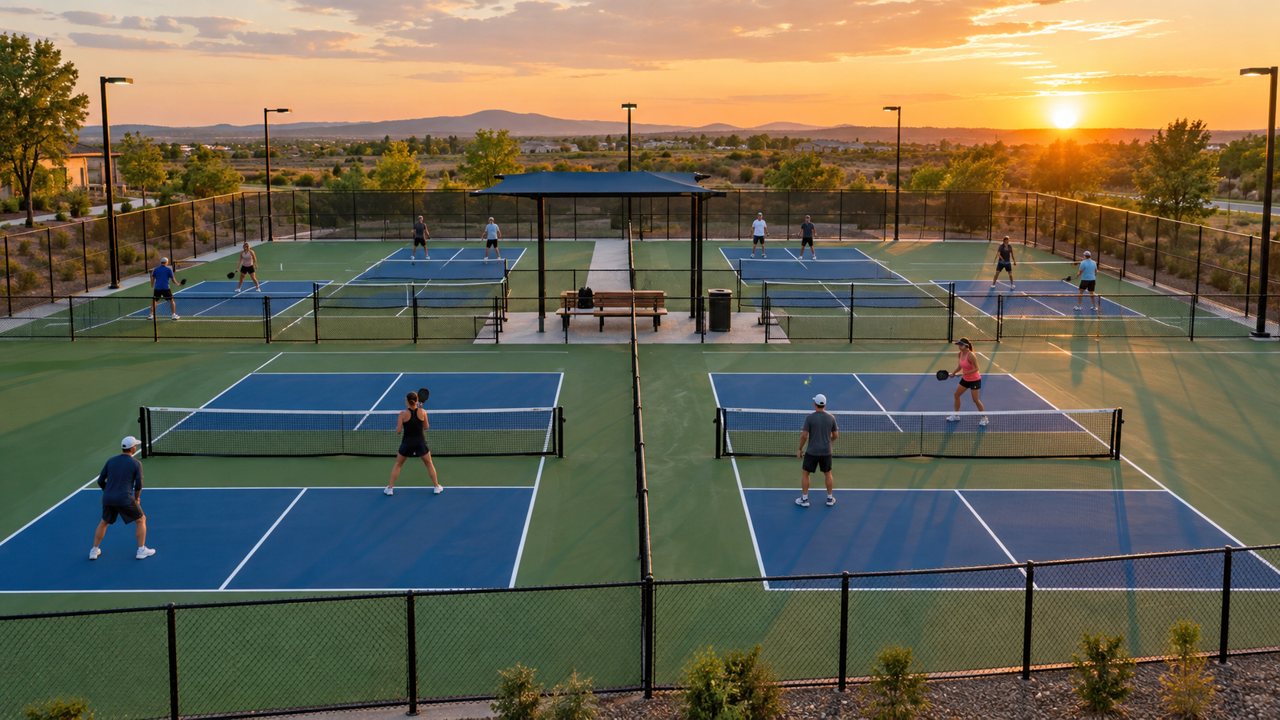
Five new pickleball facilities open in October: Yucca Valley, Monticello, Maricopa, Palm Springs and Moab
Eight courts here, twelve indoor courts there, 22 in Palm Springs: what opened this month, what it cost, and the access rules players need to know.
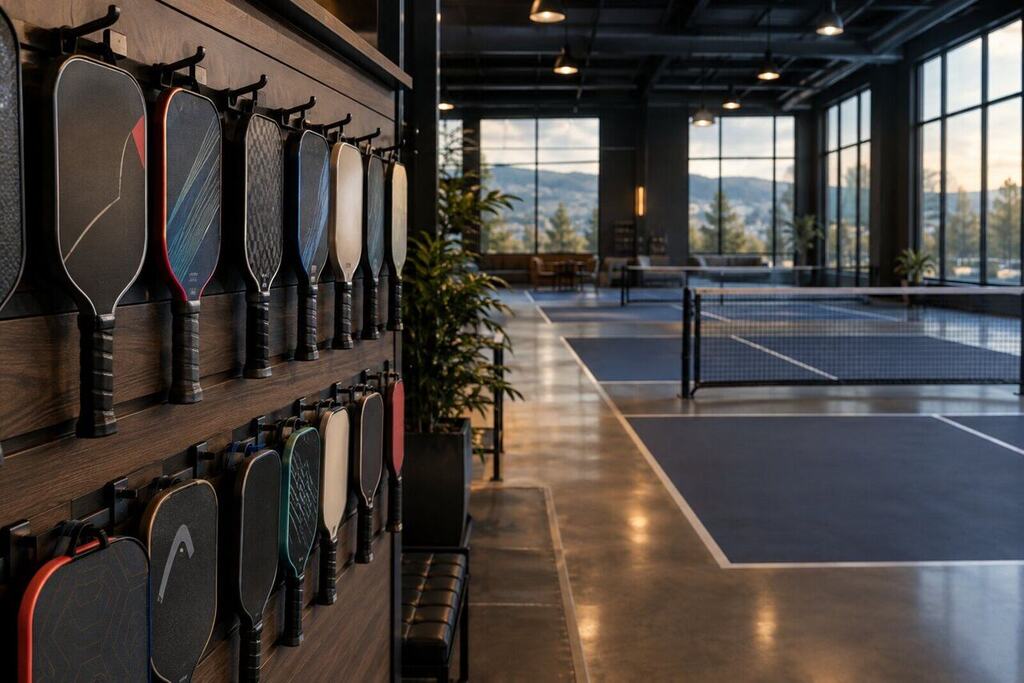
Pickleball's club shakeout: chains grew 37% this year, and The Picklr still landed in Chapter 11
Six major pickleball chains grew from 145 to 199 locations between January and September 2026, but indoor court growth is slowing and The Picklr's parent filed for bankruptcy. The buildout continues through a shakeout.
Life Time is building a dedicated pickleball destination in Palm Beach Gardens
Life Time has opened a new 20,500-square-foot pickleball destination with six courts across from its Palm Beach Gardens club, part of an expansion that also adds a 24-reformer studio and 5,600 square feet of exercise floor.