
How to Start a Pickleball League in a City With Few Courts
The essentials: Count your real core, pick a court-light format like a flex league or ladder, run a short zero-friction pilot, make results visible weekly, and negotiate venue time with evidence in hand.

Your city has players, a couple of courts, and no organized competition. That is not a obstacle; it is the normal starting state of most leagues. Here is the sequence that gets from scattered open play to a running league without owning a single court.
Count your actual player base first
Before any format, get real numbers. Attend the busiest open plays for two weeks, talk to the organizers, join the local group chats, and count how many distinct players show up in a week. A league needs a committed core more than a big headline number: eight reliable players can run a format, while forty casual names cannot.
Pick a format that survives scarcity
With few courts, choose formats designed for them. A flex league, where pairs of players arrange their own matches at any court within a two-week window, needs zero reserved court time. A ladder, where players challenge upward and report scores, needs none either. A fixed-night league with reserved courts is the luxury version; earn it later, when the numbers justify negotiating for court time.
Start with a pilot, not a season
Run a four-to-six-week pilot with whoever signs up, using the simplest workable rules: standard scoring, self-arranged or single-night matches, one shared results sheet. A pilot teaches you what your player base actually wants (singles or doubles, social or sharp, weeknight or weekend) before you build anything permanent. Keep the barrier to joining at zero for the pilot.
Make results effortless to report
Leagues die of administrative friction. Set up one place where scores go: a shared spreadsheet, a form, or a league app if the group is ready for one. Post the current standings weekly in the group chat. Visible movement is what keeps players arranging their next match; silence is what kills momentum between rounds.
Use ratings to seed, lightly
If players have DUPR ratings, use them as rough seeding guidance; DUPR's own documentation describes the rating as a modified Elo built on match results, with a Reliability Score indicating how much data sits underneath. Where ratings are thin, seed by a quick self-assessment against the published skill definitions and adjust after week one. Early mismatches fixed fast teach the group that the league listens.
Borrow legitimacy and venues
You do not need to own courts to reserve them. Approach the venues where players already go with a concrete ask: one evening a week, a defined block of weeks, an expected headcount. Municipal courts, schools, churches, and gyms all respond better to specifics than to visions. Bring the pilot's participation numbers as your evidence.
The paperwork nobody warns you about
Even a casual league needs a few dull foundations: a named organizer and a deputy, a written rule sheet covering scoring and disputes, a weather and cancellation policy for outdoor play, and a contact list with consent to message. Sorting these in week one prevents the mid-season confusion that makes players drift away.
What kills new leagues
The pattern is consistent: over-ambitious formats that demand reserved courts the city does not have, invisible results that let momentum die between rounds, one exhausted organizer doing everything alone, and a competitive tone that scares off the middle of the player base. Every one of those is a design choice, and every one has the fix described above. The leagues that survive year one are rarely the ambitious ones; they are the ones that made playing and reporting easy every single week.
Keep the social core visible
Competitive formats survive on the same fuel as open play: people enjoying each other. End league nights with twenty minutes of open rotation, run a season-closing social round, and celebrate the improvers as loudly as the winners. The players who come for the competition stay for the community, and the community is what recruits next season's sign-ups.
Plan season two from week one
Collect the information season two will need while season one runs: emails, availability preferences, format feedback, and who might help organize. A league that ends with a ready-made list and two volunteers turns a fragile pilot into an institution.
The Europe angle
Court-scarce European cities are exactly where flex and ladder formats shine, since they grow competition without demanding reserved facilities. Pickle Haus ([pickle.haus]) is setting out to build the first and biggest network of dedicated pickleball centers in Poland, with a vision to lead across Europe. The brand describes this as its ambition; the centers are not open yet.
The bottom line
Count your real core, choose a court-light format like a flex league or ladder, run a short pilot with zero friction, make results visible weekly, and negotiate venue time with evidence in hand. Build the social core from day one, and season two builds itself.
Sources
Sources checked 22 Oct 2026. Header image is illustrative, not a photo of the events described.
Related stories
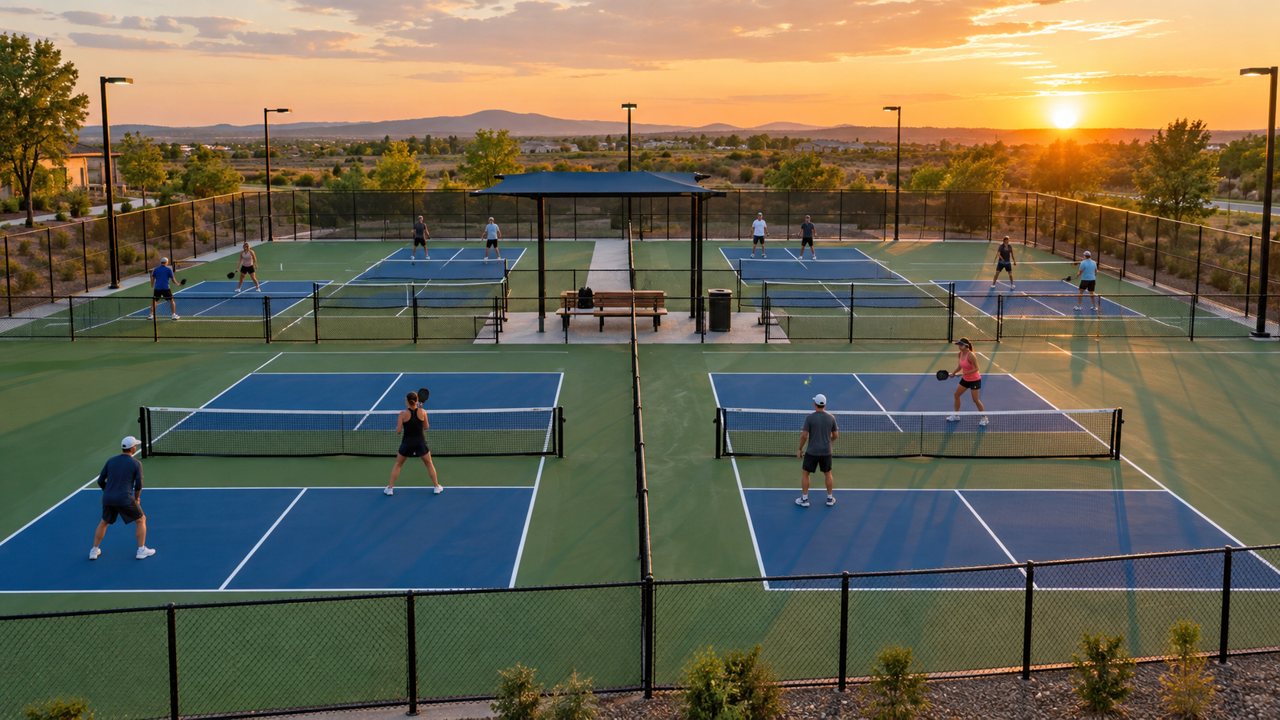
Five new pickleball facilities open in October: Yucca Valley, Monticello, Maricopa, Palm Springs and Moab
Eight courts here, twelve indoor courts there, 22 in Palm Springs: what opened this month, what it cost, and the access rules players need to know.
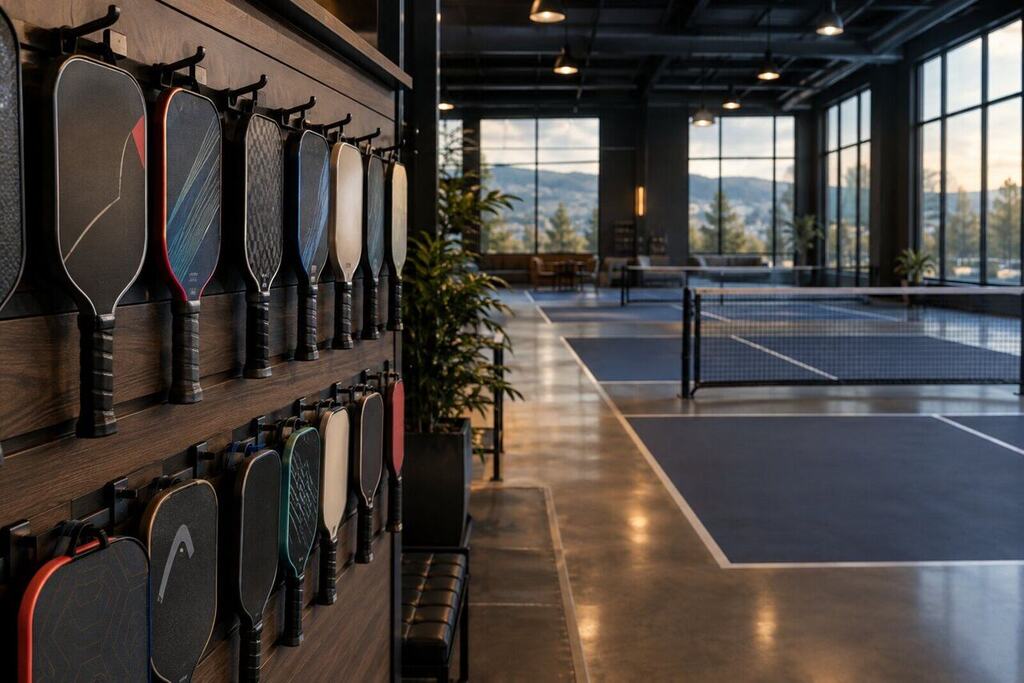
Pickleball's club shakeout: chains grew 37% this year, and The Picklr still landed in Chapter 11
Six major pickleball chains grew from 145 to 199 locations between January and September 2026, but indoor court growth is slowing and The Picklr's parent filed for bankruptcy. The buildout continues through a shakeout.
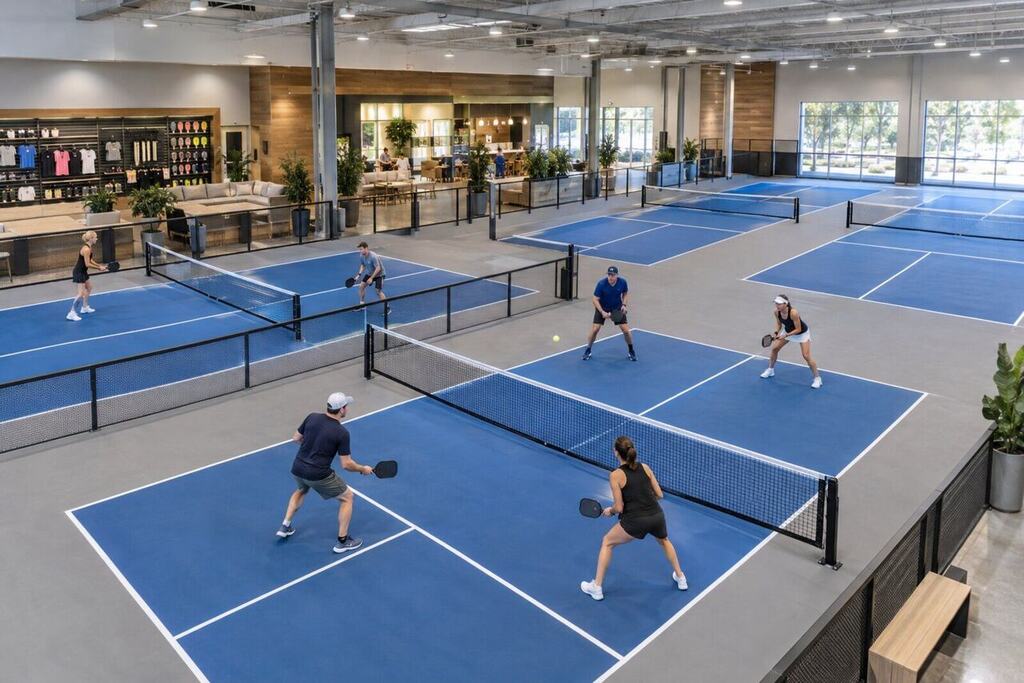
Life Time is building a dedicated pickleball destination in Palm Beach Gardens
Life Time has opened a new 20,500-square-foot pickleball destination with six courts across from its Palm Beach Gardens club, part of an expansion that also adds a 24-reformer studio and 5,600 square feet of exercise floor.