
How to Poach in Pickleball Doubles Without Hogging the Court
The essentials: Poaching means crossing to your partner's side to intercept a ball, and USA Pickleball's own strategy guide splits it into planned and opportunistic versions. Here is when each works, how to signal, and how to avoid the two failure modes: confusion and resentment.
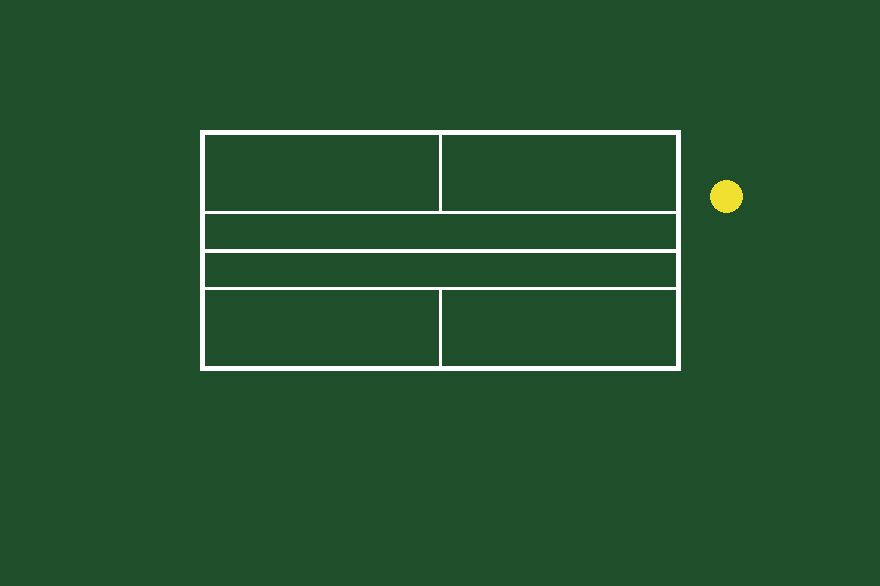
Most doubles players learn to poach in the most chaotic way possible: a ball floats toward their partner, instinct takes over, they lunge across the middle, and either the point ends in a winner or both players collide while the ball drops between them. Done on purpose, poaching is one of the highest-percentage pressure plays in amateur doubles. Done on impulse, it is the fastest way to make a partner stop trusting you. The difference is not talent. It is planning.
The essentials: Poaching means moving onto your partner's side of the court to intercept a shot, usually at the non-volley line. USA Pickleball's strategy guidance splits it into two distinct plays - a planned poach, agreed in advance with signals, and an opportunistic poach, taken when an opponent gives you a ball you cannot ignore. Both work at recreational level, but only when your partner knows what you are doing.
What a poach actually is
USA Pickleball's strategy article on the topic defines poaching simply: moving onto your partner's side of the court to intercept a shot, typically for a winner. Nothing in the rules restricts where you stand or move during a rally once the return is in play, so the play is fully legal in tournaments and rec games alike. The constraints are practical, not regulatory: your movement leaves your own side open, and it only works if your partner adjusts.
The reason poaching matters more in pickleball than in tennis is geometry. The court is 20 feet wide, the non-volley line is where points are decided, and a player camped at the kitchen line can reach well past the center of the court. A ball that travels two or three feet onto your partner's half at chest height is, for a prepared net player, a short step and a put-away.
The planned poach
USA Pickleball describes the planned poach as a full commitment: you cross to the other side and stay there, trusting your partner to cover everything behind and beside you. It is usually run by the receiving team. The receiver returns deep, ideally crosscourt, and the up player at the net crosses to cut off the serving team's next ball. Because the serving team must stay back for the two-bounce rule, the ball they hit is often a predictable deep ball toward the receiver - exactly the ball the poacher is waiting for.
Two details from the USA Pickleball guidance matter at rec level. First, the receiver can hang back instead of rushing the line, inviting the opponent to hit the very ball the poach is designed around. Second, neither player should telegraph the play: wait until the hitter is committed to the shot before moving.
The opportunistic poach
The opportunistic version needs no pre-game agreement. USA Pickleball frames it as a punishment for one specific mistake: an opponent at the baseline who hits a high, slow ball toward your partner while your partner is still behind the non-volley line. If you let that ball drift past you, two feet from your paddle, purely because it is on your partner's side, you are giving the opponent free comfort. Step across and end it.
The coaching caveat, echoed by The Dink Pickleball's guide on the same topic, is discipline. The opportunistic poach works because it is a surprise; if you go fishing for it every point, opponents will simply hit behind you. USA Pickleball's advice is to time the move to the moment just before the opponent's paddle contacts the ball, and not to overdo it.
Signals, fakes and the word that saves points
Planned poaches run on signals. The commonly used system, per USA Pickleball, is the up player holding a hand behind the back: open hand means go, closed hand means stay, and flashing between them signals a fake. The receiver should always acknowledge the signal. Verbal plans work too, agreed during a brief meeting at the center line - but if you only huddle or only show a hand when a poach is coming, observant opponents will read it.
Fakes are part of the toolkit: a step or lean toward the other side, timed early enough that the opponent has time to change the shot and miss. USA Pickleball adds a hard limit here. The fake is body positioning only. Stamping your feet, waving your arms, or yelling at an opponent crosses into unsportsmanlike conduct and can earn a technical foul in tournament play.
The most important word in the whole system is "switch." When a poach carries you deep into your partner's side, the back player should call the switch immediately, before you start drifting back. USA Pickleball points out why: the poacher cannot see a partner who is behind them, so a silent switch creates the classic disaster of two players covering one side while the other side stands empty. A small step into your partner's territory usually means you will recover to your own side; a full crossover usually means you switch.
The etiquette problem
Strategy articles rarely dwell on the social cost, but it decides whether you get invited back. Poaching against the opposing team is fine; poaching against your own partner is not. The rec-game failure mode looks like this: a dominant net player starts taking every ball within reach, including balls the partner was lined up to hit. The partner stops moving, stops engaging, and the team gets worse even if the poacher wins a few points.
The fix is selectivity. Take balls you can finish decisively - the floaters at chest height - and leave the reachable-but-awkward balls to the partner who owns them. With a regular partner, agree on signals and debrief between games. With a stranger at open play, introduce the idea in one sentence before the game ("I like to poach if they give me a floater - I'll call switch") and then poach less than you would with your usual group. USA Pickleball's own guidance notes that impromptu signal systems work best with experienced players who already understand the strategy.
Making it a habit
The skill underneath poaching is not speed; it is reading the hitter. Drill it simply: have a feeder at the baseline hit balls toward your partner while you stand at the kitchen line. Move only when the feeder's shoulder and paddle commit to the shot. Ten minutes of this teaches you the one timing rule that separates poachers from pests - move on commitment, not on hope.
Poaching will not transform a doubles game by itself, but it changes what your opponents are allowed to feel. A team that never poaches lets opponents hit comfortable balls to the backcourt all day. A team that poaches twice a game makes every high ball a small crisis. That is the real return: not the winners you take, but the easy shots you take away.
Sources
Sources checked 24 Oct 2026. Header image is illustrative, not a photo of the events described.
Related stories
Five new pickleball facilities open in October: Yucca Valley, Monticello, Maricopa, Palm Springs and Moab
Eight courts here, twelve indoor courts there, 22 in Palm Springs: what opened this month, what it cost, and the access rules players need to know.
Pickleball's club shakeout: chains grew 37% this year, and The Picklr still landed in Chapter 11
Six major pickleball chains grew from 145 to 199 locations between January and September 2026, but indoor court growth is slowing and The Picklr's parent filed for bankruptcy. The buildout continues through a shakeout.
Life Time is building a dedicated pickleball destination in Palm Beach Gardens
Life Time has opened a new 20,500-square-foot pickleball destination with six courts across from its Palm Beach Gardens club, part of an expansion that also adds a 24-reformer studio and 5,600 square feet of exercise floor.