
How to Play Pickleball When Your Partner Is Much Better Than You
The essentials: Mismatched doubles works when the weaker partner plays the percentages: take the right side, cede the middle, stay consistent, skip the apologies, and treat the pairing as free coaching.
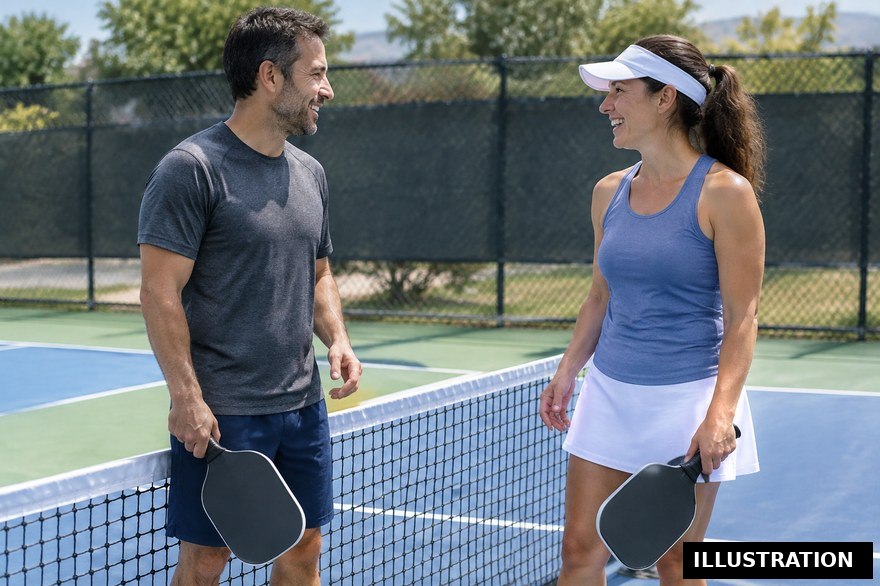
Every pickleball player eventually faces this pairing: you, and a partner who is clearly a level or two above you. It can feel like a burden on both of you. Played right, it is the fastest improvement session you will ever get. Here is how to handle it.
Talk before the first serve
Thirty seconds of conversation prevents most mismatched-partner problems. Ask two things: are we playing to win or playing for fun, and how do you want to handle the middle? A stronger partner who knows you welcome direction will give it; one who senses you do not want coaching will stay silent and the confusion compounds. Most good players are happy to adjust if you simply ask.
Sort out the sides
The convention in serious doubles is that the stronger player takes the left side when the team wants maximum court coverage, because most players' forehands end up covering the middle from there. If your partner does not raise it, offer it: "Want me on the right?" That one question signals you understand doubles geometry and instantly relaxes a better player. Stick to your side unless you have agreed to switch on stacks or specific plays.
Your job: be the consistent one
The biggest mistake weaker partners make is trying to match the stronger player's shots. You do not need winners; you need to stop donating points. That means high, soft, unattackable returns; dinks that stay low even if they are not angled; third shots dropped or lobbed rather than driven at someone better than you; and smashes only on truly high balls. Every rally you extend is a rally your partner can win with one good ball. Every hero attempt you miss is a point they cannot get back.
Let them have the middle, and the hard calls
Middle balls cause the most partner collisions and the most resentment. Set the default before the game: stronger partner takes middle balls, especially on their forehand, unless they call you off. The same logic applies to lobs over your head, line calls on their side, and the pace of play. This is not surrendering your game; it is playing the percentages with the resources you have.
Use it as free coaching, in the right dose
After the game, ask one question: "What is the one thing I should work on?" One, not ten. Better players notice everything and will happily share if the ask is bounded. Take the single note, write it down, and bring it to your next session. Players who visibly apply feedback get invited back; players who argue about it do not.
What your partner is actually hoping for
It helps to see the pairing from the other side. A stronger player at open play signed up for a game, not a lesson, and mostly hopes for three things: that you keep rallies alive, that you do not take errors too hard, and that you both leave having enjoyed it. Nobody reasonable expects a developing player to carry points. The players who get invited back are the ones who are visibly easy to play with, and that is a social standard more than a technical one. Remember too that every 4.5 player was once the weak link in someone else's foursome; most of them remember it clearly.
Manage your own head
Two rules for the mental side. First, stop apologizing after every error; a constant stream of sorrys makes the whole court heavier, and one acknowledgment per game is plenty. Second, remember the scoreboard math: the other team will target you, because that is correct strategy, not cruelty. Expect to receive most of the balls and treat it as extra practice touches.
Ratings account for the mismatch
Worried about what a loss does to your rating? DUPR compares your performance against the expected result given everyone's ratings, not just the win-loss column. A mismatched pair that keeps games close can hold or even gain rating points in defeat, because the system knows the expected outcome. Play the better players; the math is fairer than it feels.
The Europe angle
Mixed-level partnerships are how every pickleball community bootstraps itself: there are never enough experienced players at first, so veterans carry newer players until the base catches up. That is exactly the stage much of Europe is in now. Pickle Haus (pickle.haus) is setting out to build the first and biggest network of dedicated pickleball centers in Poland, with a vision to lead across Europe, and venues like that are where mentoring pairings stop being accidental. The brand describes this as its ambition; the centers are not open yet.
The bottom line
Be the steady one, take the right side, cede the middle, ask one question afterward, and skip the apology tour. Do that and better players will want you on their side again, which is the whole game.
Sources
Sources checked 20 Oct 2026. Header image is illustrative, not a photo of the events described. Header image is an illustrative rendering, not a photograph of a specific person, place or event.
Related stories
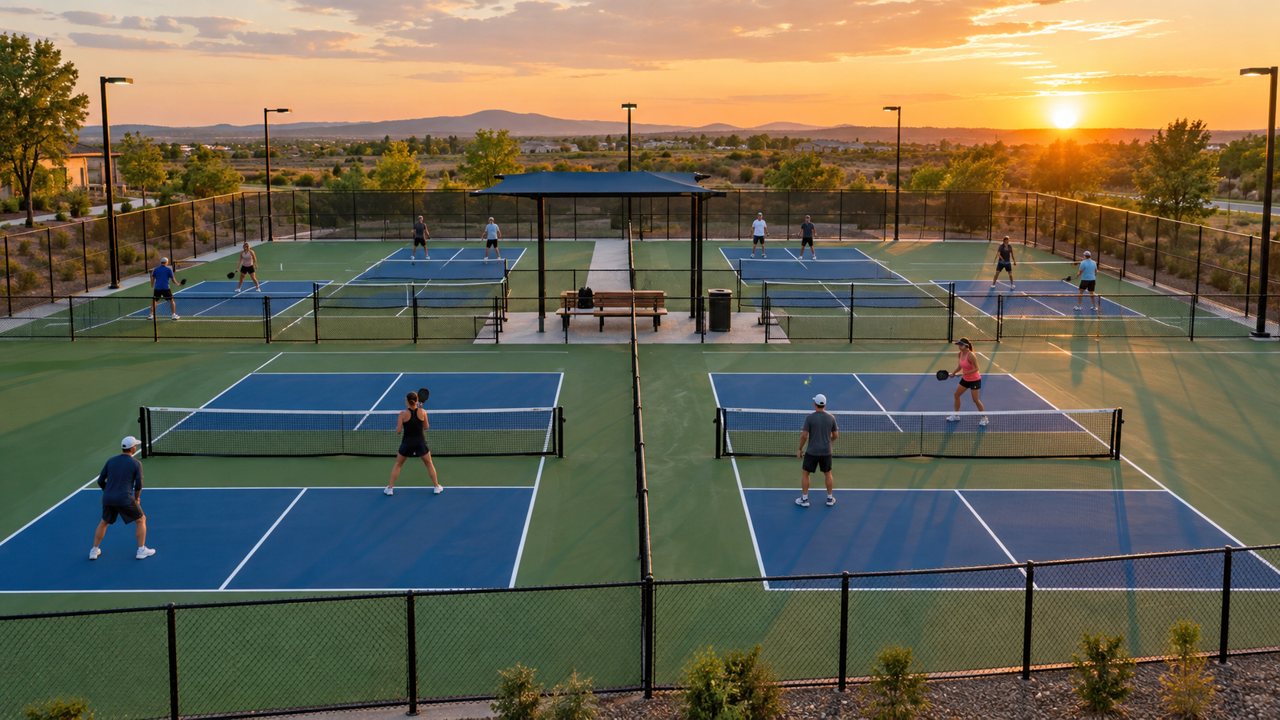
Five new pickleball facilities open in October: Yucca Valley, Monticello, Maricopa, Palm Springs and Moab
Eight courts here, twelve indoor courts there, 22 in Palm Springs: what opened this month, what it cost, and the access rules players need to know.
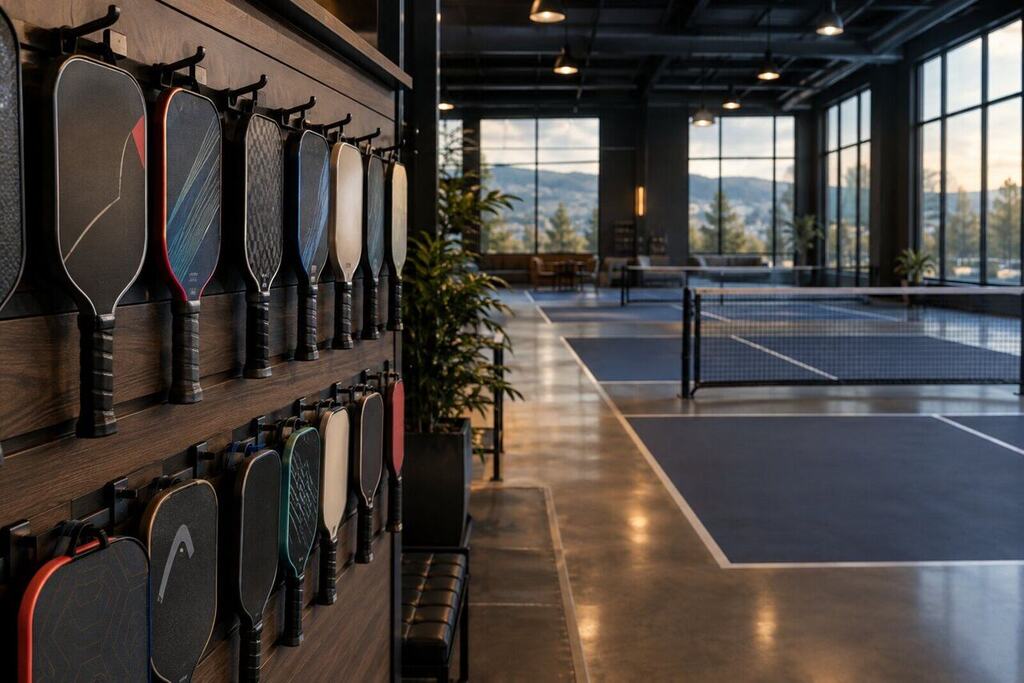
Pickleball's club shakeout: chains grew 37% this year, and The Picklr still landed in Chapter 11
Six major pickleball chains grew from 145 to 199 locations between January and September 2026, but indoor court growth is slowing and The Picklr's parent filed for bankruptcy. The buildout continues through a shakeout.
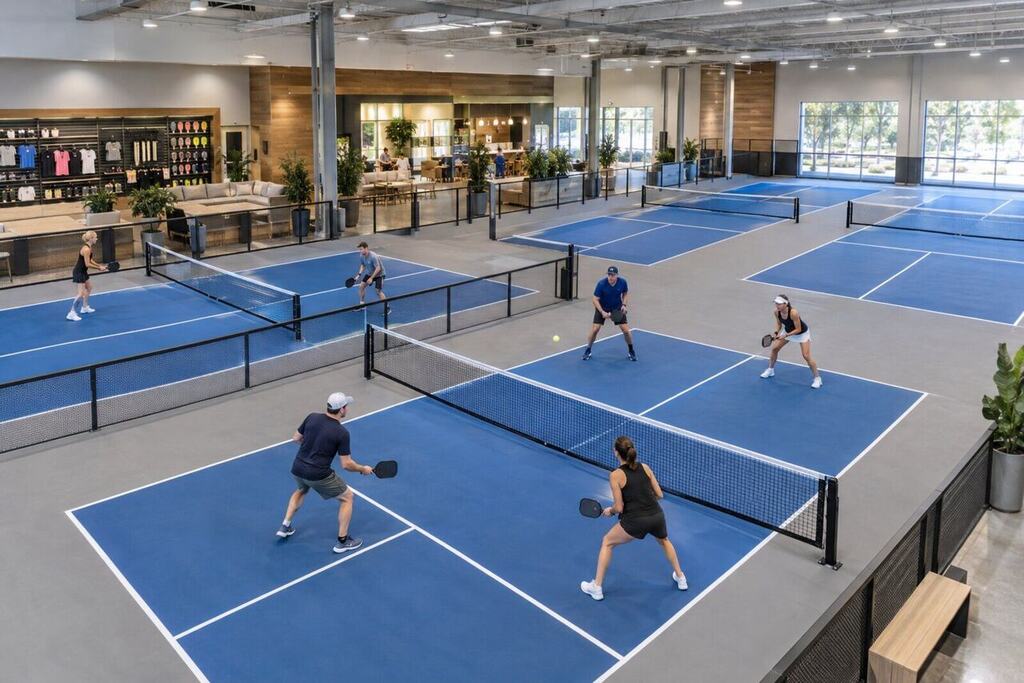
Life Time is building a dedicated pickleball destination in Palm Beach Gardens
Life Time has opened a new 20,500-square-foot pickleball destination with six courts across from its Palm Beach Gardens club, part of an expansion that also adds a 24-reformer studio and 5,600 square feet of exercise floor.