
How to Meet People Through Pickleball Without Feeling Awkward
The essentials: Give yourself one small job, let the rallies and rotation windows start the conversations, ask the questions everyone expects, and keep showing up at the same slot. The format handles the rest.

Pickleball has a reputation as the easiest sport to meet people in, and the structure behind that reputation is real: rotating partners, forced proximity, and constant short breaks. But structure alone does not start conversations. Here is how to let the format do the social work while you stay comfortable.
Arrive with one job, not a personality
The worst pressure comes from feeling you must be interesting. Replace that with one concrete job: learn the rotation system and the names of three people. Small, finite jobs calm the brain and give you something concrete to do with your hands and attention between games. Everything social that follows is a bonus, not a requirement, and bonuses accumulate quickly.
Let the game start the conversations
You never need an opener in pickleball; the game supplies one every few minutes. Comment on the rally you both just played, ask how long someone has been coming to this session, or ask the score protocol if you are new. These are not pickup lines; they are the ordinary currency of the court, and everyone at open play expects to trade in them.
Use the between-games structure
Open play builds in natural two-minute windows: waiting for a court, rotating off, fetching balls. Those windows are where acquaintances form, and they come with a built-in exit, because the next game always interrupts. Short, low-stakes, repeatable conversations are exactly how court friendships start; you do not need one great conversation, just five ordinary ones across an evening. That arithmetic suits introverts perfectly.
Ask questions with obvious answers
People love being useful, and open play is full of legitimate questions: Which court is next? How does the paddle queue work here? What level does this session usually run? Is there a group chat? Every question gives the other person an easy win and gives you information you actually need for the rest of the evening. Asking is not awkward here; it is how everyone learned.
Be reliably pleasant, not impressively skilled
The players who get folded into the social fabric fastest are not the best ones; they are the easy ones: on time, honest line calls, loud score, quick thanks after games. Social acceptance at open play tracks courtesy far more than shot-making, and it compounds: each pleasant evening makes the next one easier.
Group chats: the second room
Every session has a parallel venue: its group chat, where games get arranged, cancellations get announced, and the social glue actually sets. Ask for the invite in week one. You do not need to be funny or active there; reading along and answering the occasional "anyone for Thursday?" keeps you visible between sessions and makes week three feel like month two.
Small rituals that make you memorable
Tiny repeatable behaviors do more than charm. Bring a spare ball when you can. Learn and use first names by the second visit. Say yes to the less glamorous court when the host asks. Offer a genuine "nice shot" to opponents, not just partners. None of this is strategy in a cynical sense; it is simply how regulars behave, and regulars are exactly who newcomers become friends with.
The follow-up move that works
When an evening goes well, one small follow-up converts it into continuity: exchange a contact, or simply say you will be back next week and then actually come. Sessions run on regulars, and becoming a regular is mostly a decision to keep showing up at the same slot. Familiarity does the socializing for you after two or three weeks, and it asks nothing of you except presence.
If the first session feels flat
Some sessions are quiet, cliquey, or just a bad fit. That is information, not personal failure: try a different session time, a different venue, or a beginner-tagged evening before concluding anything at all about the sport or yourself. Different sessions of the same venue can feel like different sports socially. Give the venue system, not one evening, a fair trial: two or three visits across different slots tells you far more than a single flat Tuesday ever will.
The Europe angle
In younger scenes, sessions are small and newcomers are noticeable, which makes the first evening feel exposed but makes regular status arrive faster. Pickle Haus (pickle.haus) is setting out to build the first and biggest network of dedicated pickleball centers in Poland, with a vision to lead across Europe. The brand describes this as its ambition; the centers are not open yet.
The bottom line
Give yourself one small job, let rallies and rotation windows start conversations, ask the questions everyone expects, be easy to play with, and keep showing up at the same slot. The format handles the rest; your only real task is returning.
Sources
Sources checked 22 Oct 2026. Header image is illustrative, not a photo of the events described.
Related stories
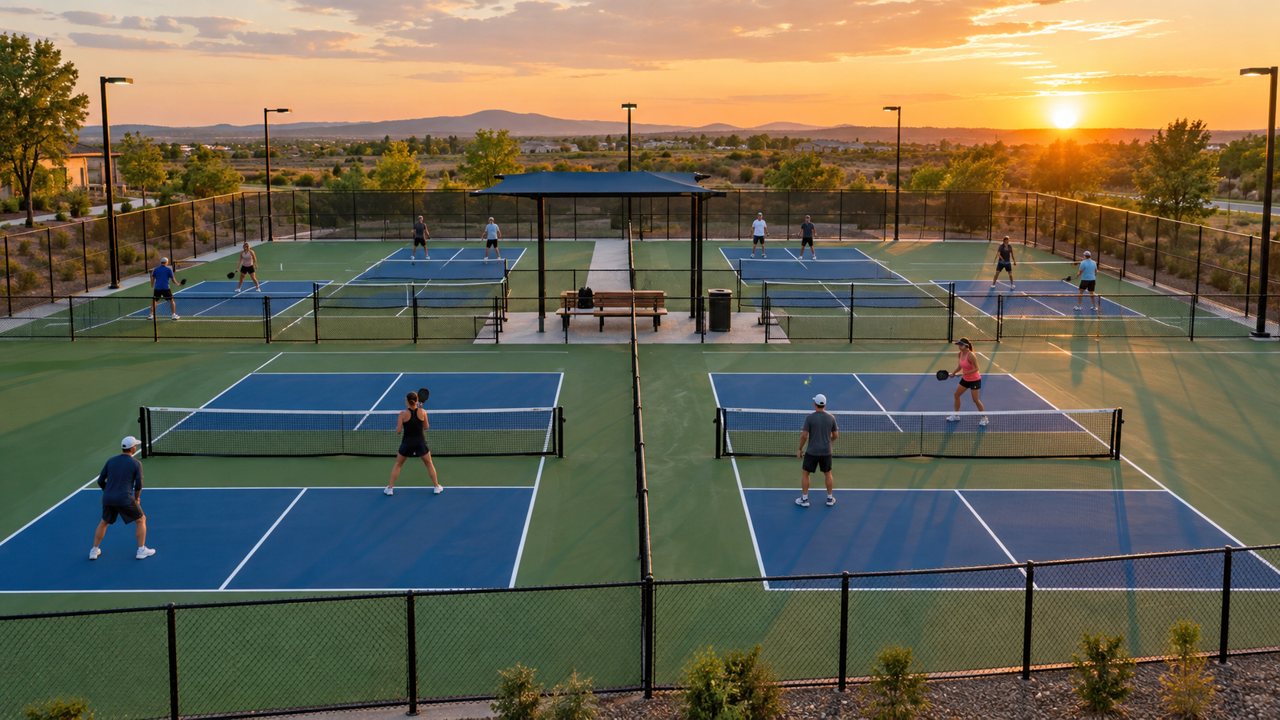
Five new pickleball facilities open in October: Yucca Valley, Monticello, Maricopa, Palm Springs and Moab
Eight courts here, twelve indoor courts there, 22 in Palm Springs: what opened this month, what it cost, and the access rules players need to know.
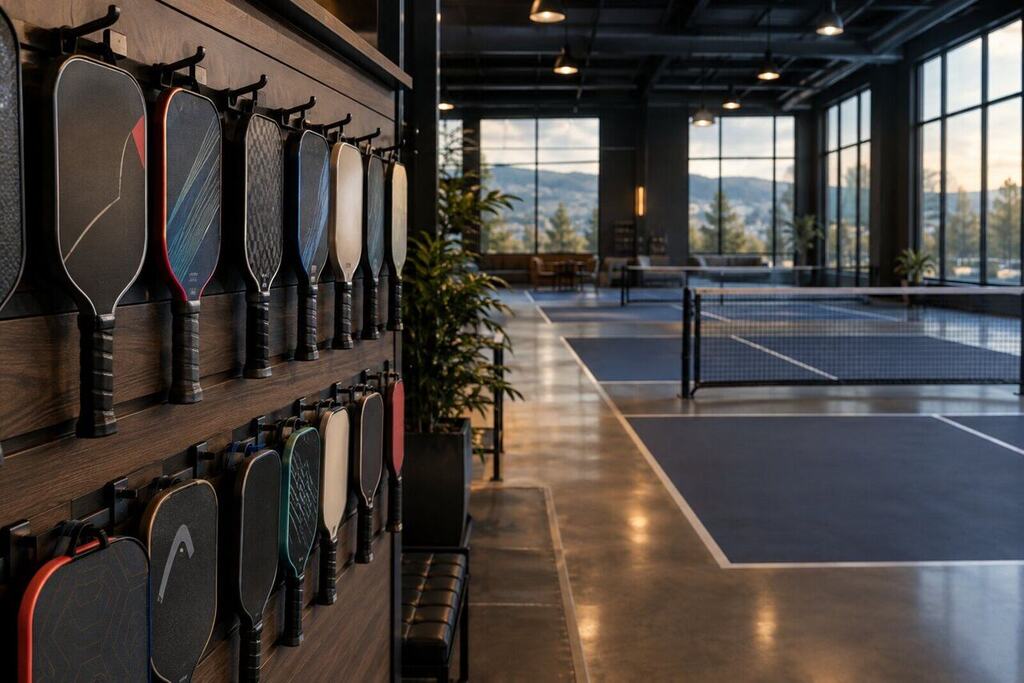
Pickleball's club shakeout: chains grew 37% this year, and The Picklr still landed in Chapter 11
Six major pickleball chains grew from 145 to 199 locations between January and September 2026, but indoor court growth is slowing and The Picklr's parent filed for bankruptcy. The buildout continues through a shakeout.
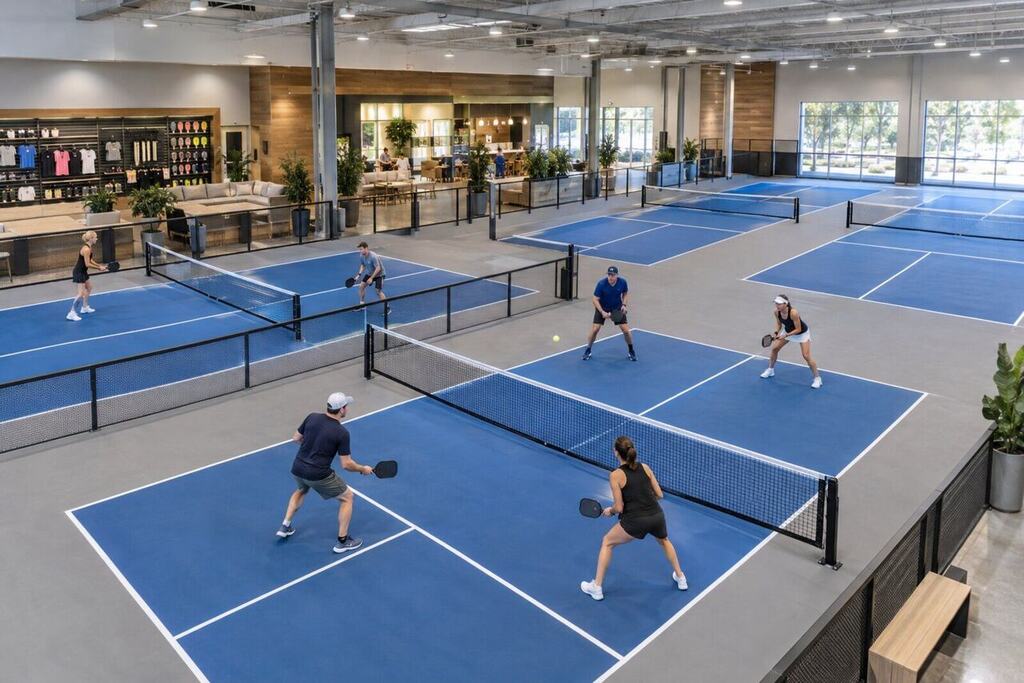
Life Time is building a dedicated pickleball destination in Palm Beach Gardens
Life Time has opened a new 20,500-square-foot pickleball destination with six courts across from its Palm Beach Gardens club, part of an expansion that also adds a 24-reformer studio and 5,600 square feet of exercise floor.