
How to Keep Score in Pickleball When Everyone Forgets the Score
The essentials: Pickleball scoring has built-in recovery tools: the three-number call, the even-right odd-left position check, and a called score before every serve. Reconstruct lost scores instead of guessing.
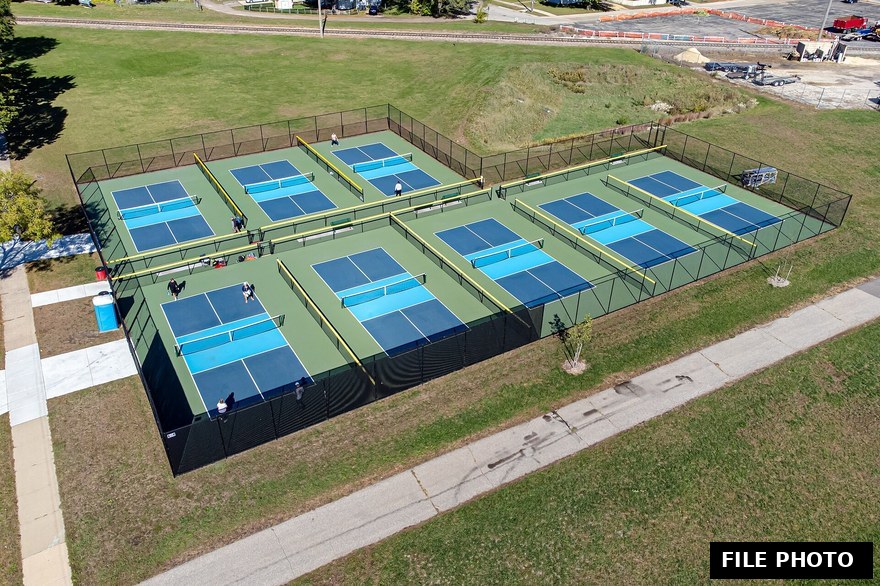
"Wait, what's the score?" is the most spoken sentence in recreational pickleball. The good news: the scoring system contains its own recovery tools. Once you know them, you can reconstruct a lost score in seconds instead of guessing.
Why the score is three numbers
In doubles, the score is called as three numbers: the serving team's score, the receiving team's score, and the server number, which is 1 or 2. That third number exists because both players on a team get to serve before the serve passes to the other side, with one famous exception: at the start of the game only one partner serves, which is why the opening call is "0-0-2." After that first side-out, both players on each team serve in turn until two faults hand the serve back. Points are scored only by the serving team, and games normally run to 11, win by 2.
A worked example
Say the call is "5-3-1." The serving team has 5 points, the receiving team has 3, and the first of the serving team's two players is serving. If that server faults, the call becomes "5-3-2" and their partner serves from wherever they stand. If the second server faults too, it is a side-out: the other team now serves, starting from the right-hand court, and opens with their own three-number call. Remember that only the serving team scores, so the first two numbers can sit unchanged for several rallies while the server number flips. Watch a game with that in mind once and the whole system clicks. Tournament formats sometimes extend games to 15 or 21, still win by 2, but the three-number logic never changes.
The position check: your fastest recovery tool
Here is the trick that settles most disputes. USA Pickleball's rules summary spells it out: when the serving team's score is even, the player who served first in the game for that team will be in the right-side court; when it is odd, that player will be in the left-side court. So if you know who served first for a team, their current position tells you whether their team's score is even or odd. Combine that with the last score everyone agrees on and the disputed number usually resolves itself.
Singles has an even simpler version: the server serves from the right when their own score is even and from the left when it is odd. If the server is standing on the right, their score is even. No memory required.
Reconstruct, don't negotiate
When nobody knows the score, the rules-minded approach is to walk it back together: agree on the last score everyone heard called, count who has served since and from which side, and use the even-right, odd-left check to confirm. What not to do: split the difference or accept a score both teams know is a guess, because it punishes whichever team was actually ahead. Reconstruction takes thirty seconds and both teams can verify each step.
Prevention beats reconstruction
The habits that keep scores findable: the server calls the full score, loud enough for everyone, before every serve; the receiving team echoes or acknowledges it, because a called score both sides heard is a score nobody loses; and the serving team keeps a mental note of the server number, since that is the digit most often dropped. Some groups assign the clearest voice on court as the permanent caller. All of this is easier than it sounds after a week of practice.
Rally scoring: know which system you are playing
One wrinkle worth knowing: alongside traditional side-out scoring, USA Pickleball provisionally recognized rally scoring, where a point is scored after every rally regardless of who served. Some leagues and events now use it, and it changes both the math and the memory load, since every rally moves a number. If your group plays rally scoring, say so before the first serve; mixing the two systems mid-game is the one scoring argument nobody wins.
The Europe angle
Scoring confusion is universal, but it concentrates wherever the sport is newest, because nobody in the group has logged enough games for the calls to become automatic. That is much of Europe right now, and it is part of why organized venues with hosted beginner sessions accelerate learning. Pickle Haus (pickle.haus) is setting out to build the first and biggest network of dedicated pickleball centers in Poland, with a vision to lead across Europe, the kind of venues where new players learn the scoring rhythm with guidance instead of guesswork. The brand describes this as its ambition; the centers are not open yet.
The bottom line
Three numbers, a position check, and a called score before every serve. Master those and you will be the player who always knows the score, which, it turns out, is a genuinely useful person to be.
Sources
Sources checked 20 Oct 2026. Header image is illustrative, not a photo of the events described. Header image is an illustrative rendering, not a photograph of a specific person, place or event.
Related stories

Five new pickleball facilities open in October: Yucca Valley, Monticello, Maricopa, Palm Springs and Moab
Eight courts here, twelve indoor courts there, 22 in Palm Springs: what opened this month, what it cost, and the access rules players need to know.

Pickleball's club shakeout: chains grew 37% this year, and The Picklr still landed in Chapter 11
Six major pickleball chains grew from 145 to 199 locations between January and September 2026, but indoor court growth is slowing and The Picklr's parent filed for bankruptcy. The buildout continues through a shakeout.

Life Time is building a dedicated pickleball destination in Palm Beach Gardens
Life Time has opened a new 20,500-square-foot pickleball destination with six courts across from its Palm Beach Gardens club, part of an expansion that also adds a 24-reformer studio and 5,600 square feet of exercise floor.