
How to Find Pickleball Partners When You Don't Know Anyone
The essentials: Starting from zero: how open play rotations work, where to find local organizers and scheduling apps, why clinics are partner factories, and how to turn sessions into a standing game.

Pickleball is a doubles-first sport, which makes it social by design and awkward if you know nobody. The good news is that the sport's structures are built exactly for your situation: open play exists so strangers can mix. Here is how to find partners when you are starting from zero.
Start with open play
Open play is the standard format at public courts and clubs: everyone shows up, paddles go into a rack or stack, and foursomes rotate on and off courts. You do not need to bring a partner, and arriving solo is completely normal. Look up the nearest courts, then check whether sessions have posted times for different levels; beginner-friendly sessions are the easiest entry point. When you arrive, say you are new and ask how the rotation works. That one question is expected, and it starts conversations.
Find the local organizers
Most pickleball scenes run on a small number of organizers who schedule sessions, manage groups, and answer questions. You can find them through community center front desks, parks-and-recreation program listings, local club websites, and social media groups for your city. Introduce yourself and ask two things: when beginners play, and how joining works. Ask anyway; sessions grow by adding new players.
Use the scheduling apps
Several free apps exist specifically to help players find games. PlayTime Scheduler lets players post and join sessions by location and level. PicklePlay maps courts and clubs. TeamReach and similar group-messaging apps are used by many local groups for day-to-day organizing. Search your city or venue name inside these apps, join the relevant group, and watch for sessions tagged for beginners or all levels. Reading a group for a week before your first session tells you the local etiquette.
Take a beginner clinic
A clinic or intro class is the fastest way to meet other beginners, because everyone there is in your position by definition. Community centers, clubs, and coaches run them regularly. Use the clinic to learn names and exchange numbers, so your first open play starts with familiar faces.
Play up when invited
Once you have played a few sessions, better players will sometimes invite you into their games. Accept. Rotating through stronger foursomes shows you positioning, shot selection, and pace that beginner-only games cannot. Expect to feel slow at first; that is part of moving up.
Be easy to play with
Partner-finding is partly reputation, and reputation forms fast in a small scene. Call the score clearly, call lines generously, thank partners, and do not coach anyone who did not ask. Before you leave, introduce yourself to the organizer and ask about the next open play.
Level matters less than reliability
When you join a group, do not oversell or undersell your level. Describe it plainly: how long you have played, whether you keep score comfortably, whether you know the kitchen rule. Groups use that to slot you into the right courts, and accurate self-description gets you better games faster than wishful labeling. Whatever your level, the players everyone wants back are the reliable ones: they show up when they said they would, they stay for the session, and they make the rotation easy to run.
Turn sessions into standing games
After a few weeks, you will recognize the same faces at the same sessions. Ask one or two of them directly: want to set up a regular game? A standing weekly foursome is the end state of this whole process, and it usually forms from exactly that one direct question. Most people are waiting for someone else to ask.
If the scene is thin where you live
In areas where pickleball is new, sessions may be sparse. The moves that work: check nearby towns' community centers, ask at multi-sport halls whether they host racket sports, and consider being the organizer. Reserving a court time and posting it in a local group is how many scenes start. Two players and a net are a viable session.
The Europe angle
Across much of Europe the sport is young, so local scenes are often built by exactly the kind of newcomer initiative described above, and dedicated venues are arriving to give those scenes a home. Pickle Haus (pickle.haus) is setting out to build the first and biggest network of dedicated pickleball centers in Poland, with a vision to lead across Europe. The brand describes this as its ambition; the centers are not open yet.
The bottom line
Show up at open play alone, say you are new, join the local scheduling app, take one clinic, accept invitations to play up, and ask one person about a standing game. Partners follow from there.
Sources
Sources checked 21 Oct 2026. Header image is illustrative, not a photo of the events described.
Related stories
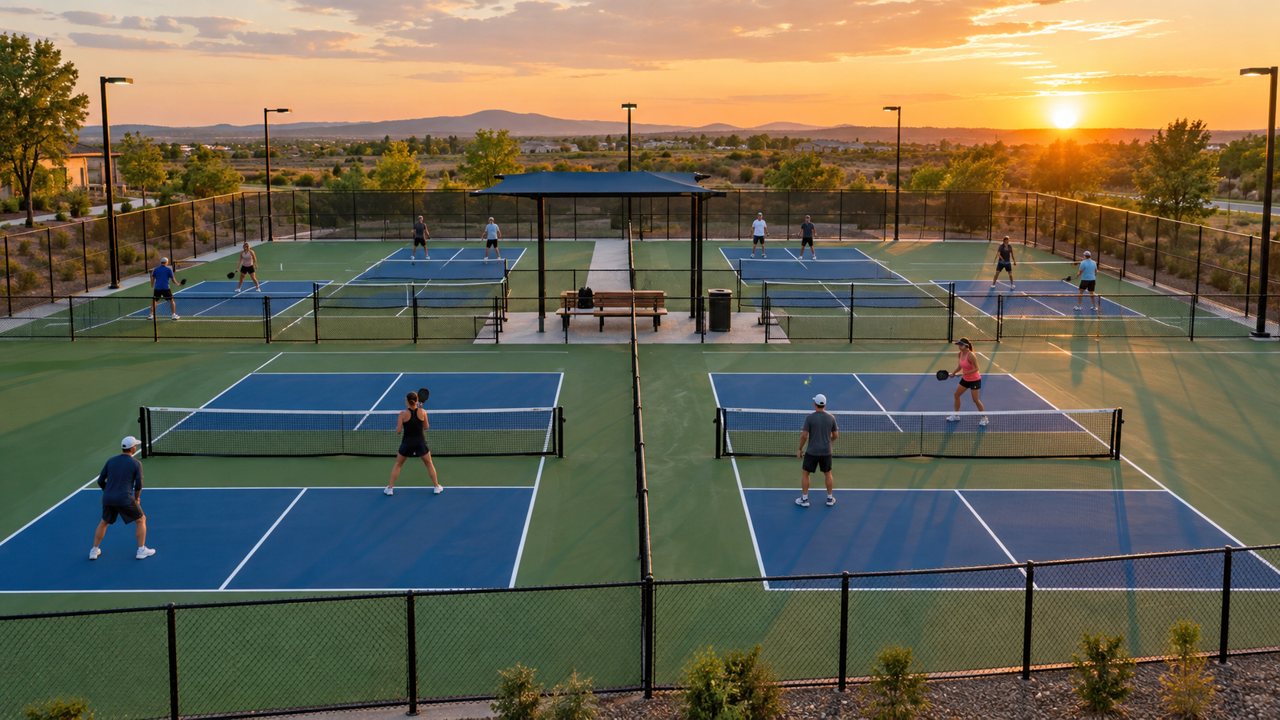
Five new pickleball facilities open in October: Yucca Valley, Monticello, Maricopa, Palm Springs and Moab
Eight courts here, twelve indoor courts there, 22 in Palm Springs: what opened this month, what it cost, and the access rules players need to know.
Pickleball's club shakeout: chains grew 37% this year, and The Picklr still landed in Chapter 11
Six major pickleball chains grew from 145 to 199 locations between January and September 2026, but indoor court growth is slowing and The Picklr's parent filed for bankruptcy. The buildout continues through a shakeout.
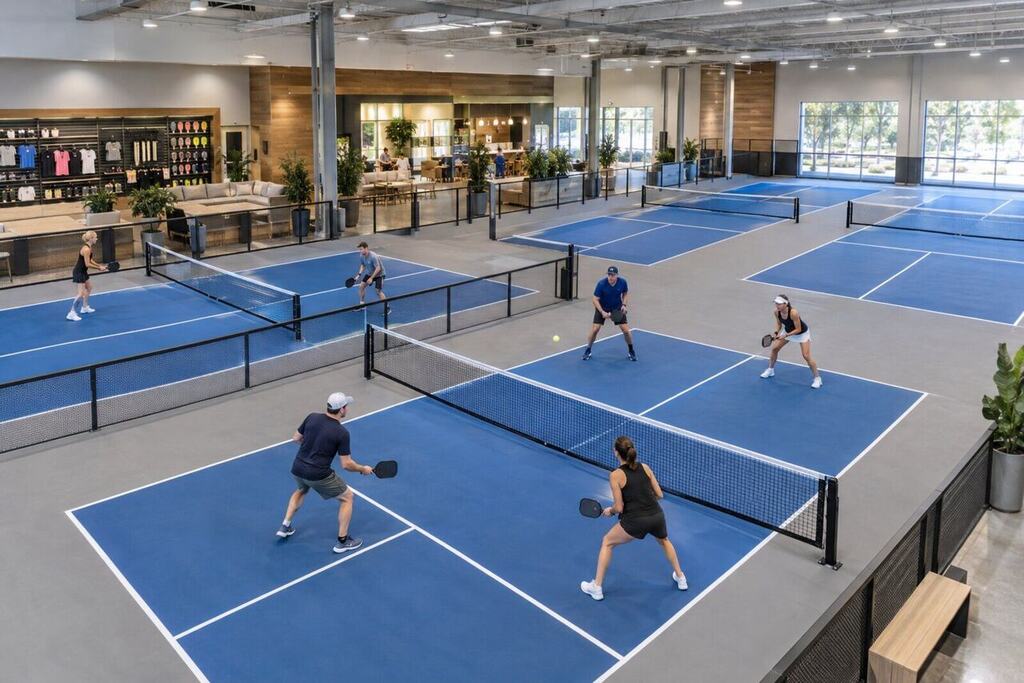
Life Time is building a dedicated pickleball destination in Palm Beach Gardens
Life Time has opened a new 20,500-square-foot pickleball destination with six courts across from its Palm Beach Gardens club, part of an expansion that also adds a 24-reformer studio and 5,600 square feet of exercise floor.