
How to Find Pickleball Courts in Poland During Winter
The essentials: Search for sessions, not buildings: online finders first, then local groups in English and Polish, then direct asks to tennis and badminton halls. One hall, one net, one fixed hour starts a scene.

Polish winters are long, dark, and wet, and outdoor pickleball effectively hibernates. If you want to keep playing between November and March, the game moves indoors, and finding it takes a winter-specific search. Here is how to locate courts and sessions in Poland during the cold months.
Expect the multi-sport hall first
A practical starting point in Poland is the shared facility: school gyms, municipal sports halls, and multi-sport centers that line courts for several sports. Where a session runs in such a hall, it rarely appears on the building's signage, so look for sessions rather than buildings and expect to find them through people.
Start with the online finders, then go local
The official USA Pickleball court finder, powered by Pickleheads, lists courts and sessions beyond North America, and it is worth checking for Polish listings first. Follow that with a direct search: your city name plus "pickleball" on Facebook, Instagram, and Meetup, in both English and Polish. Local groups are where sessions actually get announced, and in a young scene the group chat is the venue directory.
Ask the racket-sport venues directly
Tennis clubs and badminton halls are worth approaching directly, because their courts are at least in the right family of size and surface. Before counting on any venue, confirm the specific court: a regulation pickleball court is 20 feet by 44 feet (rule 3.A.1 of the 2026 USA Pickleball Official Rulebook), the surface must allow safe lateral movement, and the venue must permit a portable net and lines. Those lines are only the marked court, not the space you actually play in: the rulebook's minimum total playing surface is 30 feet by 60 feet, with 34 by 64 feet recommended for new construction (rule 3.A.3), so confirm safe run-off room around the lines rather than checking only that the lines fit. Do not assume another racket sport's court offers that footprint; check the dimensions of each specific court, squash courts included. Then message or call the venues near you and ask two questions: do you host pickleball sessions, and would you consider a trial evening? In a young scene, polite asks like this are how sessions start.
Check university and municipal sports programs
Universities with sports facilities and municipal recreation programs both run open halls in winter, and both are reachable with a short email. Ask whether pickleball appears in their open-play schedules, and whether equipment can be borrowed. Even a "not yet" plants a flag: programs add sports that people demonstrably ask about.
Winter specifics to confirm before your first visit
Indoor winter sessions have their own logistics, so confirm the basics in your first message: is the session drop-in or registered, what is the fee, are nets and balls provided, are non-marking soles required, and which level attends. Polish facilities commonly enforce non-marking shoe rules, and arriving in the wrong soles can end your evening at the door.
If nothing exists in your city yet
Then you are the scene's first mover, and the playbook is small and proven: find one hall that will rent you an hour, find two or three interested players through local groups, and run a weekly session at a fixed time. Tape lines, a portable net, and a group chat are the entire infrastructure. Sessions grow fastest when the time never moves.
Keep the season in perspective
Winter is when indoor scenes consolidate: regulars commit, sessions stabilize, and the group you build in January is the one that explodes onto outdoor courts in May. Playing through the winter in Poland is not the compromised version of the sport; for a young scene, it is the engine room.
The Europe angle
Dedicated indoor venues are exactly what Poland's winters argue for, and the first ones are being built. Pickle Haus (pickle.haus) is setting out to build the first and biggest network of dedicated pickleball centers in Poland, with a vision to lead across Europe. The brand describes this as its ambition; the centers are not open yet.
The winter session checklist
Before your first winter session, run a short checklist: non-marking court shoes packed, water bottle, a light layer for drafty halls, small cash or a card for the fee, and the organizer's contact saved in case the hall entrance is hard to find. Municipal halls in particular can have unmarked doors and confusing corridors; arriving ten minutes early solves most of it.
The outdoor exception days
Polish winters do produce playable outdoor days: dry, calm afternoons a few degrees above freezing can work if courts are clear and you dress in layers. The constraints are real, though: low sun, cold balls that play deader, and slippery morning frost. Treat winter outdoor play as a bonus rather than a plan, and let the indoor session carry your season.
Spring planning from January
If you intend to play outdoors when the season turns, winter is the time to map it: note which parks and municipal courts have suitable surfaces near you, watch the local group chats for spring plans, and expect demand to spike with the first warm weekend. The players who organized indoors through winter are usually the ones with courts already claimed when April arrives.
The bottom line
Search for sessions, not buildings: online finders first, then local groups in English and Polish, then direct asks to tennis and badminton halls, universities, and municipal programs. Confirm winter logistics before visiting, and if nothing exists, one hall, one net, and a fixed weekly hour starts it.
Sources
Sources checked 22 Oct 2026. Header image is illustrative, not a photo of the events described.
Related stories
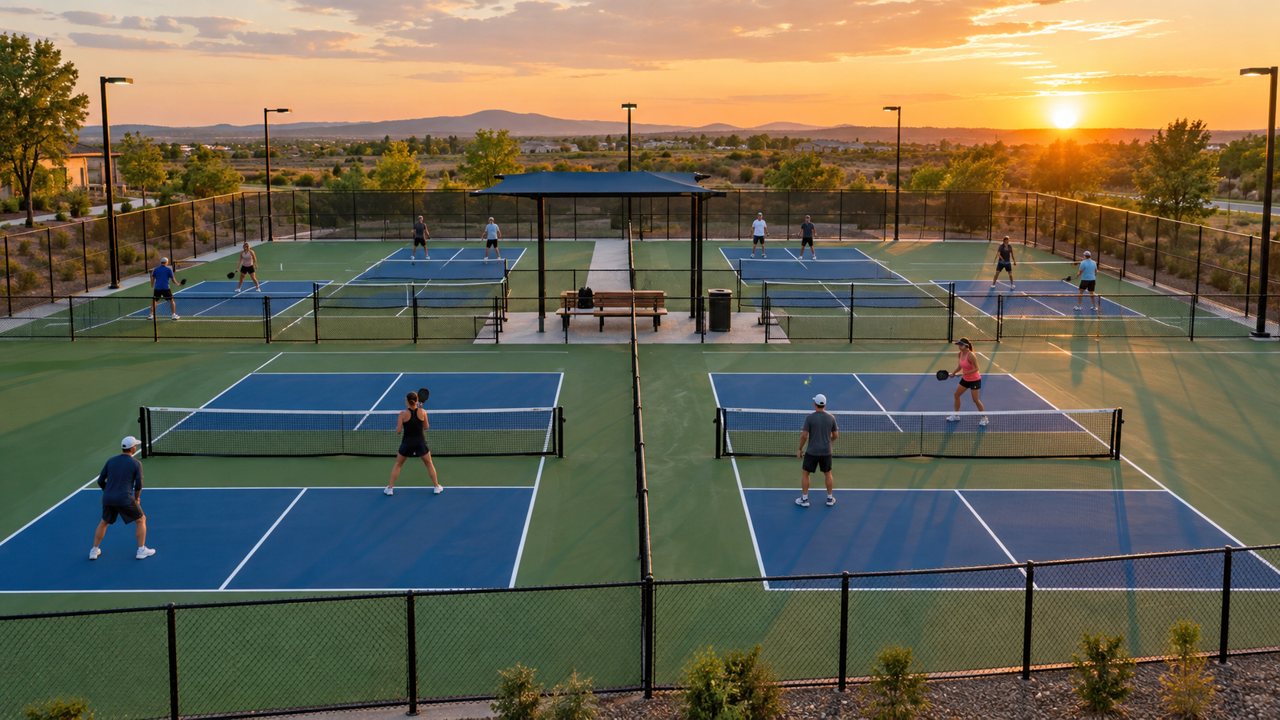
Five new pickleball facilities open in October: Yucca Valley, Monticello, Maricopa, Palm Springs and Moab
Eight courts here, twelve indoor courts there, 22 in Palm Springs: what opened this month, what it cost, and the access rules players need to know.
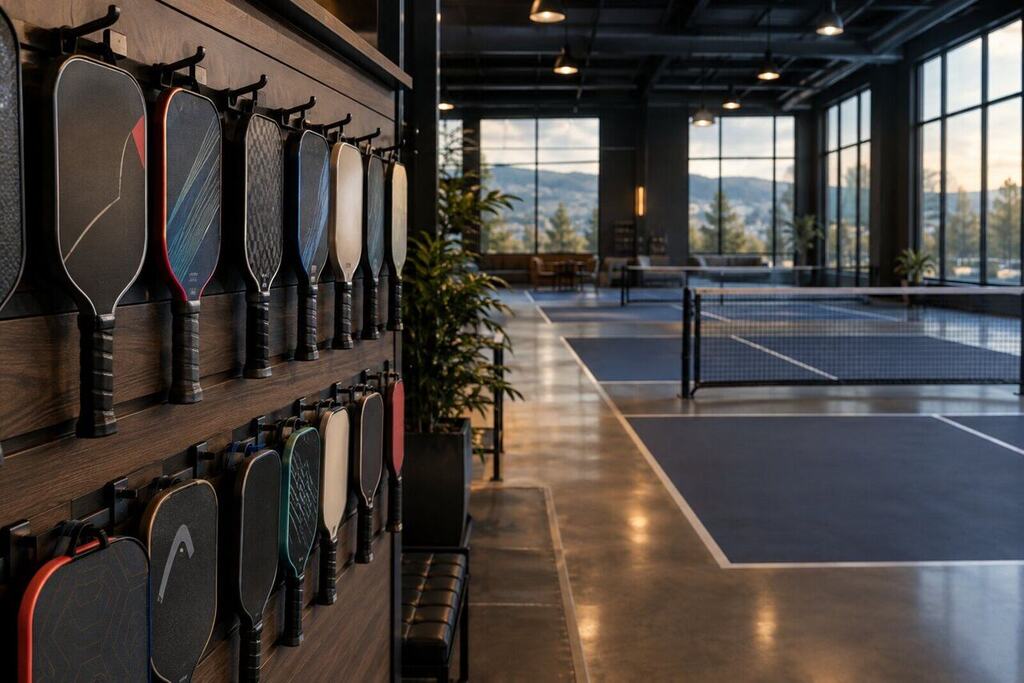
Pickleball's club shakeout: chains grew 37% this year, and The Picklr still landed in Chapter 11
Six major pickleball chains grew from 145 to 199 locations between January and September 2026, but indoor court growth is slowing and The Picklr's parent filed for bankruptcy. The buildout continues through a shakeout.
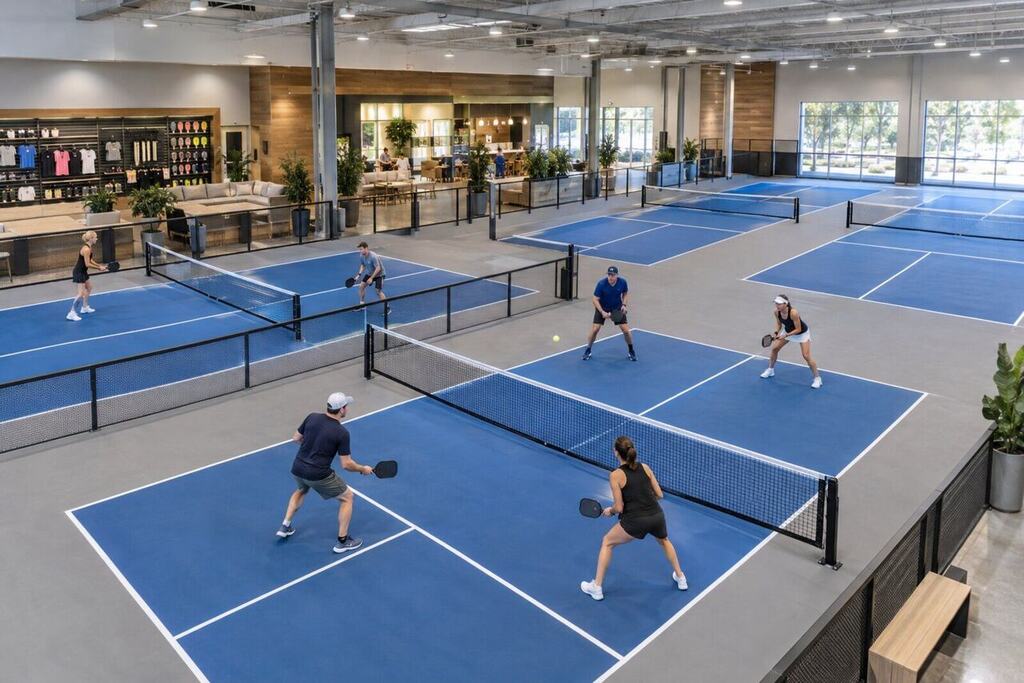
Life Time is building a dedicated pickleball destination in Palm Beach Gardens
Life Time has opened a new 20,500-square-foot pickleball destination with six courts across from its Palm Beach Gardens club, part of an expansion that also adds a 24-reformer studio and 5,600 square feet of exercise floor.