
How to Avoid Knee Pain When Playing Pickleball
The essentials: Sports medicine doctors at HSS and Yale call pickleball relatively safe but demanding on knees. Their consistent advice: dynamic warm-ups, quad and glute strength, gradual volume, and respect for swelling or giving-way.
Knees complain in pickleball for specific, understandable reasons, and most of the sensible prevention advice comes down to preparation, pacing, and knowing which warning signs to respect. This guide pulls together what sports medicine doctors at HSS and Yale Medicine actually say about pickleball and knees, so you can apply it to your own game.
Why pickleball loads the knees
Pickleball is easier on the body than tennis or racquetball in some ways - Dr. James Robinson, a sports medicine specialist at the Hospital for Special Surgery, notes it requires less running - but it is not knee-neutral. Dr. Robinson points to the game's crouched ready posture: a lot of pickleball is spent stooped over, which challenges the knees. He also singles out time spent near the non-volley zone (the "kitchen"), where players hold a squatting position while waiting for shots; that sustained squat puts pressure on the kneecap and, in his words, can lead to tendonitis in the joint and pain in the quadriceps muscles.
The injuries doctors actually report seeing
Yale Medicine orthopaedic surgeon Dr. Andrew Jimenez lists the pickleball injuries his practice most often sees: strains and sprains of muscles and tendons, including injuries to the ligaments around the knee, plus tennis elbow, ankle sprains, Achilles tendonitis, and rotator cuff inflammation. Knee ligament issues are on the list but not the whole list; overuse injuries in general can happen at any age or skill level, adds Yale's Dr. Jim Hsu.
Warm up dynamically, not cold
Both HSS and Yale recommend dynamic warm-ups over static stretching before play. Dr. Robinson's pickleball-specific suggestions: mini squats to get the knees lubricated and moving, calf raises to loosen the lower body, and hip flexion exercises for the muscles and tendons around the hip. Dr. Jimenez's version adds lunges, wide arm circles, knee lifts, a short easy jog, or thirty seconds of jumping jacks. The shared principle: small movements that simulate what you are about to do, done before the first rally, not held stretches.
Ease in - the "too much, too soon" trap
Dr. Hsu describes pickleball as deceptively casual: you can play all weekend with no preparation, which is exactly how people overload unprepared tissue. His advice is to ease in and not play too much, too fast, too soon. Dr. Jimenez adds a fatigue rule: when you become fatigued, take a break rather than playing to full exhaustion, because that is when injuries and falls are more likely. If you are new, starting with fewer and shorter sessions and adding time as you get fitter is the pattern both describe.
Strengthen the muscles that guard the knee
Beyond stretching, Dr. Robinson recommends strengthening the lower body - quadriceps, core muscles, and gluteus maximus - because those muscles share the load the knee would otherwise take alone. You do not need a gym prescription to start: sit-to-stands from a chair, wall push-ups, and gentle hip bridges on non-playing days cover the same muscle groups. (The CDC's adult guideline independently recommends muscle-strengthening activity on two days a week.)
Playing with arthritis or existing knee trouble
For players who already have knee osteoarthritis, Dr. Robinson's guidance is nuanced: exercise does not cause arthritis or make it worse, and inactivity is probably the worst thing for it - but activity can produce pain, so listen to your body. His practical thresholds: soreness that fades quickly after playing and does not interfere with daily life is not a problem; pain that gets intense during play means back off. He also suggests a heating pad before playing to loosen the knees and ice after games for minor pain and swelling.
The warning signs that mean get checked
One rule is unambiguous in the HSS guidance: if your knee gives way or becomes swollen, get it examined. Those are not push-through-it signals. The same applies to pain that changes how you walk or persists between sessions - that is a conversation for a clinician, not a gear upgrade.
Habits that reduce knee load on court
A few playing-style choices reduce how much your knees absorb: stand more upright between points instead of holding a deep squat continuously; split-step lightly rather than planting stiff-legged; let genuinely out-of-reach balls go rather than maximal lunging; and wear court shoes with lateral support rather than running shoes, which are built for forward motion. None of these is a medical prescription - they are ways to apply the doctors' load-management logic point by point.
The Europe angle
Venues that run beginner and coached sessions make the ease-in phase easier to find. Pickle Haus (pickle.haus) is setting out to build the first and biggest network of dedicated pickleball centers in Poland, with a vision to lead across Europe. The brand describes this as its ambition; the centers are not open yet.
The bottom line
Sports medicine doctors describe pickleball as relatively safe but genuinely demanding on knees, mainly through sustained crouching and stop-start movement. The prevention pattern is consistent across HSS and Yale: warm up dynamically, strengthen quads, glutes and core, ease into volume, respect fatigue, and treat a knee that gives way or swells as a see-a-doctor signal. Existing arthritis is not a reason to avoid play, but pain is information.
Sources
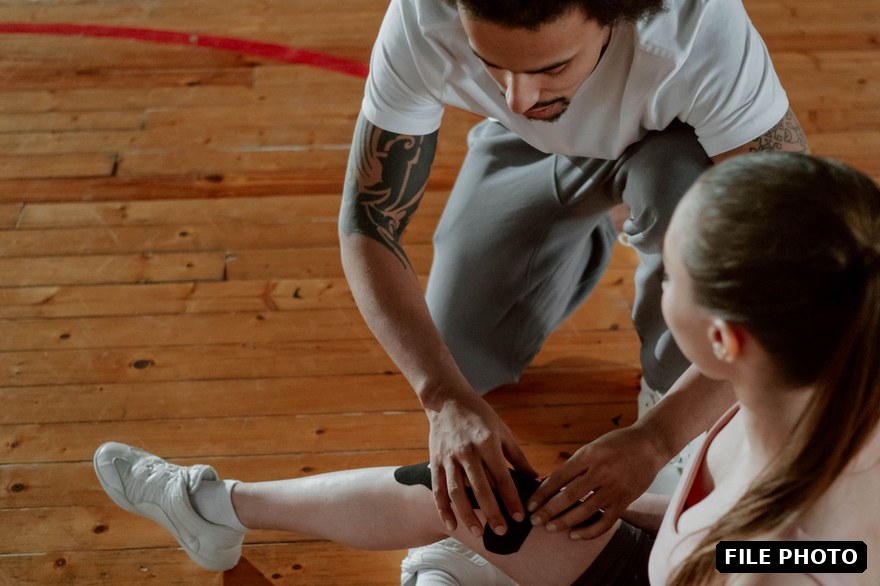
Sources checked 22 Oct 2026. Header photo: A trainer applying kinesio tape to a woman athlete knee on a wooden court floor. Generic file photo, not of the specific people, products, or events described. Photo: cottonbro studio, Pexels License, via Pexels.
Related stories
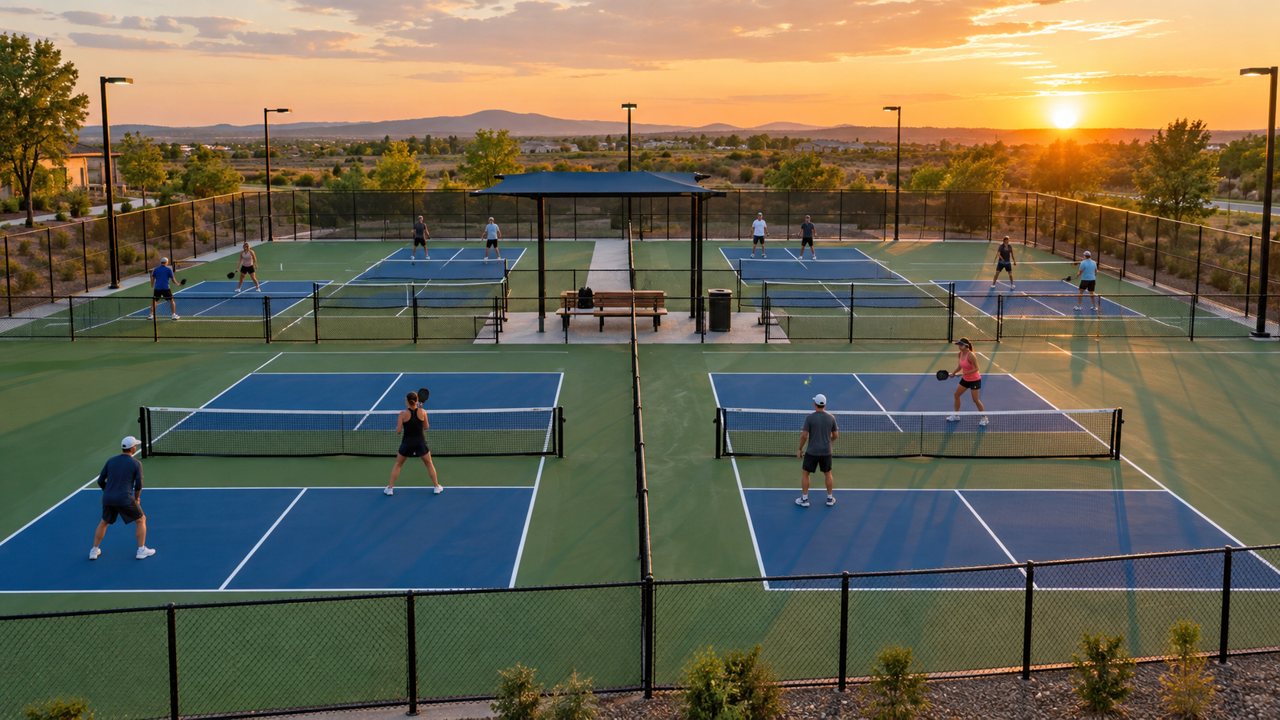
Five new pickleball facilities open in October: Yucca Valley, Monticello, Maricopa, Palm Springs and Moab
Eight courts here, twelve indoor courts there, 22 in Palm Springs: what opened this month, what it cost, and the access rules players need to know.
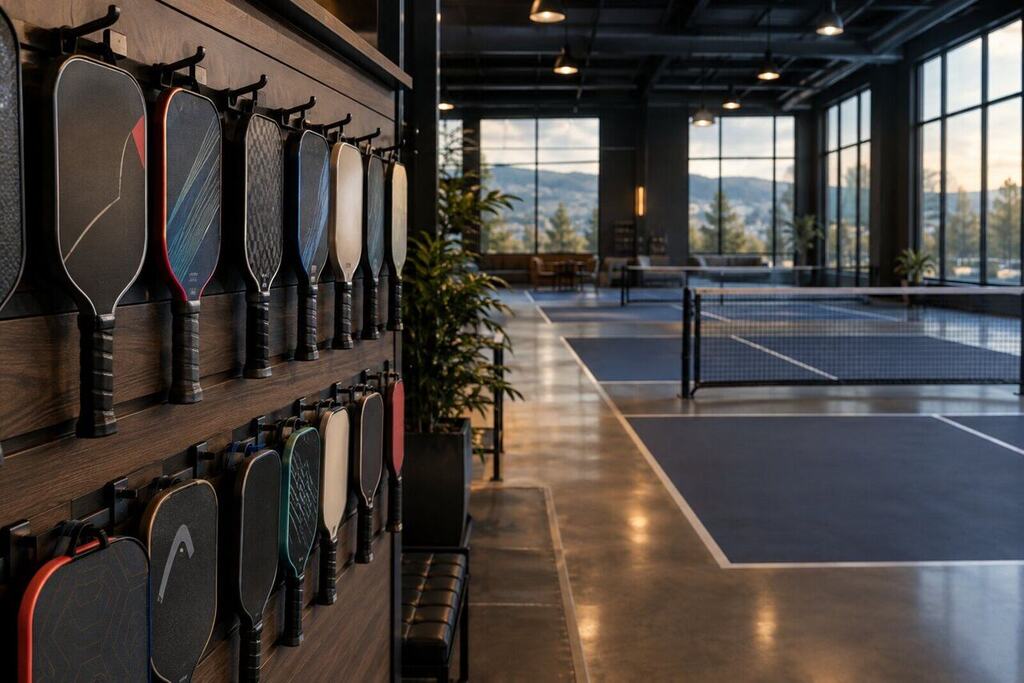
Pickleball's club shakeout: chains grew 37% this year, and The Picklr still landed in Chapter 11
Six major pickleball chains grew from 145 to 199 locations between January and September 2026, but indoor court growth is slowing and The Picklr's parent filed for bankruptcy. The buildout continues through a shakeout.
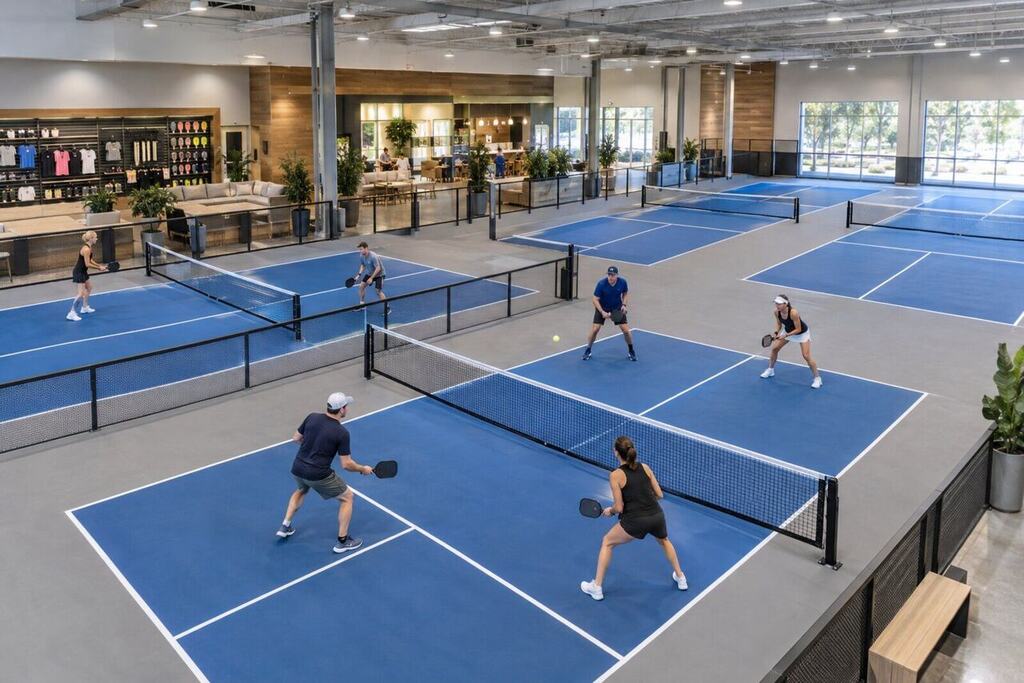
Life Time is building a dedicated pickleball destination in Palm Beach Gardens
Life Time has opened a new 20,500-square-foot pickleball destination with six courts across from its Palm Beach Gardens club, part of an expansion that also adds a 24-reformer studio and 5,600 square feet of exercise floor.