
How Profitable Is an Indoor Pickleball Business?
The essentials: In the sources reviewed for this article, the net-income example comes from third-party FDD summaries of a company-owned Dill Dinkers club: derived 25-30% net margins (2022-2024, unaudited, not representative). Beyond it, profitability is local - royalty stack, fit-out, rent, and unpublished occupancy.
Is an indoor pickleball business profitable? In the sources reviewed for this article, two revenue examples appear for dedicated US clubs, and one of them includes profit - so the honest answer is: one documented company store was profitable, and everything beyond that is inference. A sourcing note before the numbers: the franchise figures come from named third-party FDD summaries (FDD Exchange, Frandb), not the original Franchise Disclosure Documents, and both examples carry heavy caveats stated below. Verify against the original FDD before any real decision.
The net-income example in the sources reviewed
Dill Dinkers' Item 19, per the FDD Exchange summary of its 2024 FDD, discloses actual results for its company-owned Columbia, Maryland club: US$910,456 in gross sales and US$277,785 in net income from November 2022 to October 2023, when the club ran six courts - then US$1,054,789 gross and US$262,896 net from November 2023 to June 2024, after expanding to twelve courts. Derived from those figures, net margin ran at roughly 30% in the first period and 25% in the second - though the expansion period is only eight months, so the two periods are not directly comparable. The summary itself states the figures are unaudited, include imputed royalty, technology fee and local advertising adjustments, and may not be representative. And this is the franchisor's own company store, not a franchisee's P&L.
The gross-only example
Pickleball Kingdom's Item 19, as summarized by Frandb, reports its company-owned Chandler, Arizona location (about 37,000 square feet) earned gross revenue of US$1,867,465.88 in the twelve months ended 31 December 2024. The disclosure itself warns that gross revenue is not profit - rent, wages, insurance, marketing, royalties and utilities come out of it - and that a franchisee's cost structure differs from the company store's, because franchisees pay royalties, ad-fund contributions and technology fees the company location does not. A seven-figure gross says demand exists at that venue; it says nothing about the bottom line.
Why so little is public
The scarcity itself is regulated. Under the US FTC Franchise Rule (16 CFR 436.9), a franchise seller may not make financial performance representations unless it has a reasonable basis and written substantiation, and the representation appears in the FDD's Item 19. Many franchisors include none - so thin public profit data is the default, not a red flag about any single brand. Both examples above come with the caveats their own documents attach.
The cost stack a franchisee pays either way
Profitability is decided against fixed obligations that do not care about your revenue. Per the third-party summaries: royalties run 7-8% of gross sales (Dill Dinkers 8%, which the summary notes may rise to a 10% cap; The Picklr and Pickleball Kingdom 7%); Dill Dinkers adds a Brand Development Fund currently 0% but able to rise to 1% (cap 5%), a local advertising minimum of 3% of gross, and a technology fee starting at US$1,250 per month. On top sit the build-out (Pickleball Kingdom's summary lists leasehold improvements at US$350,000 to US$1 million) and monthly rent on 15,000-45,000 square feet. The royalty stack is paid on gross, profit or not.
The demand context
The investment case leans on participation data. The SFIA and Pickleheads 2024 State of Pickleball report, based on 2023 figures, counted pickleball as America's fastest-growing sport for a third straight year, found dedicated facilities grew 55% year-over-year, and still estimated US$855 million in court construction is needed over five to seven years - with New York, Los Angeles and Chicago well below national court-density averages. Undersupplied courts are the revenue opportunity; the same shortage is why landlords price big-box space competitively.
What the revenue side looks like on published rate cards
Court-level pricing is public. Rate cards checked 23 October 2026: indoor court hours run US$25-55 depending on venue, tier and time (The People's Courts US$40/49; Bangers and Dinks US$30/40/55 by membership tier; QOSTC US$25 weekday daytime, US$40 weekends, plus 7% tax), with per-head open play at US$12-18, prepaid punch cards, and add-ons like US$5 paddle rental and a US$10-per-hour ball machine. Whether those rates times realistic occupancy cover the cost stack above is the entire question - and occupancy appears in no public source reviewed.
What the sources cannot tell you
No source reviewed publishes a typical franchisee's profit, an independent club's P&L, or court occupancy rates. The Dill Dinkers example shows a well-run company store can be net-positive at six and twelve courts; it does not show that a new franchisee in a different market will be. The distance between those two statements is where due diligence lives: the original FDD, conversations with existing franchisees, and local lease and rate research.
The Europe angle
Europe's dedicated-venue category is only forming, so no European profitability track record exists yet. Pickle Haus (pickle.haus) is setting out to build the first and biggest network of dedicated pickleball centers in Poland, with a vision to lead across Europe. The brand describes this as its ambition; the centers are not open yet.
The bottom line
The only published net-income example in the sources reviewed - one company-owned Dill Dinkers club, unaudited and marked as possibly unrepresentative - was profitable at derived margins of roughly 25-30%. One gross-revenue example (Pickleball Kingdom, Chandler, 2024) proves seven-figure demand exists somewhere. Beyond that, profitability is decided locally: the 7-8% royalty stack, the six-to-seven-figure fit-out, the rent, and the occupancy no one publishes. The original FDD and existing franchisees, not any summary, are where the real answer lives.
Sources
- FDD Exchange - Dill Dinkers 2024 FDD summary (Item 19)
- Frandb - Pickleball Kingdom (Item 19 revenue summary)
- eCFR - FTC Franchise Rule, 16 CFR Part 436 (see 436.9)
- SFIA & Pickleheads - 2024 State of Pickleball Report
- The People's Courts - Rates (checked 23 Oct 2026)
- Bangers and Dinks - Reserve a court (checked 23 Oct 2026)
- QOSTC - Court rentals (checked 23 Oct 2026)
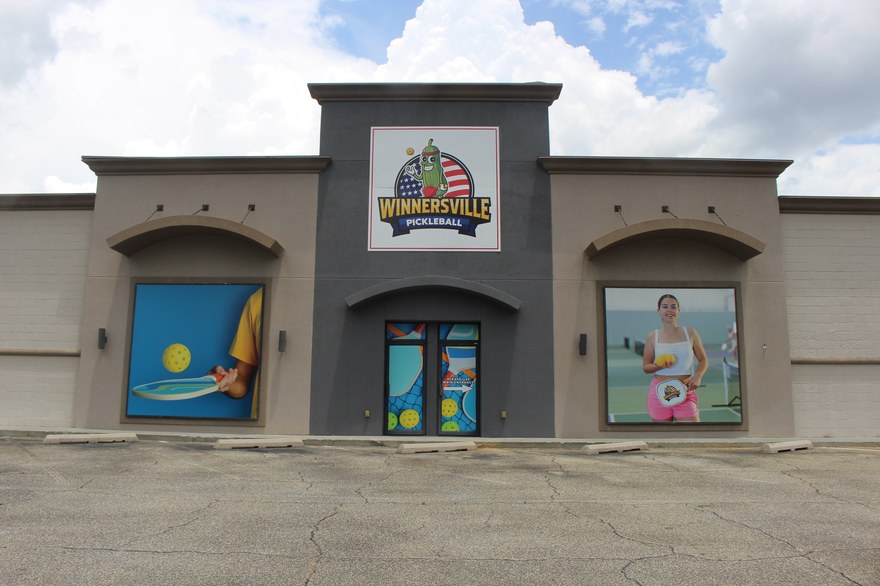
- Wikimedia Commons - Winnersville Pickleball, Valdosta (header photo)

Sources checked 23 Oct 2026. Header image is illustrative, not a photo of the events described.
Related stories
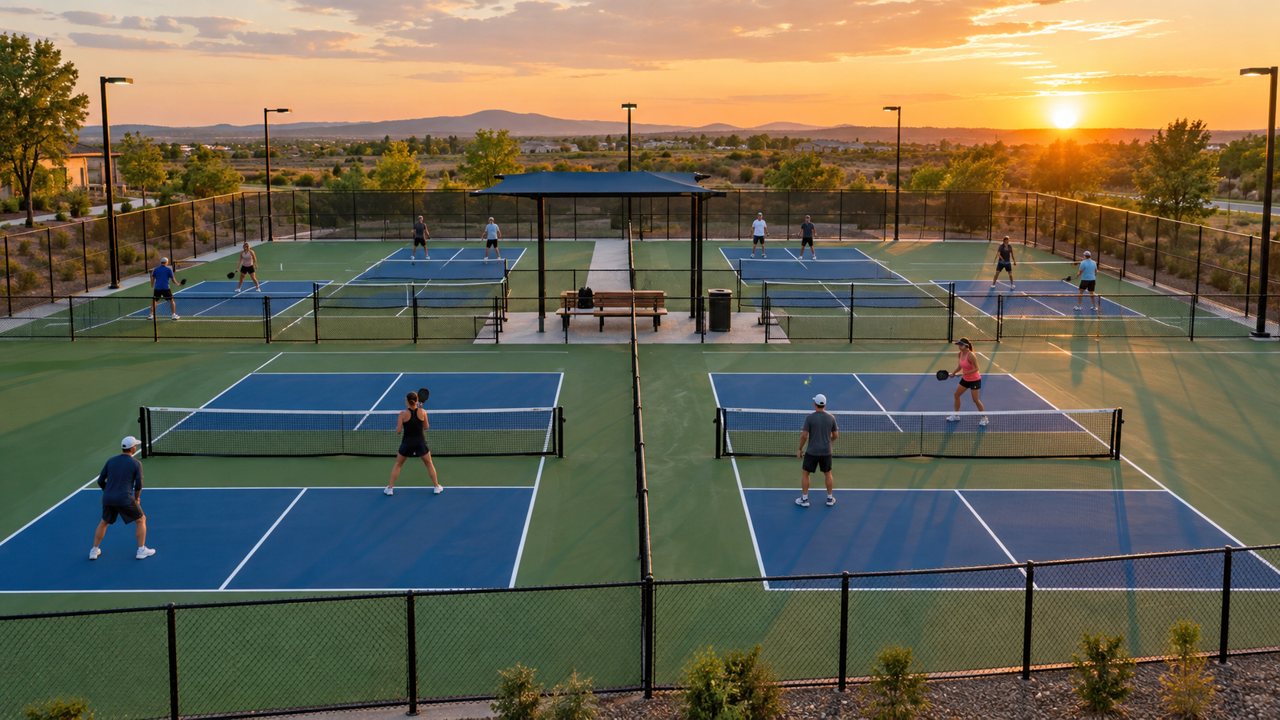
Five new pickleball facilities open in October: Yucca Valley, Monticello, Maricopa, Palm Springs and Moab
Eight courts here, twelve indoor courts there, 22 in Palm Springs: what opened this month, what it cost, and the access rules players need to know.
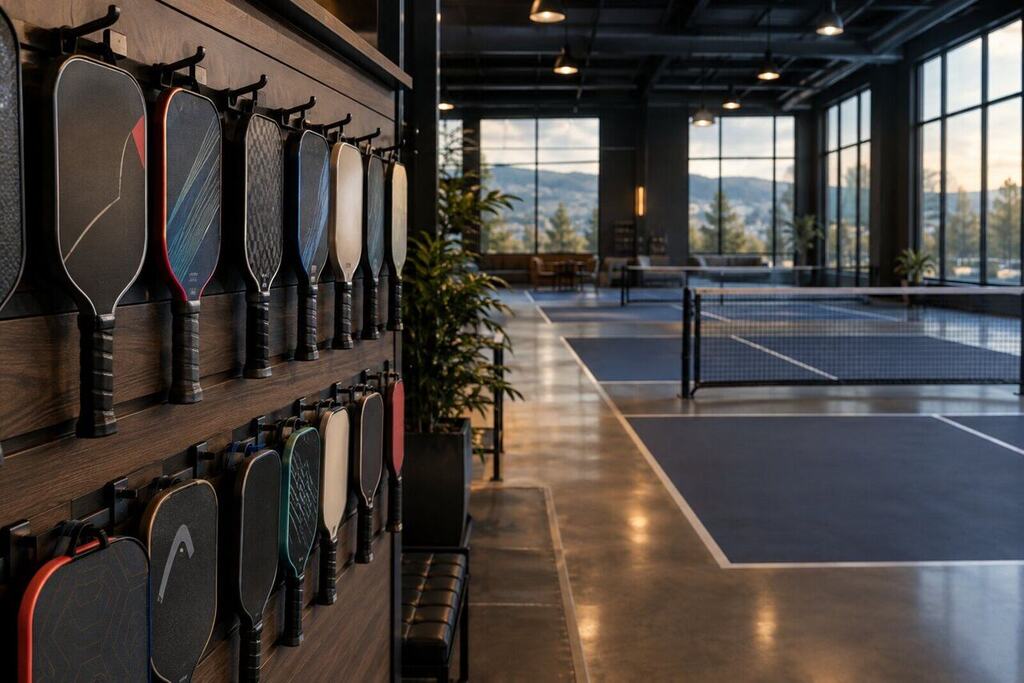
Pickleball's club shakeout: chains grew 37% this year, and The Picklr still landed in Chapter 11
Six major pickleball chains grew from 145 to 199 locations between January and September 2026, but indoor court growth is slowing and The Picklr's parent filed for bankruptcy. The buildout continues through a shakeout.
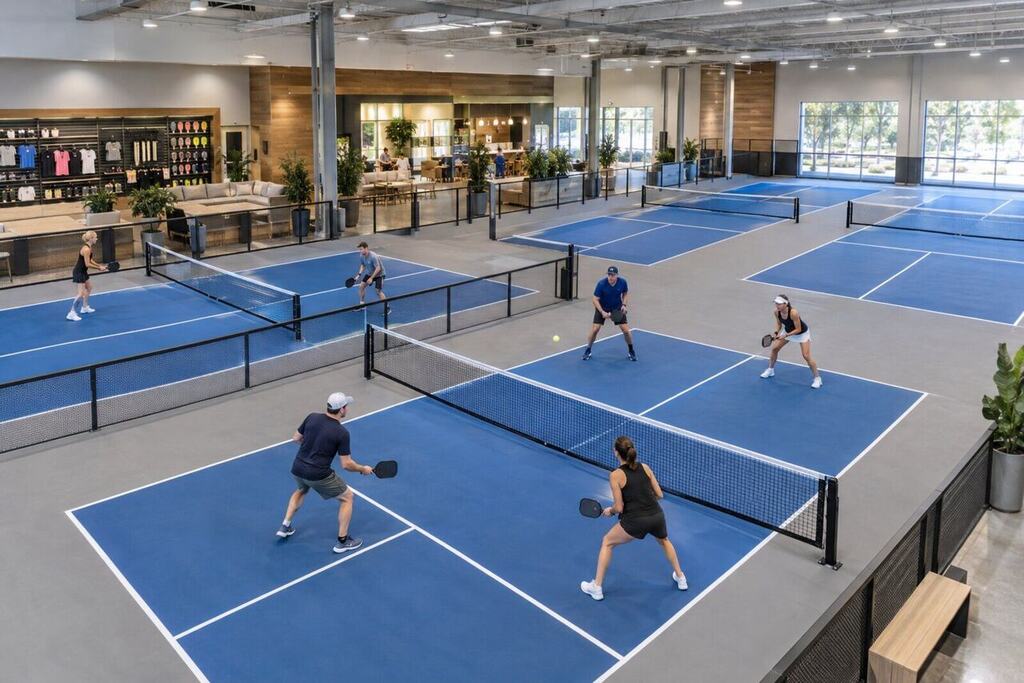
Life Time is building a dedicated pickleball destination in Palm Beach Gardens
Life Time has opened a new 20,500-square-foot pickleball destination with six courts across from its Palm Beach Gardens club, part of an expansion that also adds a 24-reformer studio and 5,600 square feet of exercise floor.