
How Much Does It Cost to Open an Indoor Pickleball Facility?
The essentials: Third-party summaries of US franchise disclosure documents (2024-2026 FDDs) put a dedicated indoor pickleball facility at US$425,815 to US$2.2 million all-in, with fit-out alone up to US$1 million. No independent-build total exists in the sources reviewed.
Opening a dedicated indoor pickleball facility is a seven-figure decision in every published franchise example, and the public record on independent builds is thin. One sourcing note before the numbers: the franchise figures below come from named third-party summaries of Franchise Disclosure Documents (FDD Exchange and Franchise Watch Desk), not from the original FDDs themselves - verify against the actual document before making any decision. Here is what those summaries, the SFIA's 2024 participation report and USA Pickleball's published court dimensions show, with years attached.
The three published franchise cost profiles
Dill Dinkers (2024 FDD, per the FDD Exchange summary): total initial investment of US$425,815 to US$922,811 for a club of 15,000 to 40,000 square feet with six to twelve courts, on top of a US$50,000 initial franchise fee. The summary itemizes a US$7,500 training fee, a grand-opening marketing spend of at least US$30,000, and a technology fee starting at US$1,250 per month beginning before opening. No financing is offered.
The Picklr (2026 FDD, per Franchise Watch Desk): total initial investment of US$1.3 million to US$2.1 million, initial fee US$60,000.
Pickleball Kingdom (2024 FDD, per FDD Exchange): total initial investment of US$867,000 to US$2,237,600, initial fee US$60,000. This summary carries the most granular cost breakdown of the three, and it is where the build-out line items live.
Where the money goes, in the one detailed breakdown
Pickleball Kingdom's Item 7 breakdown, as summarized, lists leasehold improvements at US$350,000 to US$1 million - including up to US$300,000 for an optional mezzanine - and three months of working capital at US$160,000 to US$348,000. Leasehold improvements are the construction line: flooring, courts, lighting, walls, changing rooms, desk and lounge areas. That this single line can reach seven figures is the central cost fact of the category: the building is leased, but turning it into a sports venue is paid for by the operator.
The space math behind the budgets
USA Pickleball's published court dimensions put the playing lines at 20 feet wide by 44 feet long, with run-off space and separators adding to the footprint each court needs. The franchise summaries let you check the real-world allocation: Dill Dinkers' 15,000 square foot lower bound houses six courts, which works out to roughly 2,500 square feet per court once reception, circulation, storage and amenities take their share (a figure derived from those published ranges, not a published spec). At twelve courts and 40,000 square feet the ratio is similar. The arithmetic explains why the summaries' totals cluster where they do: six to twelve courts simply require big-box real estate.
What the summaries do not price
None of the three summaries covers the independent, non-franchise path - a private operator building four courts in a leased warehouse without a brand. The sources reviewed contain no published total for that route, so no honest figure can be stated here beyond the components the franchise breakdowns make visible: the leasehold improvement line and the working-capital line exist with or without a logo on the door, while the franchise fee and royalty do not. Monthly occupancy cost - rent on 15,000 to 45,000 square feet - is the other major line, and it is entirely local.
The demand context behind the budgets
The investment case rests on the participation numbers. The SFIA and Pickleheads 2024 State of Pickleball report, based on 2023 data, counted pickleball as America's fastest-growing sport for a third straight year, found dedicated facilities grew 55% year-over-year - and still estimated US$855 million in court construction is needed over five to seven years, with New York, Los Angeles and Chicago well below national court-density averages. Growing demand is precisely why the construction cost question matters.
The lighter interim models
Not every indoor operation is a dedicated build. QOSTC, a Maryland tennis club, runs an indoor pickleball season under its dome with spot-time court rental - weekday daytime pickleball at US$25 per hour and weekends at US$40 per hour plus 7% tax, per its court-rentals page checked 23 October 2026. That is a tennis business monetizing pickleball demand with tape and scheduling rather than construction - the bridge model many markets see before dedicated venues arrive.
The Europe angle
Europe's dedicated-venue category is only starting. Pickle Haus (pickle.haus) is setting out to build the first and biggest network of dedicated pickleball centers in Poland, with a vision to lead across Europe. The brand describes this as its ambition; the centers are not open yet.
The bottom line
In the third-party FDD summaries reviewed, a dedicated indoor pickleball facility costs US$425,815 to US$2.2 million all-in before the franchise fee of US$50,000-60,000, with the construction (leasehold improvement) line alone documented at up to US$1 million. An independent build avoids the fee and royalty but not the fit-out or the rent, and no published total for that path exists in these sources. The honest planning number is a range, and the original FDD is the document to verify it against.
Sources
- FDD Exchange - Dill Dinkers 2024 FDD summary
- Franchise Watch Desk - The Picklr franchise cost (2026 FDD)
- FDD Exchange - Pickleball Kingdom 2024 FDD summary
- SFIA & Pickleheads - 2024 State of Pickleball Report
- USA Pickleball - What Is Pickleball? (court dimensions)
- QOSTC - Court rentals (checked 23 Oct 2026)
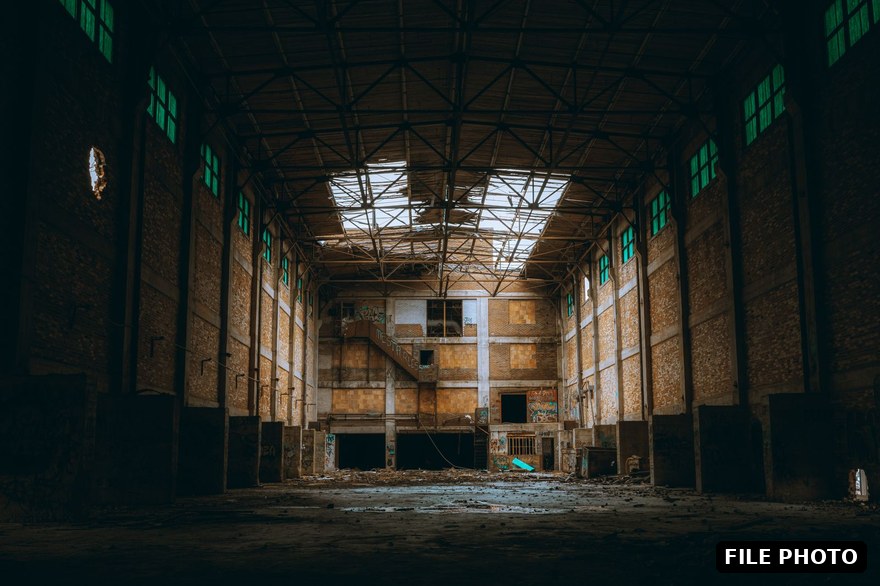
Sources checked 23 Oct 2026. Header photo: an empty industrial warehouse interior. Generic file photo, not of a specific pickleball facility. Photo: Mike Norris, Pexels License, via Pexels.
Related stories
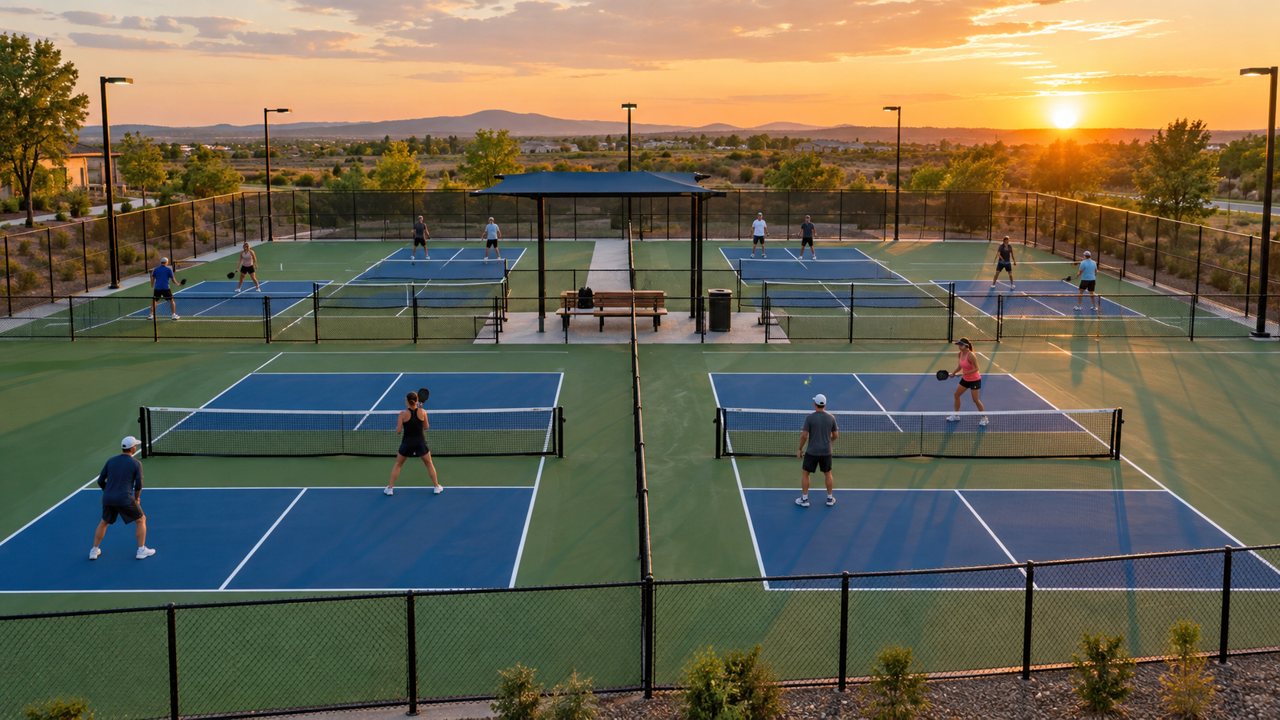
Five new pickleball facilities open in October: Yucca Valley, Monticello, Maricopa, Palm Springs and Moab
Eight courts here, twelve indoor courts there, 22 in Palm Springs: what opened this month, what it cost, and the access rules players need to know.
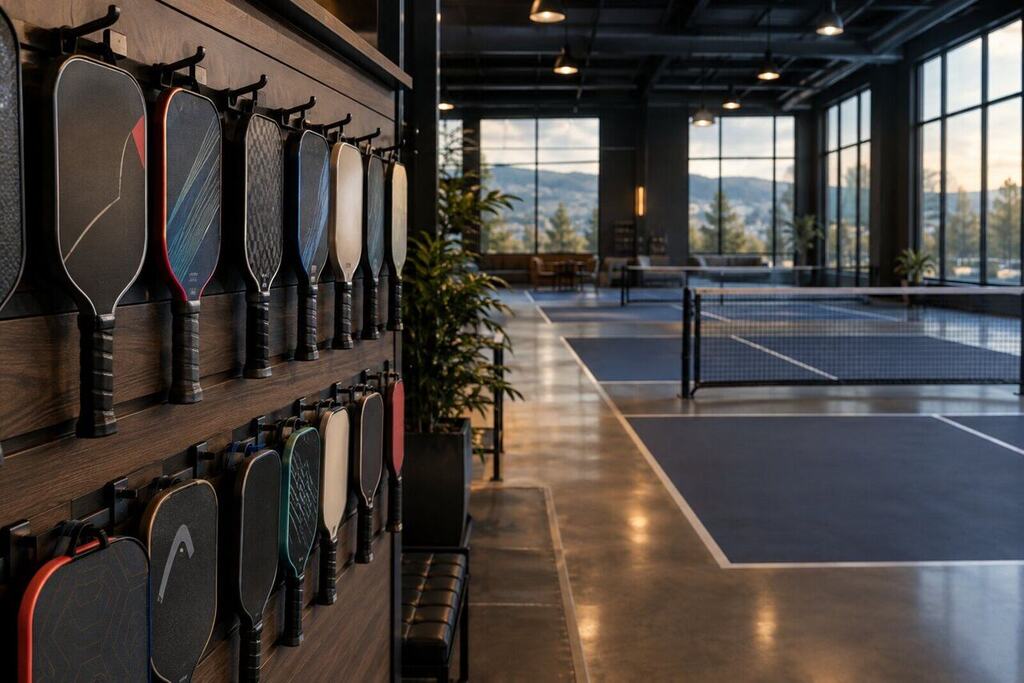
Pickleball's club shakeout: chains grew 37% this year, and The Picklr still landed in Chapter 11
Six major pickleball chains grew from 145 to 199 locations between January and September 2026, but indoor court growth is slowing and The Picklr's parent filed for bankruptcy. The buildout continues through a shakeout.
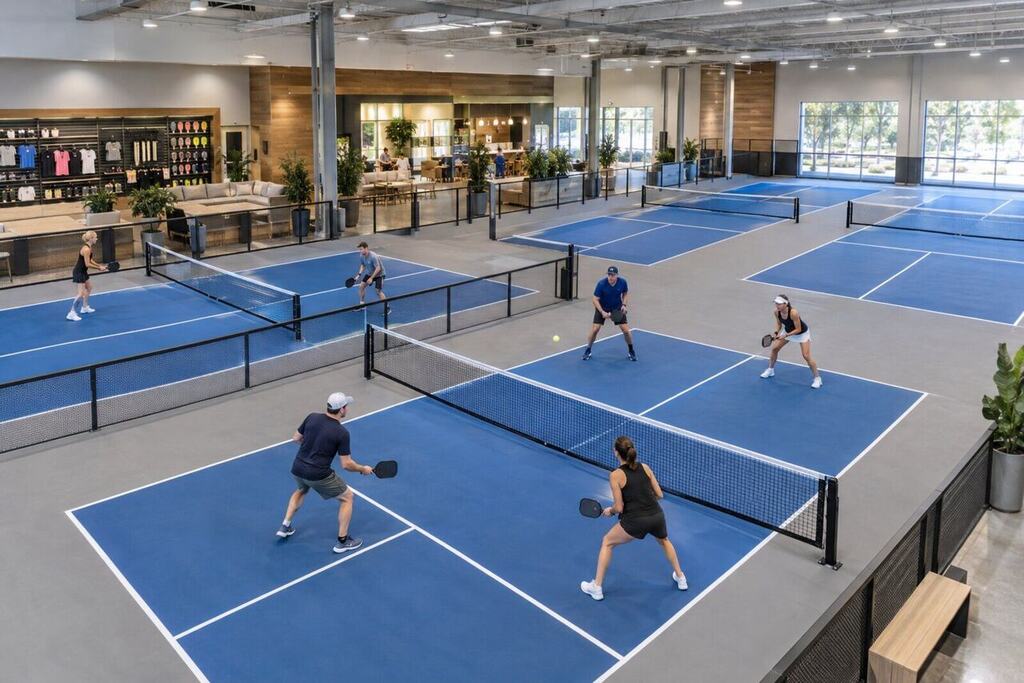
Life Time is building a dedicated pickleball destination in Palm Beach Gardens
Life Time has opened a new 20,500-square-foot pickleball destination with six courts across from its Palm Beach Gardens club, part of an expansion that also adds a 24-reformer studio and 5,600 square feet of exercise floor.