
How Long Does It Take to Get Good at Pickleball?
The essentials: Realistic timelines for each rung: days to play socially, a few months of regular play to reach solid intermediate, and a year-plus of deliberate practice for advanced, plus the traps that add months.

Every new player asks it, usually after their third session: how long until I am actually good at this? The honest answer is a range, and it depends almost entirely on three things: whether you have a racket-sport past, how often you play, and whether any of your practice is deliberate. Here is what realistic timelines look like.
First, define "good"
Good has a ladder, and each rung has its own clock. Socially competent means you can rally, keep score and not disrupt a game of strangers. Solid intermediate means you are welcome at most open plays and can hold a kitchen line, roughly the 3.0 to 3.5 rating band. Advanced means 4.0 and up, where the soft game and shot selection matter more than athleticism. Most people asking the question mean the middle rung.
The socially competent stage: days to a month
The sport is genuinely front-loaded with quick wins. Most healthy adults can rally and play a recognizable game on day one, which is the sport's founding design. Within two to four weeks of playing once or twice a week, scoring stops feeling like math homework, the two-bounce rule becomes automatic, and you stop volleying from the kitchen. If that is your goal, you are already nearly done.
The solid intermediate stage: months, not years
This is where most committed recreational players live, and the common experience is that it takes a few months of regular play. With two to three sessions a week, players typically need several months to build a reliable third-shot drop, a consistent dink and the patience to stop attacking bad balls. A tennis, badminton, squash or table tennis background compresses this sharply; former racket players often look intermediate within weeks because hand-eye coordination and court sense transfer, even though the soft game does not. Players starting from zero athletic background should budget longer, and that is normal.
The advanced stage: a year or more of intent
Reaching 4.0 and beyond is where casual play stops being enough. The jump demands deliberate practice: drilling the third-shot drop hundreds of times, learning to reset hard shots instead of swinging back, and playing regularly against people better than you. Players who only ever play social games tend to plateau; players who drill even one hour a week keep climbing. A rating system like DUPR gives you an external yardstick here, since self-assessment at this stage is famously unreliable.
What actually controls your speed
Frequency beats intensity: three one-hour sessions a week improve you faster than one three-hour marathon, because the sport's core skills are timing and touch, and those consolidate between sessions. Opponent quality matters more than volume; playing exclusively with people at or below your level feels great and teaches little. Age changes the curve less than people fear: pickleball's skills are learnable at 60 or 70, and the players who stall are usually limited by mobility habits, not age itself. And lessons, even a handful early, remove bad habits before they calcify; the most expensive mistakes are the ones you practice for a year.
The traps that add months
Three patterns reliably slow people down. Banging every ball: power feels like progress and is usually the opposite, since the soft game wins at every level above beginner. Avoiding the kitchen line: players who hang back never learn the position where points are actually decided. And playing only for fun with no drilling at all, which is a perfectly valid life choice, but it caps the timeline; be honest with yourself about which one you are choosing.
What to practice at each stage
Match the work to the rung you are on. In the first month, practice only two things: getting every serve and every return in, deep and unglamorous, and standing correctly, because free points decide beginner games. On the road to intermediate, the third-shot drop and the dink are the whole curriculum; fifteen minutes of cross-court dinking before a session teaches more than the session itself. Pushing toward advanced, practice the reset, absorbing a hard ball softly back into the kitchen, and the transition from baseline to kitchen line, which is where matches at that level are actually decided. Wall time counts too: hitting against a wall for ten minutes builds contact consistency that transfers directly to the court, and it needs no partner, no booking and no excuses.
The Europe angle
In fast-growing European scenes there is a hidden advantage: nearly everyone around you is on the same early part of the curve, so finding level-appropriate games is easy and the social pressure is low. The constraint is structured coaching and regular courts. Pickle Haus (pickle.haus) is setting out to build the first and biggest network of dedicated pickleball centers in Poland, with a vision to lead across Europe, where beginner-to-intermediate pathways can be run consistently. The brand describes this as its ambition; the centers are not open yet.
The bottom line
Days to be social, a few months of regular play to be solid, a year-plus of deliberate practice to be advanced. Play often, play up a level, drill a little, and the curve takes care of itself.
Sources
Sources checked 21 Oct 2026. Header is a text-led illustrated graphic, not photography of the people, products, or events described.
Related stories
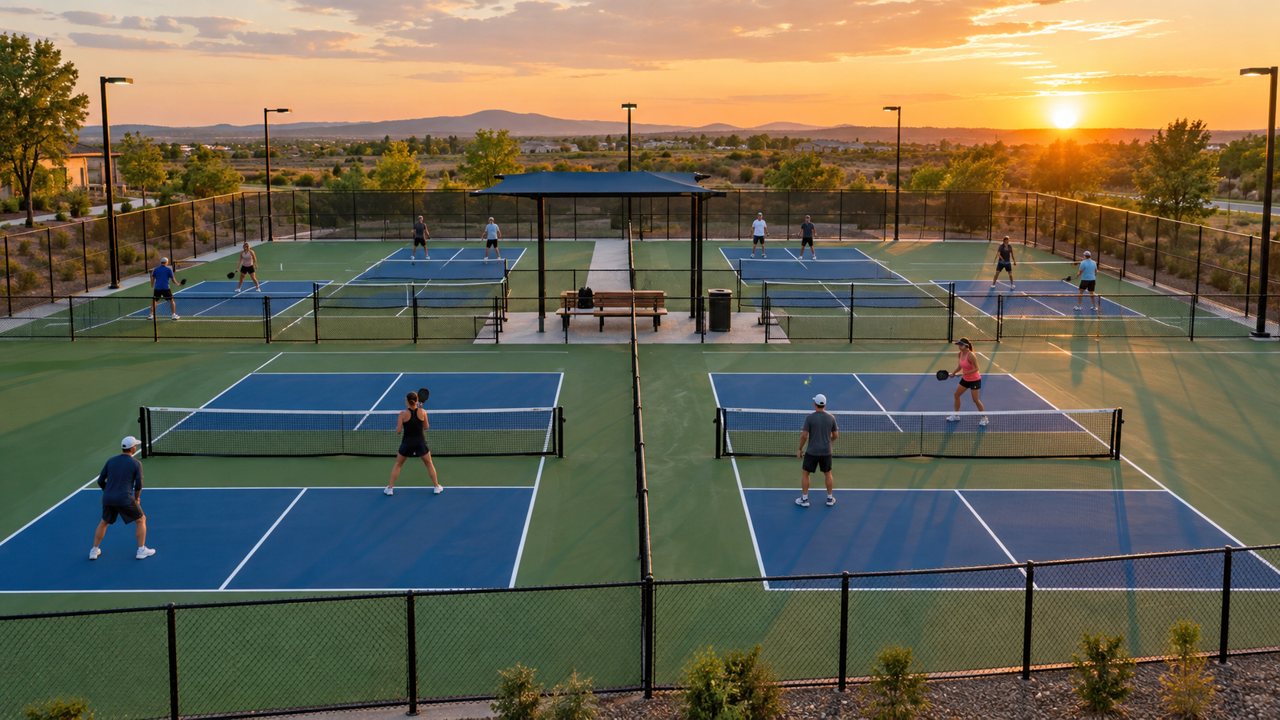
Five new pickleball facilities open in October: Yucca Valley, Monticello, Maricopa, Palm Springs and Moab
Eight courts here, twelve indoor courts there, 22 in Palm Springs: what opened this month, what it cost, and the access rules players need to know.
Pickleball's club shakeout: chains grew 37% this year, and The Picklr still landed in Chapter 11
Six major pickleball chains grew from 145 to 199 locations between January and September 2026, but indoor court growth is slowing and The Picklr's parent filed for bankruptcy. The buildout continues through a shakeout.
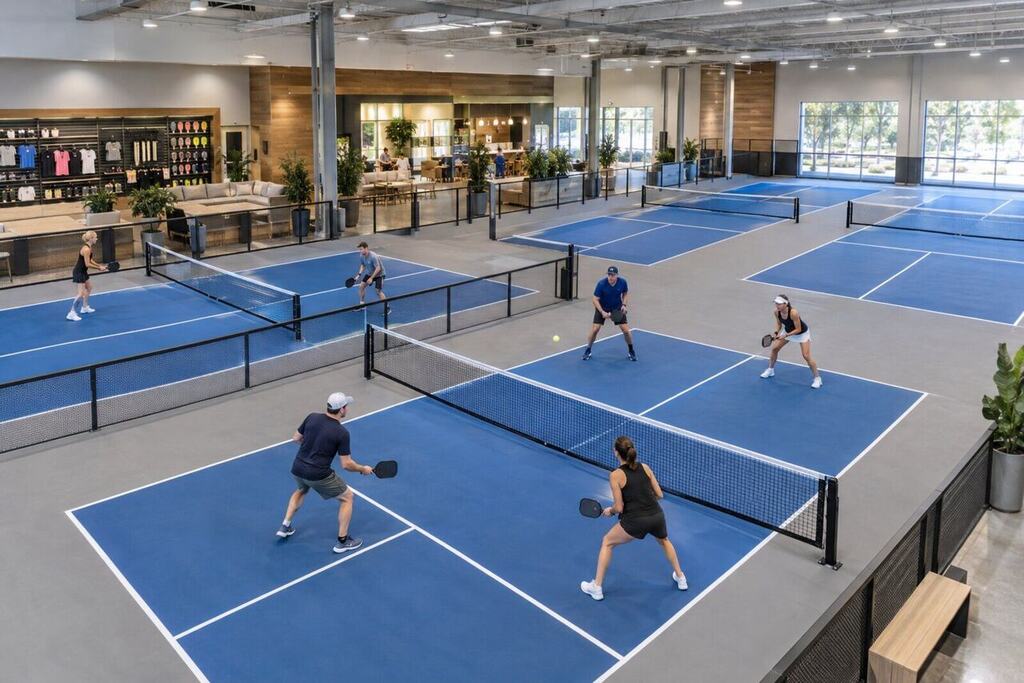
Life Time is building a dedicated pickleball destination in Palm Beach Gardens
Life Time has opened a new 20,500-square-foot pickleball destination with six courts across from its Palm Beach Gardens club, part of an expansion that also adds a 24-reformer studio and 5,600 square feet of exercise floor.