
Five pickleball tips from beginner to 4.0: kitchen line, low balls, balance, paddle up and fewer drives
Short answer: Coach Jess says players up to 4.0 improve fastest by winning at the kitchen line, hitting low to opponents' feet, getting stable before each shot, keeping the paddle up and in front, and dropping instead of driving in the transition zone.
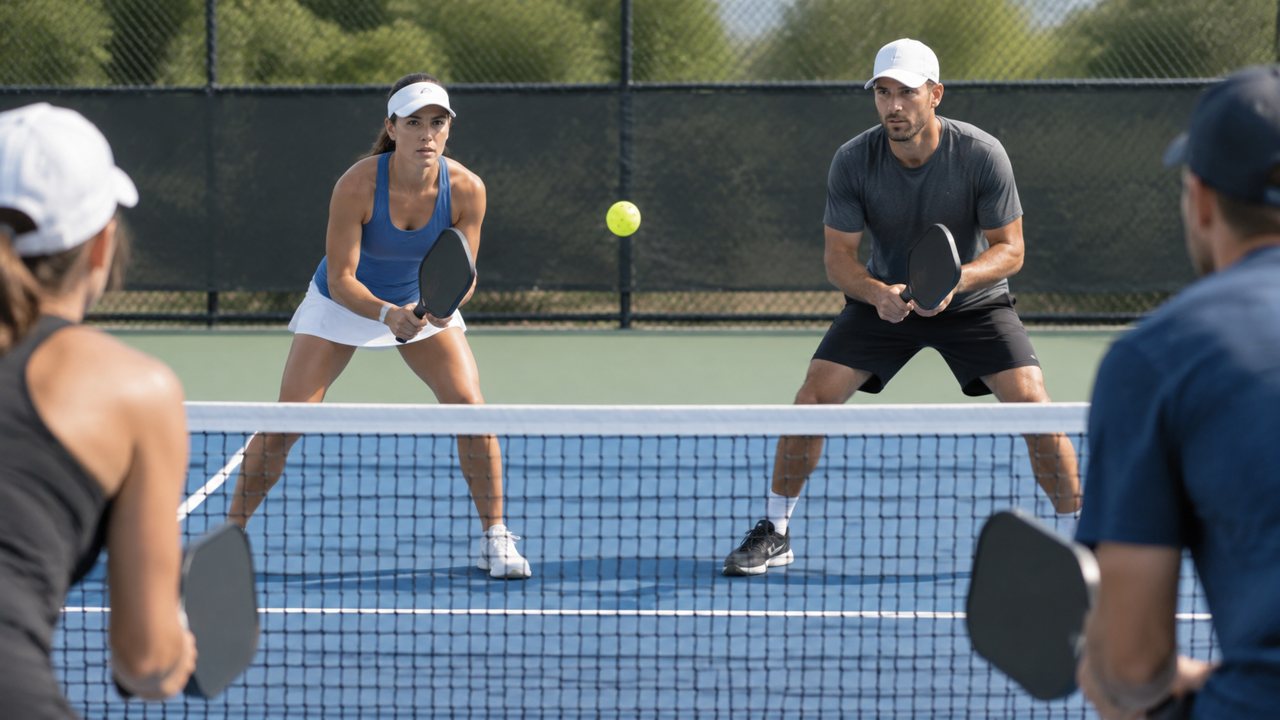
Most advice about getting better at pickleball is about adding something: a new serve, a harder drive, a spin shot. A set of five concepts shared by pro and coach Jess, and written up by Pickleball.com on October 13, goes the other way. Her point is that players from beginner level up to 4.0 improve fastest by making better decisions with the shots they already have.
Here is each idea, what it means on court, and a simple way to practice it.
1. Win points at the kitchen line
The kitchen line is where a player can apply the most pressure. The non-volley zone stops anyone from hitting a volley while standing in it, so you cannot simply overpower opponents from the net. Instead, the goal is to create balls you can hit from above net height. The closer you stand to the line, the more of those you will see.
Jess recommends using the return of serve to start moving forward. The returning team should advance toward the line while the opponents get ready to hit the third shot, aiming to be in position when that ball arrives. Once there, the job is to hold the line without giving opponents easy targets at your feet.
Practice idea (our suggestion): play practice games where the returner must be at the kitchen line before the third shot bounces. Count how often you made it.
2. What goes down must come up
When you send the ball low toward an opponent's feet, they usually have to lift it over the net. A lifted ball is one you can attack. This is the logic behind most dink rallies: you are not trying to hit winners, you are trying to make your opponent hit up.
So the advice is to stop hitting every ball hard. Keep the ball low, aim at the feet, and watch where your opponents are standing so you can place controlled shots that force them to lift. The same idea applies across the court, not only at the kitchen.
Practice idea (our suggestion): cross-court dink for five minutes with a rule that the ball must cross the net below a set height. Reward the partner who forces the first high ball.
3. Get stable before you hit
Moving forward is important, but rushing through a shot undoes the benefit. Players who run through the ball often send it too high or too far, which gives opponents the next attack. Jess says to time your movement to your opponent's contact. As they prepare to hit, pause briefly in a stable, balanced position so you can read the ball and respond with control. A split step can help, but the essential point is being balanced and ready before the ball arrives.
She describes it as red light, green light: move when it is safe to, then stop and get stable as the opponent makes contact.
Practice idea (our suggestion): from the baseline, drop and move forward in stages, stopping each time your partner hits. Do not hit while moving.
4. Keep your paddle up and in front
A paddle that hangs near your knees forces a larger motion when the ball arrives. Against a player who speeds the ball up, that extra motion can leave you scrambling. Jess recommends holding the paddle in front of your body at around midsection height, so you can block, counter and react with a smaller movement. The write-up adds that an organized, ready position also keeps you from swinging wildly or losing your place on the court.
Practice idea (our suggestion): at the kitchen line, have a partner feed speed-ups from the other side. Count how many you block back when your paddle starts at your midsection versus at your waist or lower.
5. Stop driving every ball in transition
Jess calls this one of the most common mistakes she sees, including among advanced players. In the transition zone, between the baseline and the kitchen, many players try to drive a bouncing ball from a difficult position. The ball often sits up, the opponents attack it, and the driver ends up hitting defensive shots from below net height instead of reaching the line.
Her suggestion is to drop the ball toward the opponents' feet and use the shot to buy time to move forward. The goal, as the write-up puts it, is not just to get the ball over the net but to play a shot that improves your position. Before driving a bouncing ball, check where you are on the court. If you are still in transition, favor control.
Practice idea (our suggestion): play third-shot-and-fifth-shot games where only drops are allowed from the transition zone. Track how often you reach the line after your fifth shot.
What ties the five together
The five ideas are linked. Moving to the kitchen line only works if you are stable when you hit. Low balls to the feet only work if you keep your paddle ready for the reply. Drops from transition only work if they bring you forward. Together they describe a simple pattern: advance, balance, aim low, keep the paddle up, repeat.
None of this needs new equipment or a new shot. It needs patience, which is harder than it sounds. A good way to test it is to pick one idea for a full session and ignore the rest, then add another the next time. Source note: these tips come from one coach's advice as reported by Pickleball.com, not from a controlled study, so treat them as a coaching framework to try rather than guaranteed results.
Frequently asked questions
What is the biggest mistake in the transition zone?
According to Coach Jess, driving every bouncing ball. The ball can sit up and set opponents up, so she recommends dropping it toward their feet to buy time to move forward.
Where should the paddle be held?
In front of the body around midsection height, not near the knees, so reaction movements stay small.
Sources
Sources checked 20 Oct 2026.
Related stories
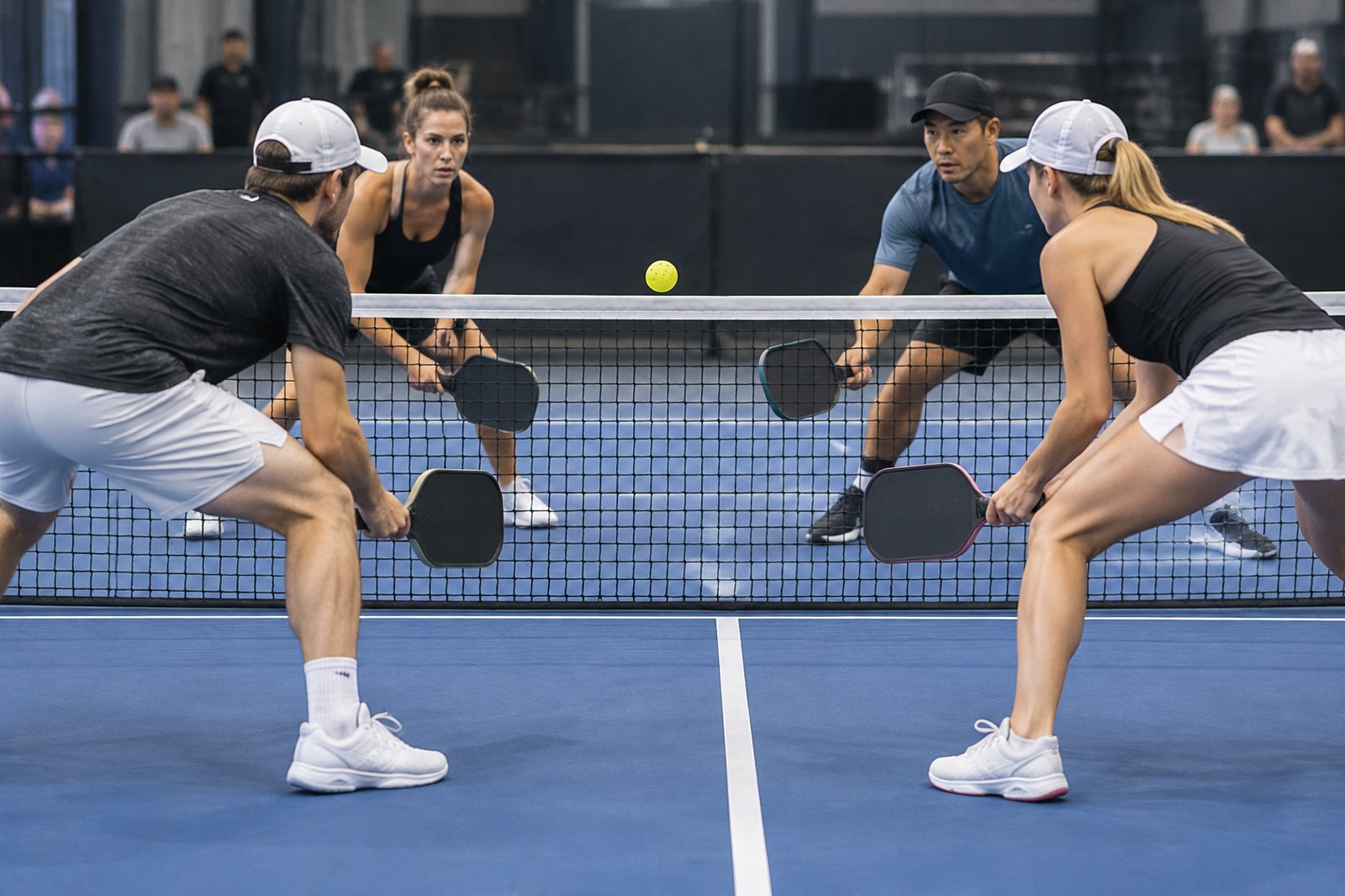
Winning the dink battle: the kitchen-line tactics that actually decide matches
Matches are won at the kitchen line, not the baseline. The tactical layer most players never learn: what every dink should accomplish, when to attack, where to aim a speed-up, and how to defend one.
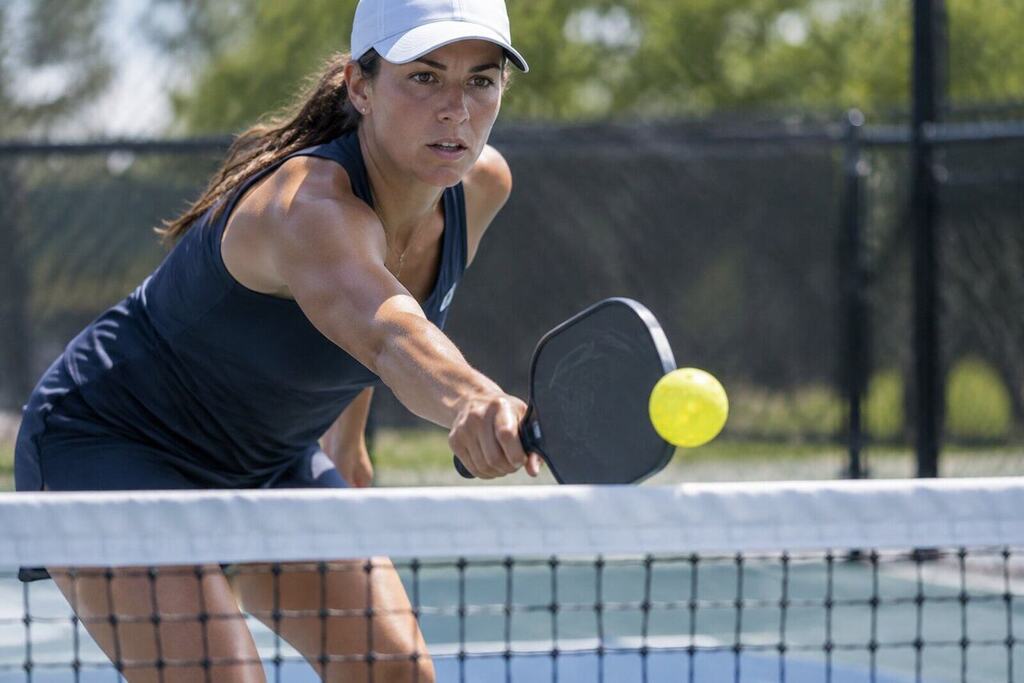
Every shot in pickleball, explained: the complete library from serve to Erne
Pickleball rewards variety, not power. A complete reference to every shot in the game: the serve, return, third shot drop, drive, dink, volley, reset, lob, smash, Erne, ATP, spin shots and the speed-up, with when to use each.
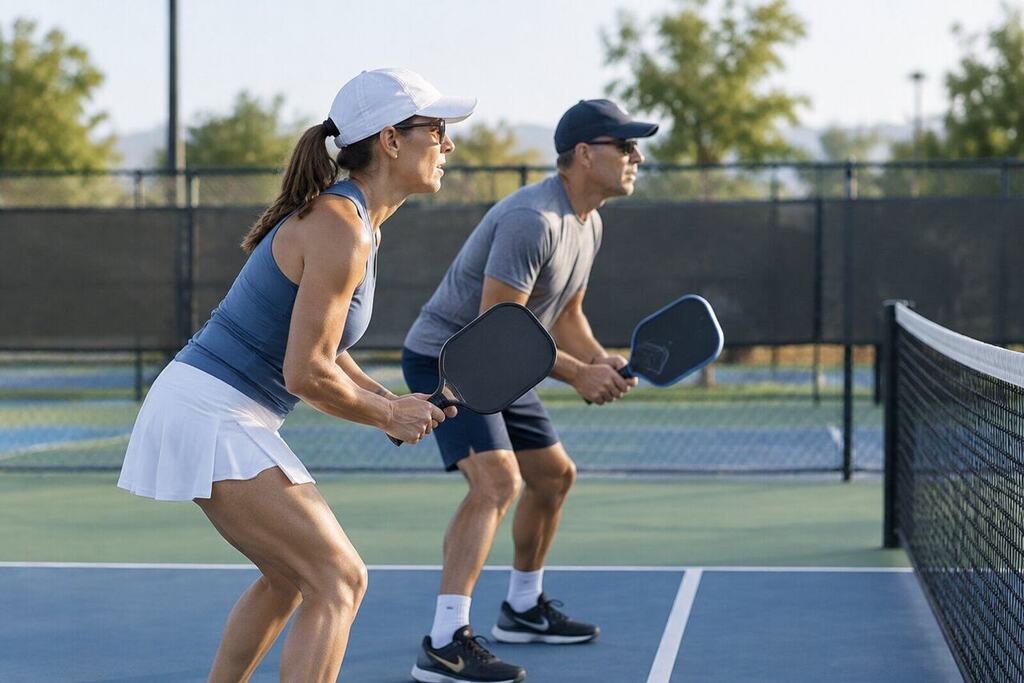
The only strategy principle that matters (and everything that follows from it)
Every pickleball tactic serves one goal: get to the kitchen line and stay there. A complete guide to positioning, doubles movement, the third shot decision, and targeting, for 3.0 players and beyond.