
How to Find Indoor Pickleball Courts Near You During Winter
The essentials: A systematic search: court finders (Pickleheads, Places2Play), the building types that hide courts (community centers, school gyms, tennis clubs), local groups, and building a winter circuit.

Outdoor courts hibernate, but your game does not have to. Indoor pickleball exists in more building types than most players check, and finding it is a one-evening research project if you search the right places in the right order. Here is the systematic version.
Start with the court finders
USA Pickleball's places-to-play page points players to Pickleheads, its official court and game finder, which lists venues with details like indoor versus outdoor courts. Places2Play is another long-running pickleball court directory with a map view. Search your city on both, filter or note the indoor entries, and write down anything within realistic travel distance. Scheduling apps such as PlayTime Scheduler add the session layer: not just where courts exist, but when organized indoor play actually happens on them.
Check the buildings that hide courts
Indoor pickleball often lives inside facilities whose names do not say pickleball. Community and recreation centers frequently host weekly pickleball on gym floors. School and college gyms open to the public through evening community programs. Tennis clubs increasingly tape pickleball lines or set portable nets on indoor courts. Multi-sport halls, badminton and volleyball venues, and even basketball gyms run sessions. Search each type plus your city name; the venue websites, not the court finders, carry the current schedules.
Ask the local scene directly
Local Facebook groups, WhatsApp chats, and club mailing lists know which gyms host winter play weeks before any directory updates. Post one question: "Where does indoor play happen near X this winter?" Include your area and your level so the answers are usable. Organizers of summer outdoor sessions almost always know the winter plan, because they are usually the ones running it.
Read listings for the practical details
When you find candidate sessions, check five things before the first trip: whether the session is drop-in or needs registration, the drop-in fee, whether play is on wood gym floor or sport court, whether nets are provided or bring-your-own, and the level mix. Gym-floor pickleball plays slightly differently than outdoor, and first-timers to indoor should know the ball moves a touch faster and sound carries.
What to bring to a gym session
Clean, non-marking court shoes are a common gym requirement, so check before you go. The American Academy of Orthopaedic Surgeons describes court shoes as built for stability in all directions, which matters on slick wood. Bring water, your paddle, and indoor balls if the listing asks; some gyms supply balls, many do not.
Build your winter circuit
One session is a lifeline; two or three is a season. Map the week: maybe Monday at the community center, Thursday at the tennis club, Saturday open play at the sports hall. Put them in your calendar now, because winter sessions fill and some require weekly sign-ups that open on a fixed day. Set a reminder for the sign-up windows.
If nothing exists near you
Ask a local gym, school, or church hall about renting floor time for a trial session, then post it in the local group. Portable nets and taped lines are all it takes, and the person who starts the winter session ends up at the center of the local scene. Venue managers say yes more readily when you arrive with numbers: court dimensions (20 by 44 feet per USA Pickleball's rule summary) and expected headcount.
Expect the indoor game to feel different
Wood gym floors play faster and lower than outdoor asphalt, lighting and sightlines change depth perception for a session or two, and ceiling height occasionally eats a lob. None of this is a problem; it is a two-visit adjustment. Give yourself those two visits before judging a venue.
Use the same playbook when you travel
The finders and the local-group question work in any city, which makes winter travel a chance to play somewhere new. A traveler posting "visiting X next week, where is the indoor play?" usually gets times, levels, and a welcoming session; pack the paddle and the non-marking shoes.
The Europe angle
European winters make indoor play the main season, and multi-sport halls are the natural hosts while dedicated venues are being built. Pickle Haus (pickle.haus) is setting out to build the first and biggest network of dedicated pickleball centers in Poland, with a vision to lead across Europe. The brand describes this as its ambition; the centers are not open yet.
The bottom line
Search the court finders (Pickleheads via USA Pickleball, Places2Play), check the building types that hide courts, ask the local groups, and read listings for fees, floors, and sign-up windows. Then build a two-or-three-session weekly circuit before the first frost. The players who keep improving through winter are rarely the most talented ones from October; they are simply the ones who found a warm gym and kept their Tuesdays, and this search is how you join them.
Sources
Sources checked 21 Oct 2026. Header image is illustrative, not a photo of the events described.
Related stories
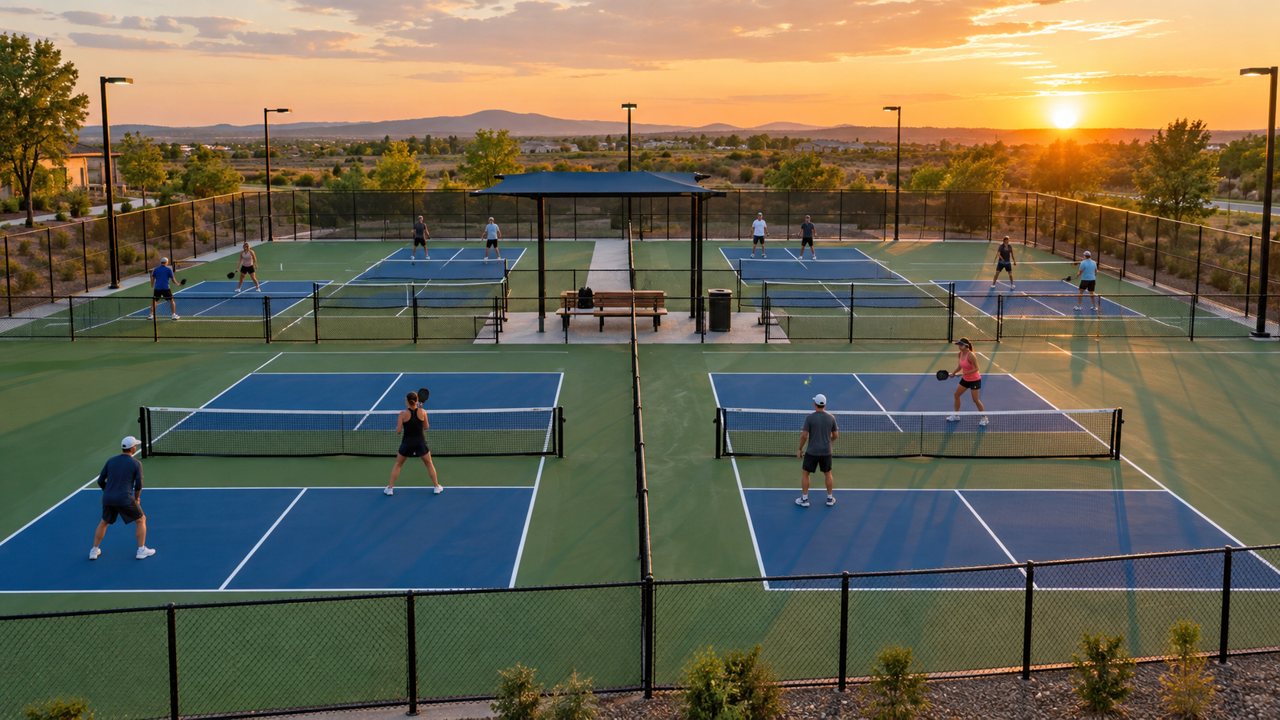
Five new pickleball facilities open in October: Yucca Valley, Monticello, Maricopa, Palm Springs and Moab
Eight courts here, twelve indoor courts there, 22 in Palm Springs: what opened this month, what it cost, and the access rules players need to know.
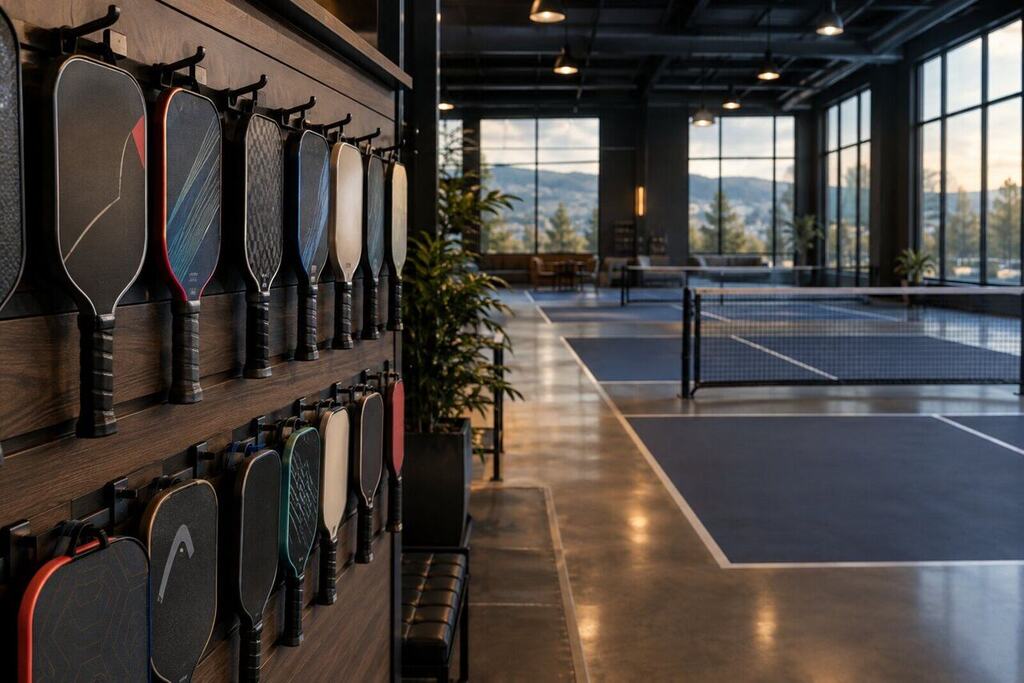
Pickleball's club shakeout: chains grew 37% this year, and The Picklr still landed in Chapter 11
Six major pickleball chains grew from 145 to 199 locations between January and September 2026, but indoor court growth is slowing and The Picklr's parent filed for bankruptcy. The buildout continues through a shakeout.
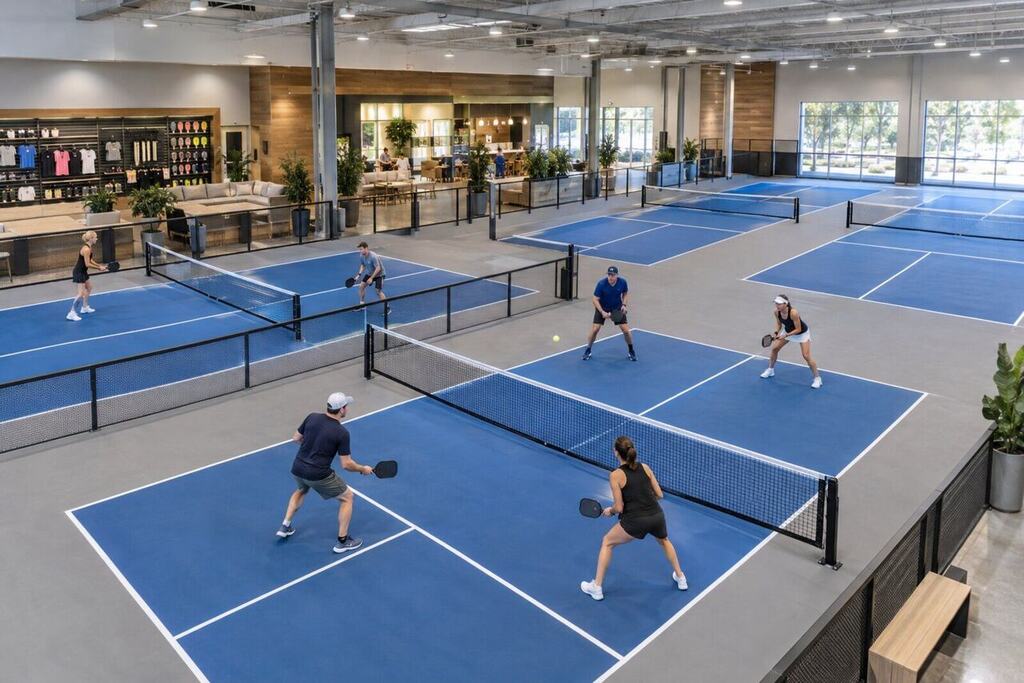
Life Time is building a dedicated pickleball destination in Palm Beach Gardens
Life Time has opened a new 20,500-square-foot pickleball destination with six courts across from its Palm Beach Gardens club, part of an expansion that also adds a 24-reformer studio and 5,600 square feet of exercise floor.