
Dill Dinkers Visalia opens with 11 indoor courts, the South Valley's first dedicated club
Short answer: Dill Dinkers has opened Visalia's first indoor pickleball club at 700 S. Bridge Street with 11 regulation courts, the franchise system's second California location.

The South Valley's indoor pickleball gap is closed. Dill Dinkers Visalia has officially opened at 700 S. Bridge Street, giving Visalia its first dedicated indoor pickleball facility with 11 regulation courts plus a half-court set aside for lessons, ending the local ritual of planning games around the Valley's summer heat and winter fog.
What is inside
The Bridge Street building is more than a court warehouse. Beyond the 11.5 courts, members and visitors get exercise equipment, a table tennis setup, and vending machines stocked with snacks and drinks, a space built for the long sessions that dedicated-club players actually keep. The developers, Bill and Georgia Revilla of Fresno, signed a 10-year lease on the property back in March, and the buildout delivered the cushioned courts and tournament-grade lighting the original plans promised, features aimed at hosting serious competition rather than only casual drop-in play.
That tournament ambition matters in a market like Visalia. The city already lists outdoor pickleball courts among its park amenities, some reservable and some first-come, and requires a permit for commercial instruction in parks. A private indoor club sidesteps all three constraints at once: weather, availability, and the ability to run professional lessons year-round.
The opening also lands with symbolic timing for the region. Fresno-area players have watched clubs open along the coast for years while the Valley's scene stayed outdoors and improvised. A branded, 11-court facility on Bridge Street is the clearest signal yet that the franchise industry now treats inland California as a primary market rather than an afterthought.
The franchise context
Visalia is Dill Dinkers' second California franchise, joining Chico, in a system that co-founder Denise Richards says now runs 33 clubs across 15 states, with the company's own site claiming more than 380 additional clubs in development nationwide. The franchise grew out of founders Will and Denise Richards' own frustration finding year-round court time; they opened the first club in Columbia, Maryland in November 2022, and Will drew on his background as a Domino's corporate employee and franchisee to build the expansion model.
The local ambitions are just as large. The stated goal is at least 10 locations across the greater Fresno and Visalia area over the next decade, which would make the South Valley one of the most densely clubbed pickleball markets in California's interior. Bridge Street is the first tile in that mosaic.
What it costs to play
The pricing is straightforward: court fees run 15 dollars per person per hour with a 60 dollar minimum. Membership halves court fees, opens booking five days ahead of non-members, and includes free ball-machine use, the classic dedicated-club bundle aimed at converting drop-ins into regulars. Against private-club pricing in coastal California markets, it is aggressive, and it reflects the franchise model's dependence on volume rather than exclusivity.
Why indoor matters in the Central Valley
Climate is the whole argument for indoor pickleball in this market. Summer afternoons in the South Valley regularly push past comfort for outdoor play, and winter tule fog can sit on the courts for weeks. An 11-court air-conditioned hall converts pickleball from a seasonal habit into a year-round routine, which is precisely the usage pattern the franchise economics depend on. The half-court dedicated to lessons points the same direction: instruction is how a club turns curious residents into core players.
The demand behind it
The national numbers explain why developers keep signing 10-year leases on big-box conversions. The Sports and Fitness Industry Association counted 24.3 million U.S. pickleball participants in 2025, up from 4.2 million in 2020, and identified 7.5 million core players who played at least eight times last year. Core players are the customers indoor clubs are built for: they play through every season, they book ahead, and they bring friends.
The franchise race in California's interior
Dill Dinkers is not alone in chasing California's inland markets, but it is early and aggressive. The franchise model, 10-year leases on retail-scale buildings, standardized fit-outs, membership bundles, is proving itself faster in mid-size cities than the big-box entertainment concepts, because the real estate is cheaper and the competition for it thinner. Visalia, a city of around 140,000 with no prior indoor club, is the exact profile: large enough to fill 11 courts, small enough that the first mover owns the market.
What to watch
The first test is programming## What to watch
The first test is programming: leagues, ladders and lessons are what turn 11 courts into a community rather than a rental hall. The second is the promised regional build-out. If the Fresno and Visalia corridor really gets 10 clubs in 10 years, the South Valley becomes a genuine pickleball market rather than a stop between Los Angeles and the Bay. Watch for the next franchise signing in the corridor, likely Fresno itself, as the signal the plan is on schedule.
Sources
Sources checked 20 Oct 2026. Header image is illustrative, not a photo of the events described.
Related stories
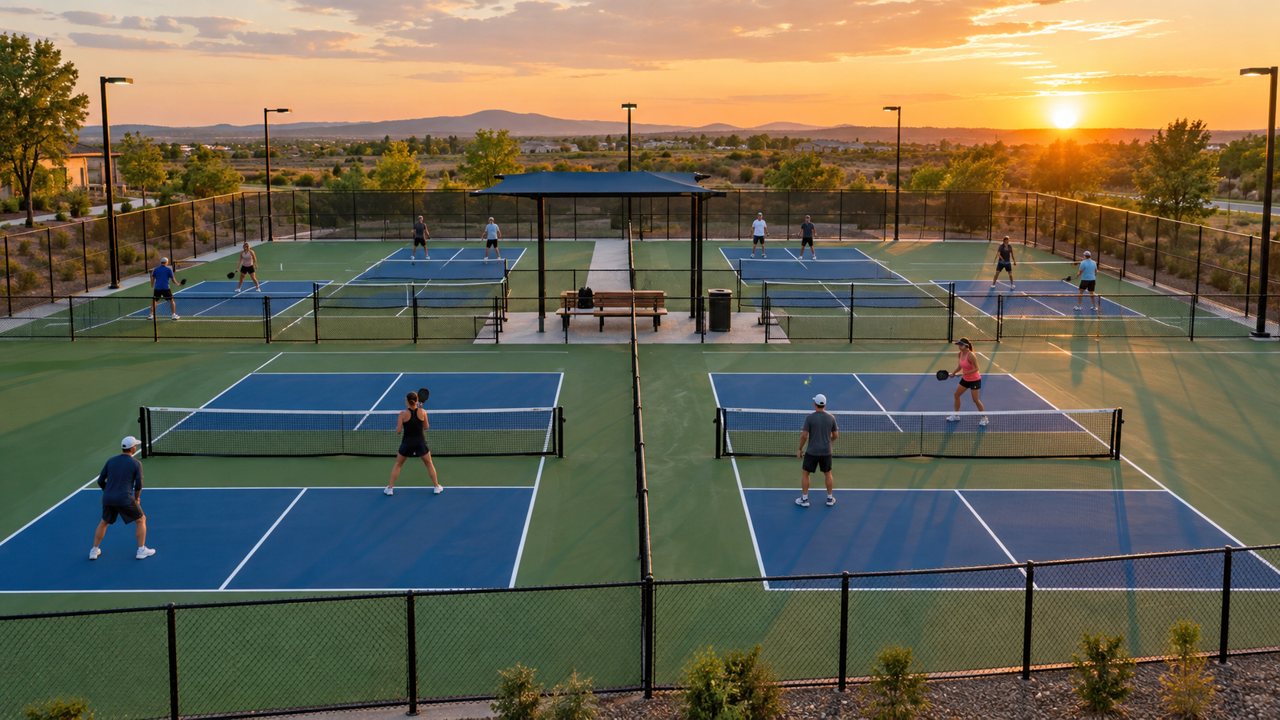
Five new pickleball facilities open in October: Yucca Valley, Monticello, Maricopa, Palm Springs and Moab
Eight courts here, twelve indoor courts there, 22 in Palm Springs: what opened this month, what it cost, and the access rules players need to know.
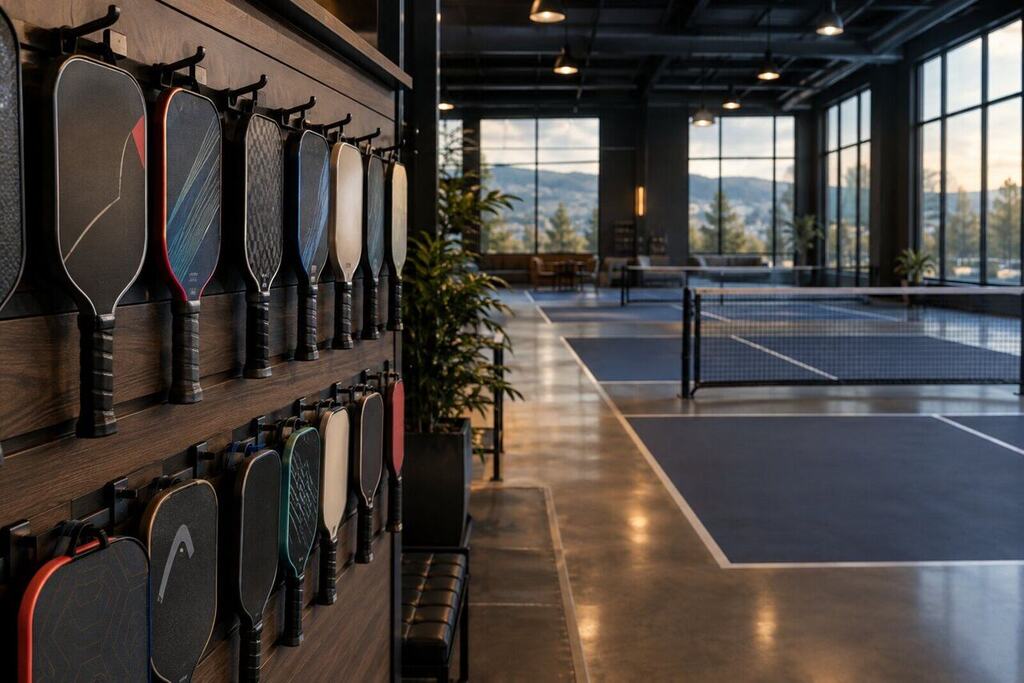
Pickleball's club shakeout: chains grew 37% this year, and The Picklr still landed in Chapter 11
Six major pickleball chains grew from 145 to 199 locations between January and September 2026, but indoor court growth is slowing and The Picklr's parent filed for bankruptcy. The buildout continues through a shakeout.
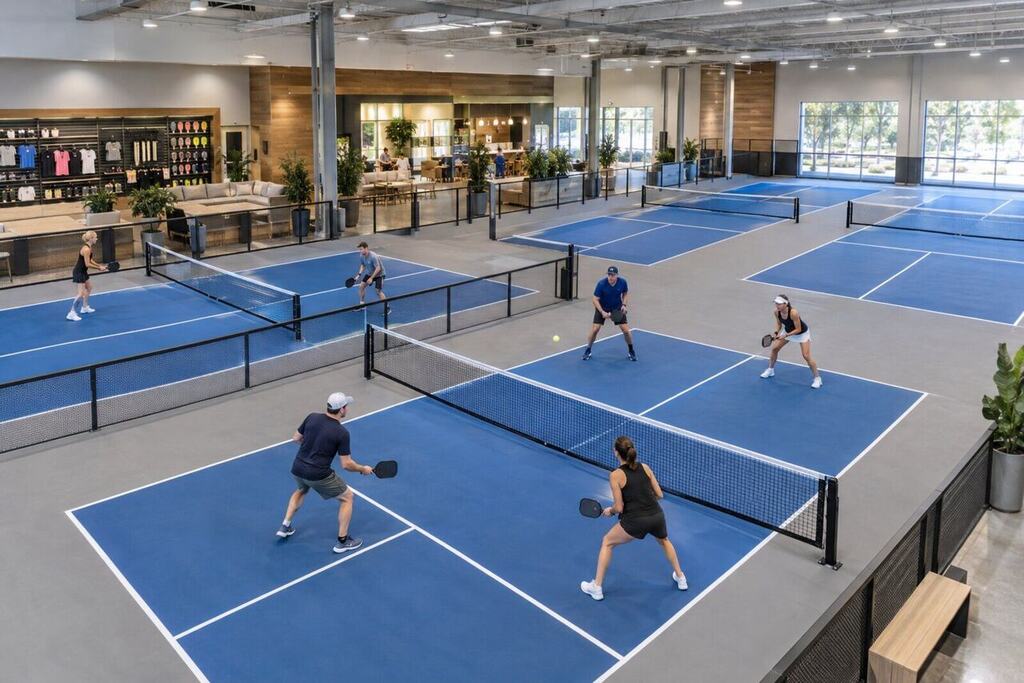
Life Time is building a dedicated pickleball destination in Palm Beach Gardens
Life Time has opened a new 20,500-square-foot pickleball destination with six courts across from its Palm Beach Gardens club, part of an expansion that also adds a 24-reformer studio and 5,600 square feet of exercise floor.