
Booked a court, got called out: the reservation vs queue-culture fight at public courts
Short answer: A Reddit post about a player who reserved a public court through the city system and got confronted by regulars running an informal queue has become a wider debate over who sets the rules on public courts.
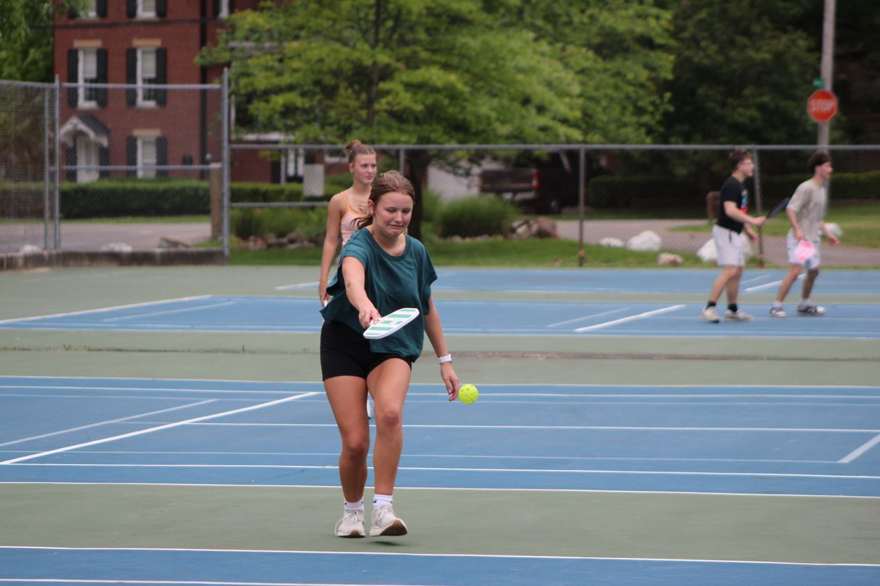
A player booked a public pickleball court through his city's official reservation system, showed up on time, and spent the morning being confronted by regulars who had invented their own queue. His account, posted to Reddit's Am I The Asshole forum and picked up by Yahoo on October 19, has turned into a wider argument about who really runs public courts: the city that owns them, or the regulars who play there every day.
What happened, according to the post
The player wrote that he and his friends were visiting a popular park with six pickleball courts for the first time. Knowing the place was always packed, he reserved a court for two hours through the city's booking system about a week in advance. He did wonder why every court showed as available, but assumed most people booked later.
On the day, the group arrived on time. The players already on the court finished exactly when his slot began, which seemed normal. The trouble started when his group took a short break to greet arriving friends. Another group walked onto the court and announced it was their turn. When he objected, one man called the Saturday-morning reservation a rude move and walked off angry. About 40 minutes later, an older man asked him, in what he described as an annoyed tone, whether he had really reserved the court, then pulled out his phone to verify the booking under his name.
The original poster stressed that none of this was visible beforehand. Nothing on the booking page mentioned a queue, no sign at the courts explained it, and the city happily took the reservation for a prime Saturday slot. Only afterwards did a friend who knew the park explain the rotation custom.
The post includes the detail that makes the story bigger than one awkward morning. The regulars, he learned afterwards, run an informal system: players line up, and when a game ends the winners give up the court and go to the back of the line. Nobody pays. The city's booking page, meanwhile, says nothing about any of this. And in the background, the same city is closing 36 pickleball courts, with a petition circulating to keep them open.
The unwritten rules are real, and so is the sign-up page
Every regular at a busy public court knows the queue culture. Paddles stacked against the fence, winners stay for one game, rotate off, hold your spot. It works remarkably well between people who all know it exists. The failure mode is exactly this story: a newcomer follows the only rules he can find, which happen to be the official ones, and discovers a parallel system that everyone assumed was universal.
The Reddit thread's commentators, and Yahoo's columnist, mostly sided with the booker. If a city offers reservations and takes money for them, the regulars' agreement cannot silently outrank it. There is also a harder edge to the economics: courts that nobody pays for cost money to maintain and earn nothing, which is part of why cities close them. The petition to save the 36 courts sits awkwardly next to a culture built around keeping the remaining ones free and first-come.
What to actually do at a busy public court
Whether you side with the booker or the regulars, the practical etiquette is not complicated. Before you play at a new venue, spend five minutes watching how people rotate. If paddles are stacked on the fence, there is a queue, and the polite move is to add yours and ask how the rotation works. If the city lists reservable courts, a booking is a booking, but flashing a confirmation email at a group mid-rally will not make friends; pointing the regulars at the booking page so they can reserve too usually works better.
If you are the regular in this story, the burden runs the other way. Unwritten systems are invisible to newcomers by definition. A hand-painted sign, a quick explanation, or simply letting a booked group finish their two hours costs little. And if the reservation system is genuinely worse than the queue, the fix is to tell the parks department, not the stranger in the parking lot.
Why this keeps happening
Court scarcity turns etiquette into conflict. The sport has added millions of players faster than cities have added courts, so every busy venue develops some allocation system, formal or not. Where the two systems collide without a sign or a conversation, you get a Reddit thread and a parking-lot confrontation. The anonymous post cannot be independently verified, and the city in question is not named, but the argument it started is familiar to anyone who has played at a crowded public facility. As more cities roll out paid reservations to fund court maintenance, expect more of these collisions until the written rules and the fence-side rules get reconciled in public, on the sign, at the court.
Sources
Sources checked 20 Oct 2026. Header image is illustrative, not a photo of the events described.
Related stories

Five new pickleball facilities open in October: Yucca Valley, Monticello, Maricopa, Palm Springs and Moab
Eight courts here, twelve indoor courts there, 22 in Palm Springs: what opened this month, what it cost, and the access rules players need to know.

Pickleball's club shakeout: chains grew 37% this year, and The Picklr still landed in Chapter 11
Six major pickleball chains grew from 145 to 199 locations between January and September 2026, but indoor court growth is slowing and The Picklr's parent filed for bankruptcy. The buildout continues through a shakeout.

Life Time is building a dedicated pickleball destination in Palm Beach Gardens
Life Time has opened a new 20,500-square-foot pickleball destination with six courts across from its Palm Beach Gardens club, part of an expansion that also adds a 24-reformer studio and 5,600 square feet of exercise floor.