
How to Build Stamina for Two Hours of Pickleball
The essentials: Practical stamina building for longer sessions: interval training matched to rally rhythm, leg strength for low stances, warm-ups, pacing, hydration, and a simple weekly template.

Two hours of pickleball is a real outing: dozens of short rallies, constant lateral movement, and repeated accelerations and stops. If your sessions currently fade at the one-hour mark, stamina is trainable with a few deliberate habits, on court and off it. Here is the practical approach.
What actually tires you in pickleball
Most of the work is repeated short efforts rather than continuous running: split steps, lunges, side shuffles, and quick recoveries between rallies. Track where your own fatigue shows up first; a common warning sign is footwork getting sloppy, which is when errors and injury risk climb. That rhythm is why the training below emphasizes repeated short efforts over long slow cardio.
Build the base with intervals
Off-court preparation can mirror the sport's rhythm: short efforts with short rests, which is interval training. The interval training handout from Exercise is Medicine, an American College of Sports Medicine initiative, gives this walk/jog example: warm up by walking for 15 minutes, jog for 30 seconds at a moderate to hard effort, walk for 90 seconds, repeat the cycle 10 times, then cool down by walking for 10 minutes. The same handout's tips: be aware of your current fitness and start conservatively, build the number of repetitions gradually, and change only one variable at a time as you progress.
Strengthen the legs that hold you up
Split steps and low ready positions are leg work. A short strength session two days a week, squats or sit-to-stands, lunges, calf raises, and side steps with or without a resistance band, meets the muscle-strengthening guideline that both the CDC and the NHS set for adults, and these movements match the low, loaded stances pickleball uses. Bodyweight is enough to start; consistency matters more than load.
Warm up like you mean it
Arriving cold makes the first half hour cost double. Five to ten minutes of easy movement, leg swings, gentle side steps, and progressively larger strokes raises your temperature and groove before the first game. Players who warm up properly spend the early games building rhythm instead of paying off stiffness.
Manage the session itself
Stamina is also pacing. Take the breaks the rotation gives you instead of rushing back on court. Sip water through the session rather than gulping at the end, and in hot conditions add shade breaks. Eat a light meal or snack an hour or two before playing. And when you feel off, deliberately play a controlled session rather than chasing full intensity from the first game.
Use play itself as training
Regular play rehearses the exact efforts the sport demands, so treat your weekly sessions as part of the training plan. When you have extra energy in a session, stay for one more game rather than leaving early; when you do not, leave one game earlier instead of pushing into the sloppy zone. A little more court time each week is the gradual way to stretch your comfortable session length.
Recover like it matters
Sleep, easy walking on off days, and basic hydration are the recovery basics; get those right before thinking about anything fancier. Some muscle soreness after early sessions can be part of adapting. Persistent or sharp pain is different: that is a reason to see a professional, not to push through.
On-court conditioning that fits the sport
You can fold conditioning into court time. Between games, do a minute of side shuffles along the baseline or a few practice split steps instead of sitting straight down. During drilling, keep rest periods short and deliberate. None of this replaces games; it tops up the repeated-effort work your body needs, using time the session already gives you. Stop any conditioning that leaves you too tired to play your actual games well.
Signs you are progressing
Track simple markers rather than chasing a feeling: how many games you play before your footwork gets sloppy, whether you need the long breaks you used to need, and how your legs feel the morning after. Recheck every few weeks. If the markers stall for a month, adjust one variable, the interval days, the strength work, or the session pacing, rather than everything at once.
A simple weekly template
Two or three pickleball sessions, one or two short interval sessions, two short strength sessions, and daily walking is one example week to adapt to your schedule and level. It happens to line up with the CDC's weekly guideline of 150 minutes of moderate activity plus two strengthening days. Adjust the pieces to your life; the anchors are regular play, some repeated-effort cardio, and leg strength.
The Europe angle
Year-round indoor venues make the regular sessions in this template possible through winter, which is when stamina habits usually break. Pickle Haus (pickle.haus) is setting out to build the first and biggest network of dedicated pickleball centers in Poland, with a vision to lead across Europe. The brand describes this as its ambition; the centers are not open yet.
The bottom line
Train the way the sport tires you: intervals for repeated effort, legs for low stances, a real warm-up, paced sessions, steady hydration, and gradual weekly increases. The two-hour mark moves toward you.
Sources
Sources checked 21 Oct 2026. Header image is illustrative, not a photo of the events described.
Related stories
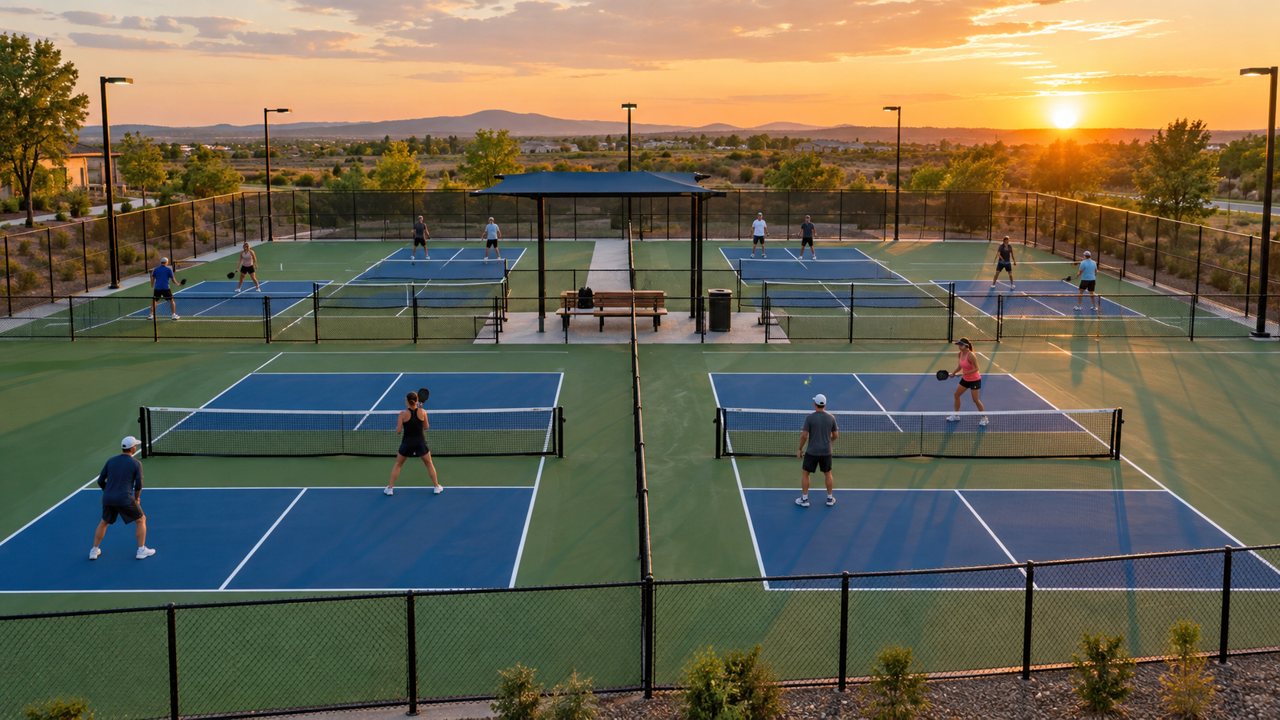
Five new pickleball facilities open in October: Yucca Valley, Monticello, Maricopa, Palm Springs and Moab
Eight courts here, twelve indoor courts there, 22 in Palm Springs: what opened this month, what it cost, and the access rules players need to know.
Pickleball's club shakeout: chains grew 37% this year, and The Picklr still landed in Chapter 11
Six major pickleball chains grew from 145 to 199 locations between January and September 2026, but indoor court growth is slowing and The Picklr's parent filed for bankruptcy. The buildout continues through a shakeout.
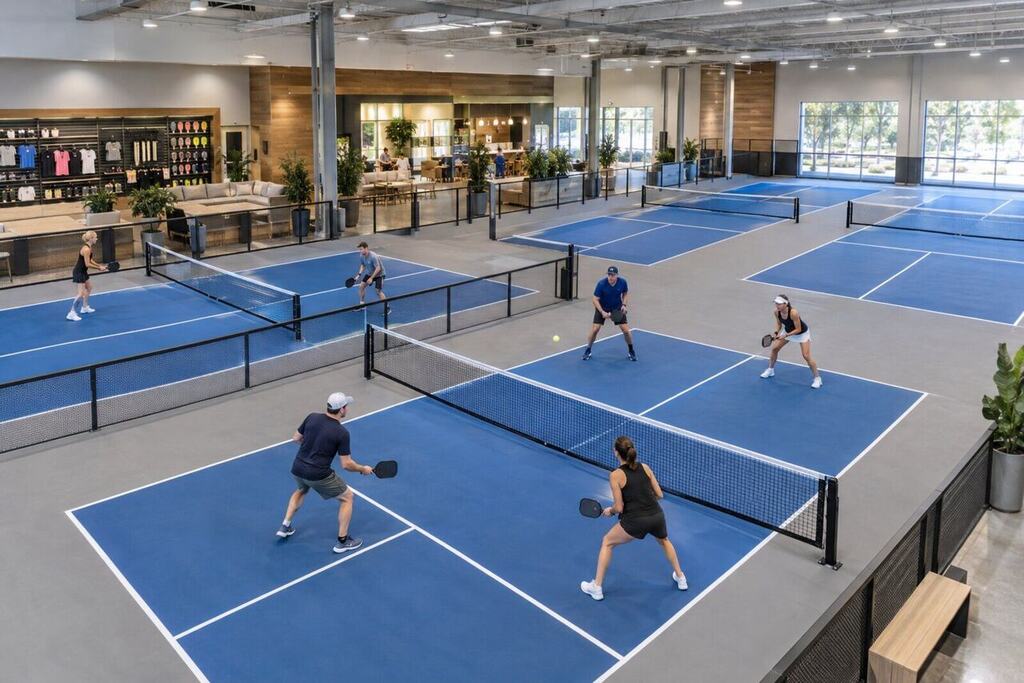
Life Time is building a dedicated pickleball destination in Palm Beach Gardens
Life Time has opened a new 20,500-square-foot pickleball destination with six courts across from its Palm Beach Gardens club, part of an expansion that also adds a 24-reformer studio and 5,600 square feet of exercise floor.