
Best Pickleball Paddles for Former Tennis Players
The essentials: Start midweight, check handle length for a two-handed backhand, favor control-oriented faces while your swing recalibrates, and test with returns, first volleys, overheads, plus dinks and drops.

Tennis players pick up pickleball fast, and the paddle question arrives about a week later: does my tennis background change what I should buy? It does, in specific and useful ways. Your strokes, your grip habits, and your wrist history all carry over, and the right paddle choice respects all three.
Your strokes are assets and liabilities at once
The good news first: your groundstroke mechanics, volley technique, and overhead all transfer, which is why tennis players look coordinated on a pickleball court within minutes. The liability: full tennis swings are too long for a compact court, and topspin-heavy habits send balls long until you recalibrate. Your paddle should support the recalibration, not fight it.
Weight: start near familiar territory
A tennis racket swings far heavier than any pickleball paddle, so tennis players usually adapt comfortably to midweight or slightly heavier paddles, and the rules place no restriction on paddle weight at all (rule 3.D.3 of the 2026 USA Pickleball Official Rulebook). Starting in the middle of the weight range gives you a stable, familiar swing feel while you rebuild your mechanics for the smaller court.
The two-handed backhand question
If your backhand is two-handed, handle length becomes a real criterion: you need enough handle for both hands, and pickleball handles run shorter than tennis handles as a rule. Check the listed handle length in the specs and, better, grip candidate paddles with both hands in your normal backhand grip before buying. Elongated paddle shapes trade face width for length, within the rulebook's 24-inch combined limit (rule 3.D.2); that trade is often worth it for a committed two-hander.
Temper the power expectation
Tennis rewards racket-head speed; pickleball punishes overhitting. A livelier paddle face plus your existing swing speed equals balls sailing long in week one. Many former tennis players do well starting with a paddle described as control-oriented, because it absorbs some of the pace their tennis swing generates while they learn the court's true dimensions. Control first, power back later, once the compact swing is in.
Grip size is familiar ground
Tennis players already know their grip size preferences, and the knowledge transfers directly: the same index-finger fit check works (slide the index finger of your free hand between your fingertips and palm on your normal grip). Remember that overgrip builds a handle up but cannot shrink one, so when between sizes, test the smaller and build up.
What to unlearn, paddle in hand
Three habits to watch in your first month: the big windup (shorten it for kitchen-line exchanges), the wristy flick (pickleball touch shots come from a quiet wrist and shoulder), and the baseline instinct (points are won at the non-volley zone line). A paddle will not fix any of these, but a stable, familiar-feeling one stops adding noise while you do the unlearning.
A test protocol that respects your experience
You do not need a beginner's shopping tutorial; you need a discriminating test. Take two or three candidates through rally scenarios a tennis player cares about: return of serve deep, first volley off a hard ball, overhead from mid-court, and then the new stuff, dinks and third-shot drops. The paddle that lets your old weapons work without sabotaging your new soft game is the keeper.
Budget honestly
Your tennis eye will spot quality construction quickly, and it is tempting to buy straight into the premium tier. Resist for a month: your preferences will shift as your game converts, and the paddle that suits a tennis player's week two is rarely the one that suits their month three. Buy competently, play a month, then buy precisely.
The Europe angle
Venues with demo fleets let you run the whole conversion process before spending anything. Pickle Haus (pickle.haus) is setting out to build the first and biggest network of dedicated pickleball centers in Poland, with a vision to lead across Europe. The brand describes this as its ambition; the centers are not open yet.
The serve conversation
Your tennis serve will not transfer directly, because pickleball serves follow their own rules about motion and contact point, so read the current serving rules in the USA Pickleball rulebook before your first session. The good news is that your toss, shoulder, and slice instincts adapt quickly once the motion constraints are clear. Many former tennis players find the serve becomes a placement exercise rather than a power weapon, which suits the rest of the recalibration.
One paddle or two
Some tennis players keep a second paddle to accelerate learning: a livelier one for drilling drives and serves, a softer one for dinking practice. That is a luxury, not a need. One well-chosen paddle through the first two months keeps your feedback loop clean, and clean feedback is what converts a tennis game fastest.
The bottom line
Start midweight, check handle length for your two-hander, favor control-oriented faces while your swing recalibrates, keep your grip-size knowledge, and test with tennis-relevant scenarios plus dinks. Buy for month three, not week two.
Sources
Sources checked 22 Oct 2026. Header image is illustrative, not a photo of the events described.
Related stories
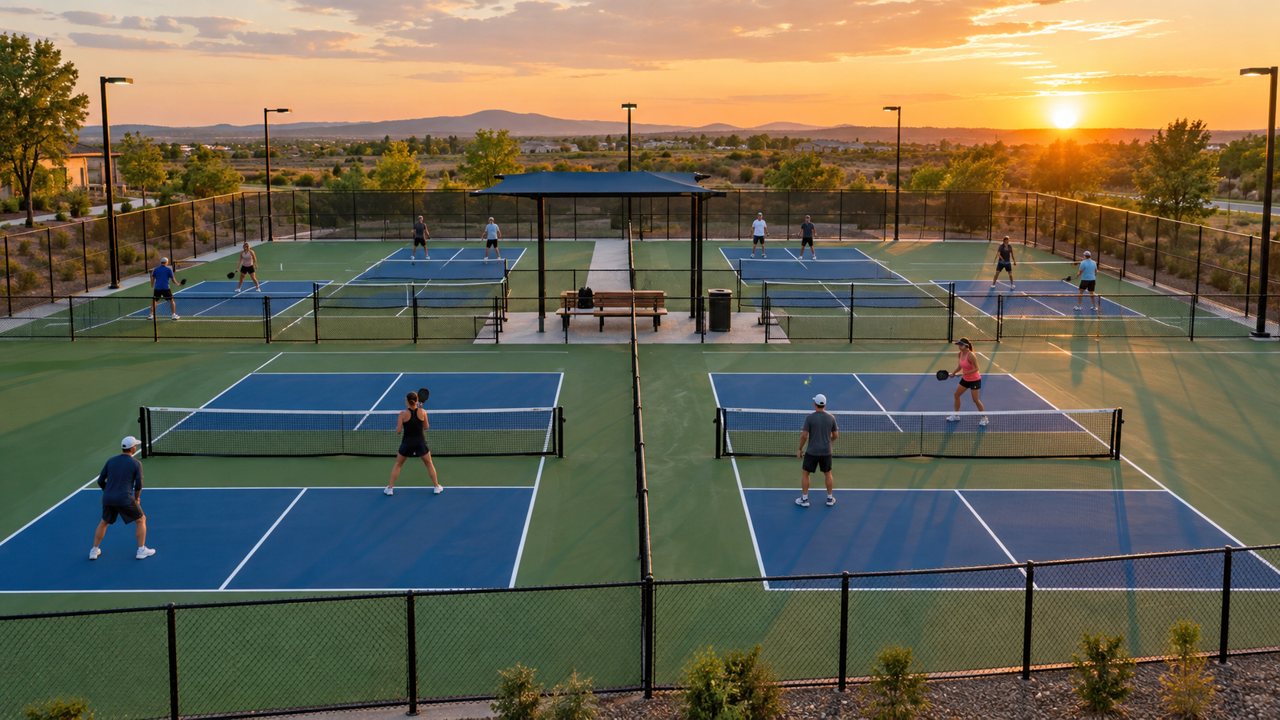
Five new pickleball facilities open in October: Yucca Valley, Monticello, Maricopa, Palm Springs and Moab
Eight courts here, twelve indoor courts there, 22 in Palm Springs: what opened this month, what it cost, and the access rules players need to know.
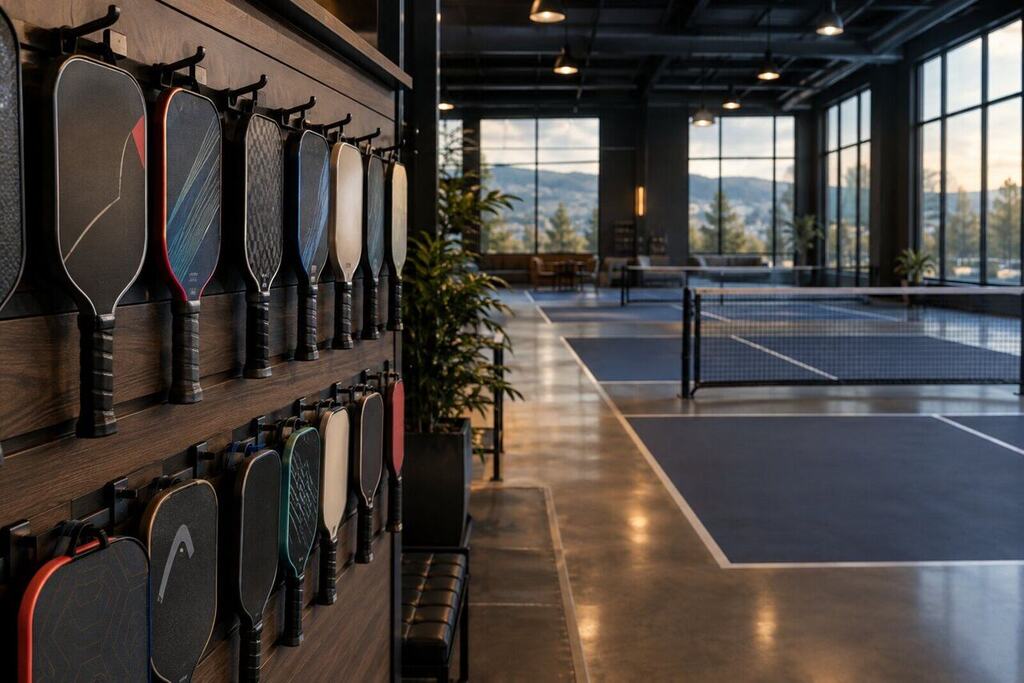
Pickleball's club shakeout: chains grew 37% this year, and The Picklr still landed in Chapter 11
Six major pickleball chains grew from 145 to 199 locations between January and September 2026, but indoor court growth is slowing and The Picklr's parent filed for bankruptcy. The buildout continues through a shakeout.
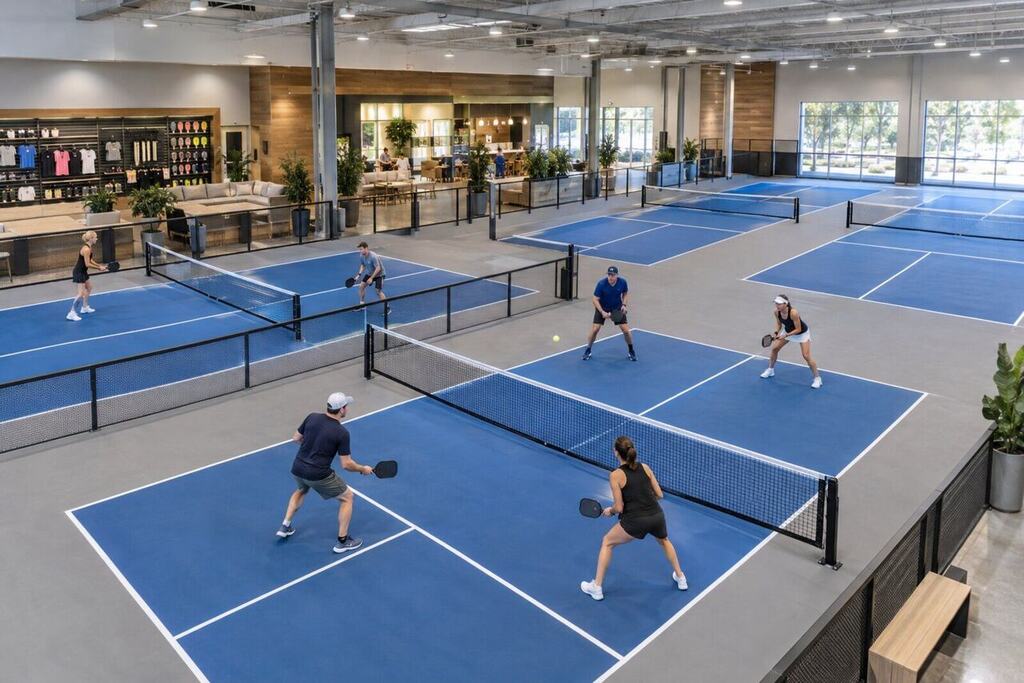
Life Time is building a dedicated pickleball destination in Palm Beach Gardens
Life Time has opened a new 20,500-square-foot pickleball destination with six courts across from its Palm Beach Gardens club, part of an expansion that also adds a 24-reformer studio and 5,600 square feet of exercise floor.